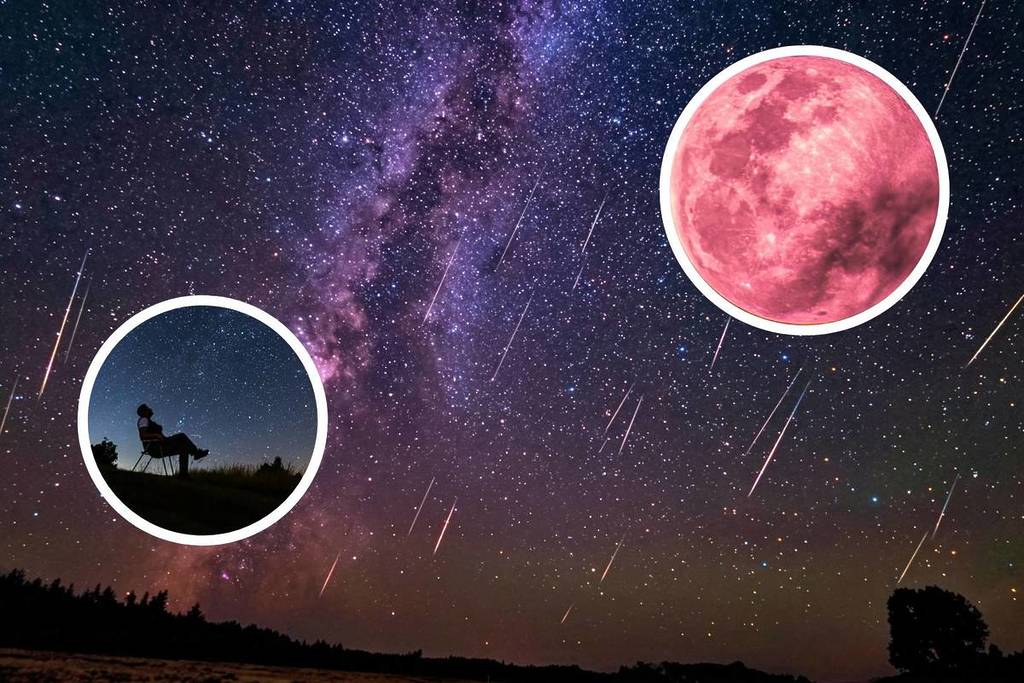

It seems almost unbelievable, but on the night between April 1st and 2nd, the moon will turn pink across Brazil. The Pink Moon is an annual phenomenon caused by the scattering of light in the atmosphere, which filters out more of the blue light when the moon is low. The result is a yellowish, orange, or reddish hue of the moon near the horizon.
Also known as the Paschal Moon, it is closely linked to the Christian calendar, as it precedes Easter Sunday. Many Christian authors associate the full moon with the celebration of Easter because it symbolizes renewal and rebirth. Just like the resurrection of Jesus, which is celebrated in early April.
The Pink Moon can also symbolize the liberation of the Hebrew people during Passover, since the date coincides with Easter.
What is the best time and place to see the Pink Moon?
The phenomenon will peak at 11:12 p.m. Brasília time. In São Paulo, the best time to view it is just after sunset, in the early evening. The moon rises lower in the sky, to the east. And it remains full in the early hours of the 2nd, with 100% illumination.
We know it’s hard to escape the artificial lights and buildings that block our view of the sky in the metropolis where we live. But to witness nature’s spectacle, look for places with an unobstructed view to the east.
Parks, lookouts, soccer fields, or even your rooftop—find an elevated spot for the best view. In small towns and rural areas , the view will be even more breathtaking; with the darker sky, the moon stands out more prominently.
Lyrid Meteors: The April Meteor Shower
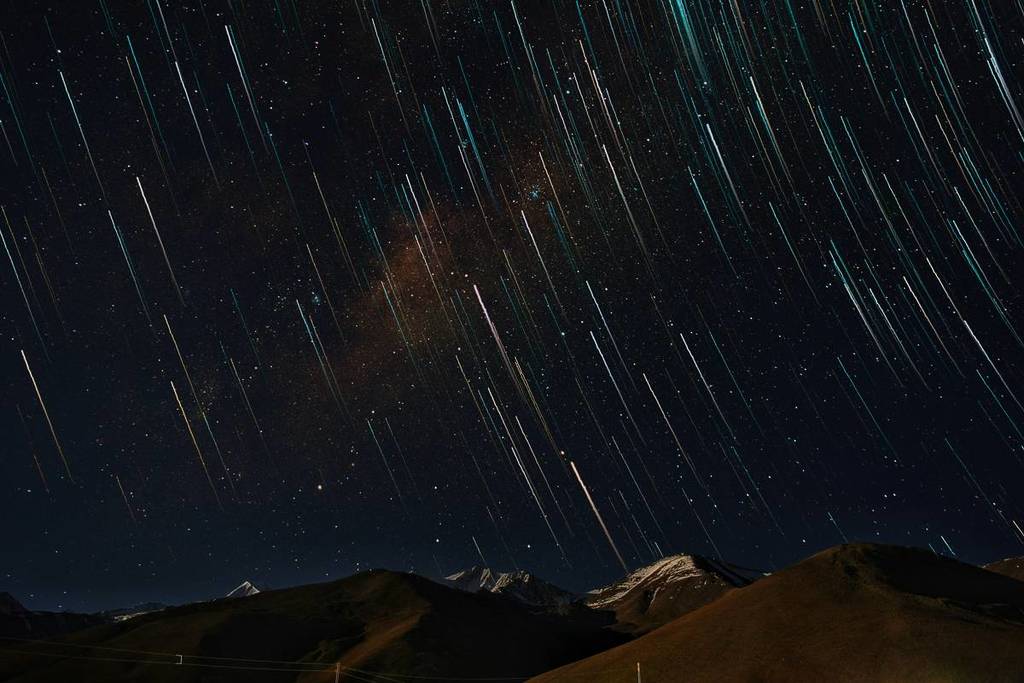
In addition to the full moon, another annual phenomenon occurs this month and can also be seen in the skies over São Paulo. With a peak expected on April 22, around 7:40 p.m. , the Lyrid meteor shower is the most significant of the month. With about 10 to 20 meteors per hour, some of which are faster and brighter.
The phenomenon occurs when the Earth crosses the debris trail of Comet C/1861 G1 Thatcher. As they enter the atmosphere, the particles burn up, producing the bright streaks we see in the sky with the naked eye.
The recommendation is the same as for the Pink Moon. You should find an open-sky location and observe starting at midnight, this time looking toward the north-northeast. Visibility, however, depends on a clear, cloudless sky.