
Initially named Sport Club Germania, it had to be renamed during World War II due to its connection with Germany. The new name, Esporte Clube Pinheiros, was adopted in reference to the Pinheiros River, which was part of the landscape of the São Paulo region.
Founded in 1899, the club is the largest in Latin America, with 170,000 square meters and about 40,000 members.
The first name was not chosen at random; the club was founded by members of the German colony, who wanted to play soccer here, a sport they already knew in Germany. Sport Club Germania was one of the first soccer teams in São Paulo, founded on September 7, 1899.
Its importance in São Paulo soccer
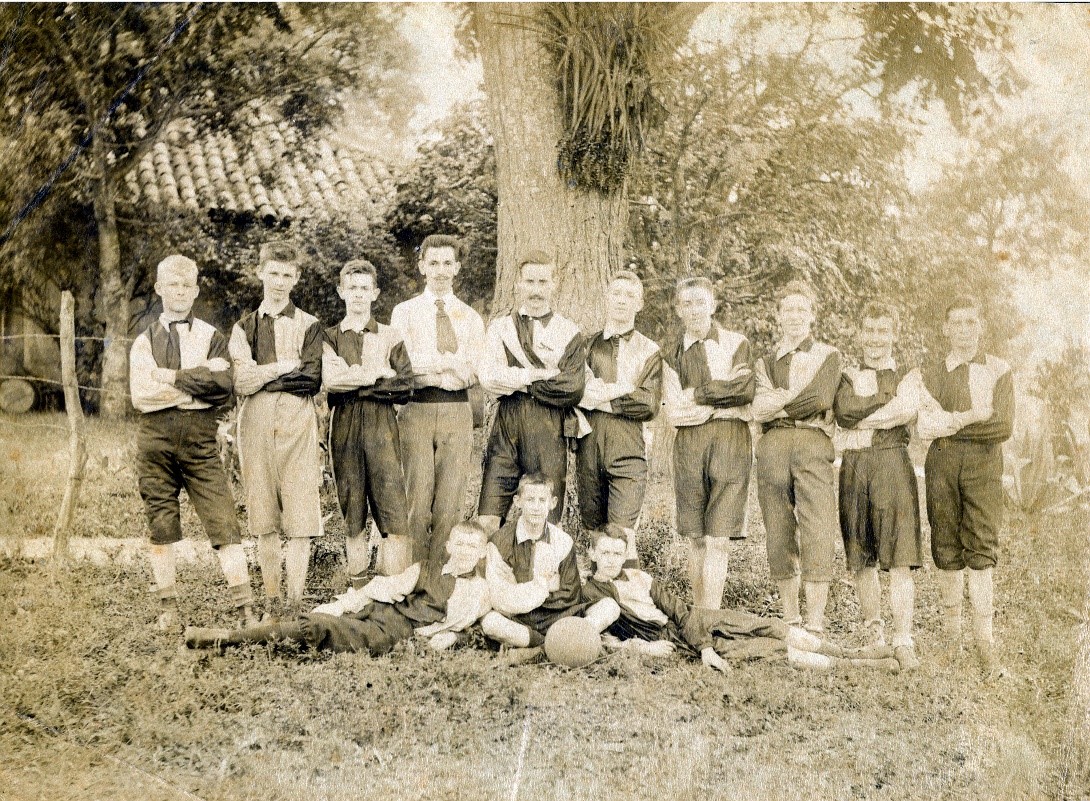 Photo: Disclosure/Esporte Clube Pinheiros
Sport Club Germania competed in the São Paulo State Championship more than twenty times, winning the title in 1906 and 1915. The founder, Hans Nobiling, brought soccer rules with him from Europe, as well as a ball and his own knowledge.
His goal was to spread the sport, which was still unknown in Brazil and practiced only by the English in their colony. Another item brought by Nobiling from Germany was the blue and black uniform adopted by the team. Germania abandoned soccer in 1933 when the sport began to be professionalized.
Esporte Clube Pinheiros: Brazil’s most Olympic club
After ending its soccer activities, the club became more diversified, adopting other sports such as athletics, tennis, and swimming. The club even inaugurated the first Olympic swimming pool in São Paulo.
Over the years, it ceased to be a leisure club and began to train athletes for major competitions. It adopted more sports such as diving, handball, gymnastics, fencing, among others. It also embraced the cause of women in sports, hosting Brazil’s First Women’s Athletics Competition in 1929.
Currently, at 126 years old, the club is still in operation and,since 1932, has sent hundreds of athletes to participate in the Olympics, eight of whom are medalists known throughout Brazil.
The club is responsible for names such as Olympic record holder Cesar Cielo, Alison dos Santos, and judokas Larissa Pimenta and Beatriz Souza, who, in addition to being a gold medalist in the last Olympics, was the first woman to achieve this feat in the club’s history.