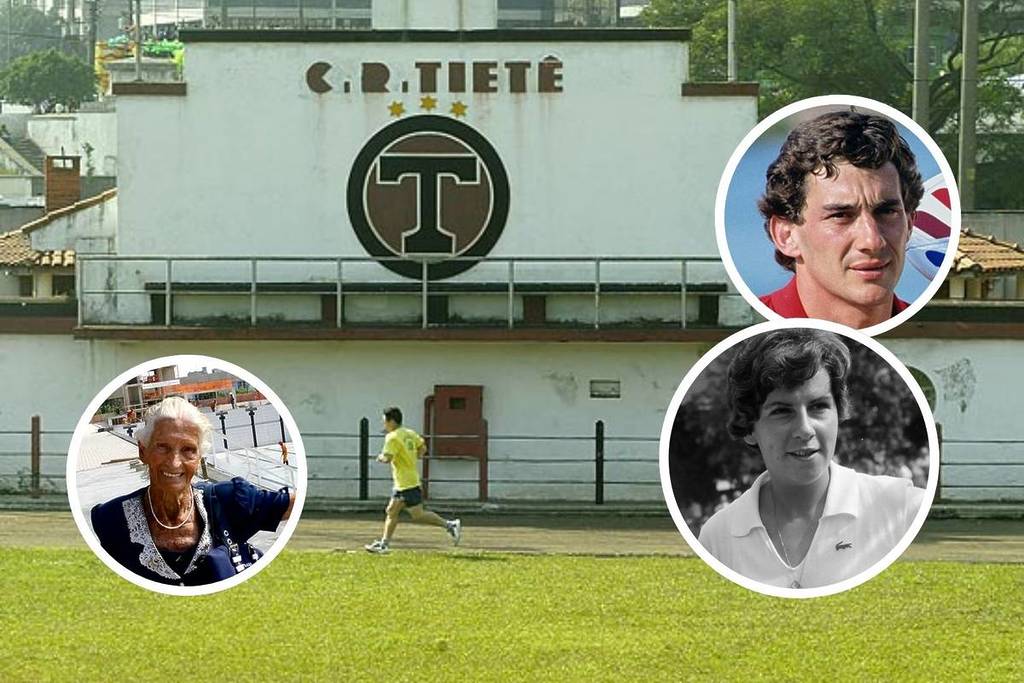
Founded in 1907, Clube de Regatas Tietê arose from the expulsion of one of the members of a swimming club in São Paulo. It was born on the banks of the Tietê River, with the idea of being focused on the sport of “regattas,“ a rowing competition. Soon, swimming, tennis, and other sports were included in the club’s activities.
The sports were practiced on the Tietê River, which at the time was clean and suitable for the practice. Clube de Regatas was champion between 1930 and 1960, in addition to winning several state titles. The red and black uniform attracted attention, earning them the affectionate nickname “vermelhinhos da beira do rio”(little red ones from the riverbank).
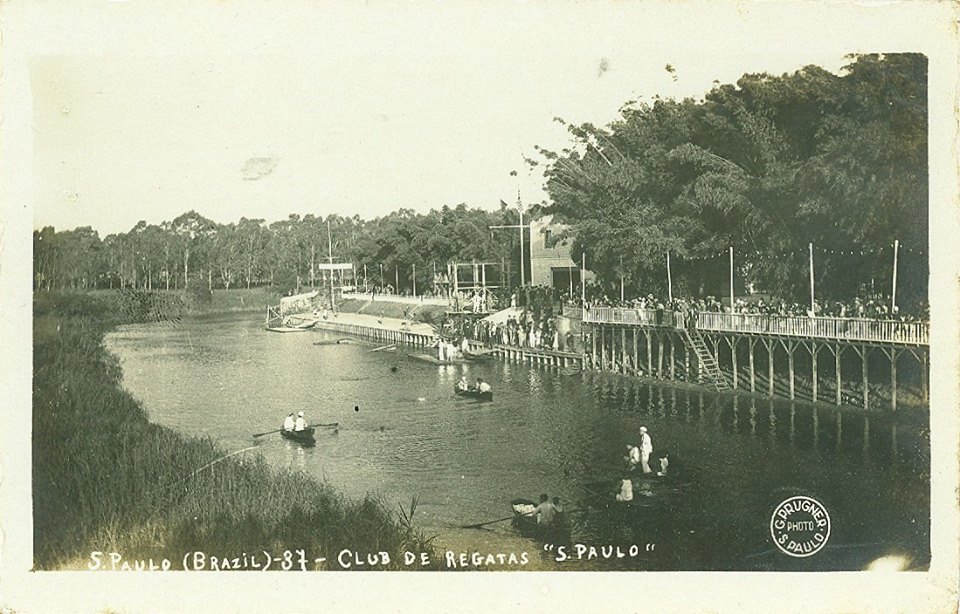 Photo: wikipedia/Edgard Martins
Famous members of the Tietê Regatta Club
The club had the most famous athletes of the time as members. Tennis player Maria Esther Bueno, considered the greatest Brazilian in the sport in the 20th century, was number 1 in the world in 1959, 1964, and 1966. She started her career there and won titles competing in the red shirt.
Another athlete who began her career at the club, swimmer Maria Lenk was the first South American woman to compete in the Olympics, making her debut in Los Angeles in 1932. She was a multiple national and international champion.
The famous race car driver Ayrton Senna also attended the club since childhood. Senna did not practice competitive sports, only swimming and gymnastics to stay in shape.
The closure of the club and the new life of the space
With the pollution of the river in 1970, it was no longer possible to practice sports. Because of this, training began to take place at the USP Olympic pool. Over time, competition grew, offering superior facilities for members.
All of this contributed to the financial difficulties that began in 1980, with a reduction in membership, the business was no longer profitable. The club survived until 2012 despite accumulating debts of up to 35,000 reais, when it closed it still had more than 1,500 members.
The 95,000-square-meter structure became the property of the São Paulo State Department of Sports and Leisure. After being listed as a historic landmark in 2014, the old buildings were renovated, and the compromised parts were transformed into new spaces.
Today, the former address of the Tietê Rowing Club houses a sports center and a park open to the public. In addition, it hosts social programs such as the School Club, which seeks to offer free recreational activities for children and adolescents.