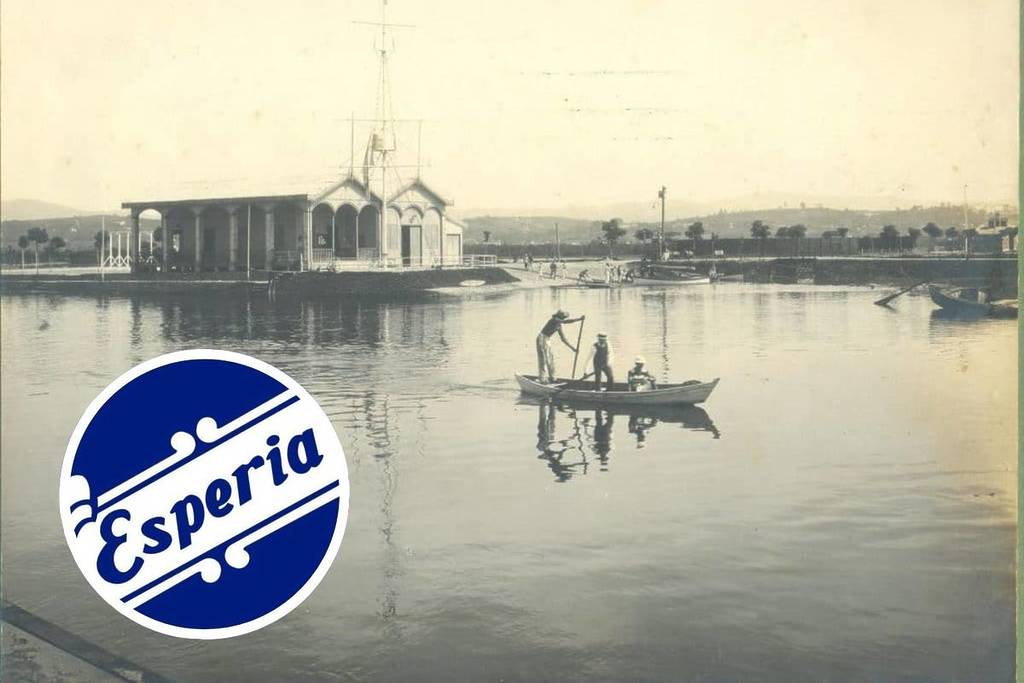
São Paulo has a history of iconic social clubs that are part of our emotional memory and cause nostalgia in several generations. Among the most emblematic is Clube Esperia, which has accompanied the urban transformations that the city has undergone since the 19th century.
Founded in 1899, the Societá Italiana di Canottieri (Italian Rowing Society, in English) was born on a rented farm before settling in its actual headquarters. There were seven young Italians who wanted to row on the once clean waters of the Tietê River. In the past, the riverbanks were the setting for outdoor sports activities or simply a beautiful landscape for family picnics.
The evolution of the structure and expansion of Clube Esperia
The history of the association is one of overcoming adversity. In 1903, to prevent flooding, they filled in the land on the opposite bank of the river with a cart and a donkey. All the manual labor ensured that the permanent headquarters remained at the same address for over a century, reaffirming the presence of the Italian colony in the region.
Previously, the club was called Associação Desportiva Floresta due to implications during World War II, but in 1970 it returned to its original name. This period was marked by its golden age, and over time the club became inclusive and began to serve other audiences besides immigrants.
It reached the memorable milestone of 20,000 members, who had access to a robust infrastructure that served for the practice of various sports.
From rowing on the Tietê River to the modernity of the Olympic Lane
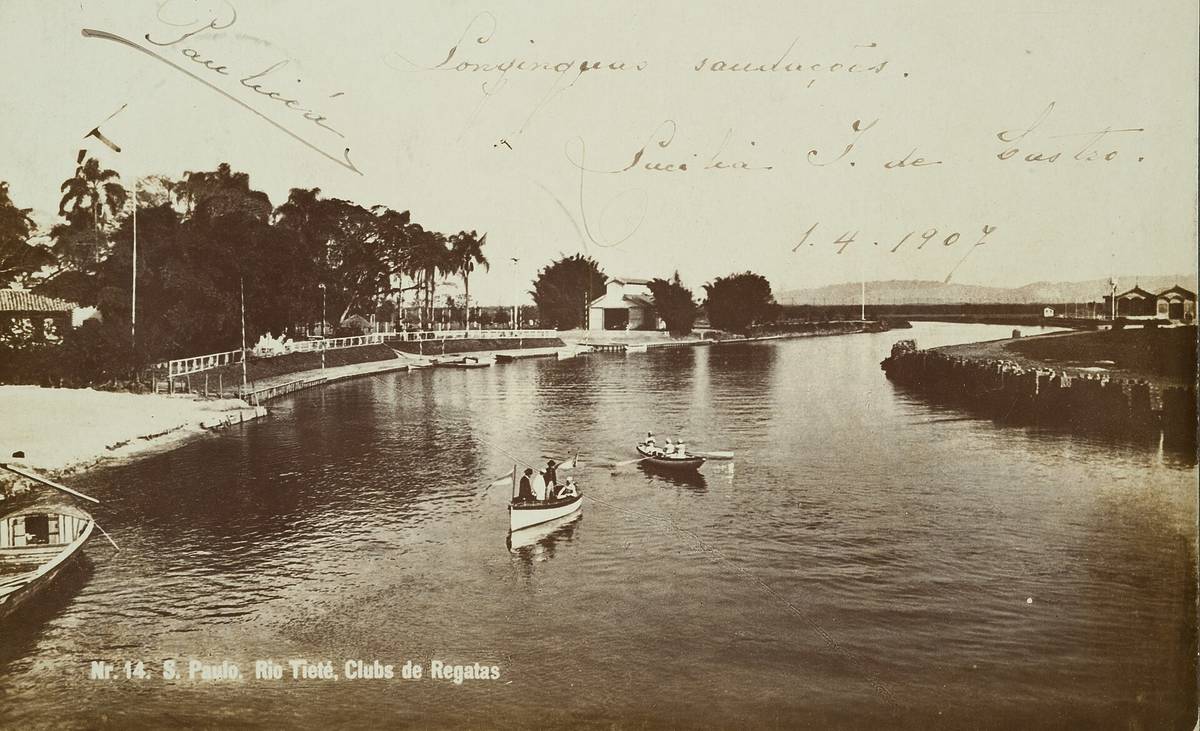 Photo: wikipedia/Guilherme Gaensly
With the construction of the Marginal Tietê, rowing competitions had to change location, moving to the USP Olympic Rowing Course. The memorable farewell took place in the club’s centenary year, in 1999. The iconic 250-meter regatta was symbolically held for the last time on the Tietê River, with equipment to protect against pollution.
Currently, the site is home to a giant of leisure and sports in São Paulo, thus maintaining its longstanding relevance. The 80,000-square-meter area has libraries, toy libraries, running tracks, and, of course, swimming pools.
There is no shortage of things to do, from rhythmic gymnastics, tennis, and volleyball to even more unique sports, such as archery. The legacy of Italian rowers remains alive at this location and, as always, has evolved with the times.