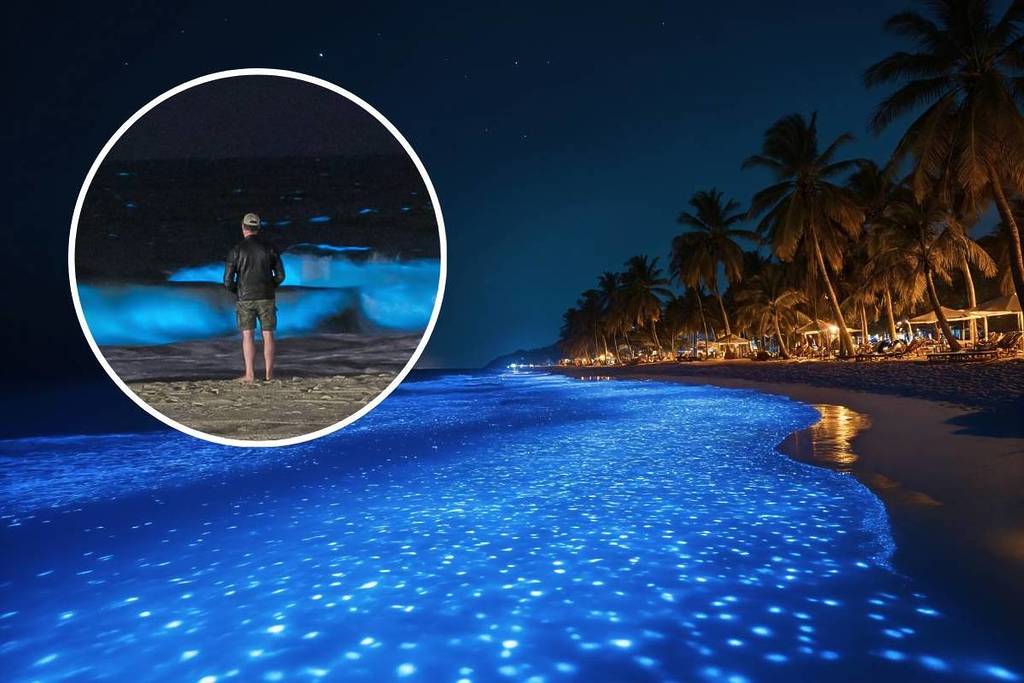

Have you ever imagined walking on the sand and seeing your footprints glow, or watching waves that seem to be lit up by neon lights? Although it looks like a scene from a fantasy movie, you can find beaches that glow in the dark along the coast of São Paulo!
This rare event occurs thanks to marine bioluminescence, a scientific phenomenon caused by microscopic organisms. The state of São Paulo has some amazing records, especially along the northern coast and in the far south, where beaches turn into luminous spectacles of nature.
Understand the “magic” behind the phenomenon
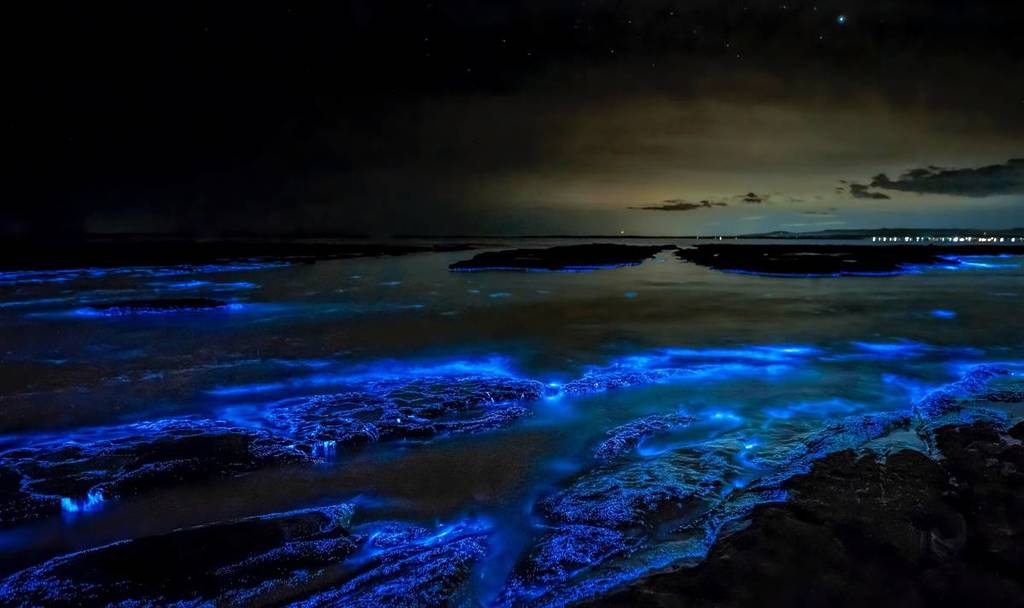
Marine bioluminescence occurs when certain organisms, such as algae and bacteria, undergo chemical reactions that emit light. The process involves a molecule called luciferin, which, when reacting with oxygen, releases energy in the form of light. To the naked eye, the result is the blue-green glow we see in the waves or on wet sand.
Although larger animals, such as squid and jellyfish, also produce their own light, on the São Paulo coast the phenomenon generally occurs due to microalgae known as dinoflagellates. These microorganisms emit light when subjected to mechanical stimuli, such as the movement of waves or someone’s footsteps at the water’s edge.
Discover the beaches that glow in the dark in São Paulo
The southernmost tip of São Paulo is a traditional destination for observing marine bioluminescence, specifically in Cananéia and on Cardoso Island. Recently, however, the phenomenon has enchanted residents of the northern coast, with reports of glowing beaches in Ilhabela and Ubatuba. According to residents, it looked as if the sea were “on fire.”
There is no specific season for the event, but most sightings occur in the summer and early fall. This is because, during these seasons, the waters tend to be warmer and richer in nutrients after periods of rain, which favors the proliferation of microalgae.
To best observe the phenomenon, choose nights with a new moon and places with little artificial lighting. After all, you need to be in the dark to perceive nature’s subtle glow!