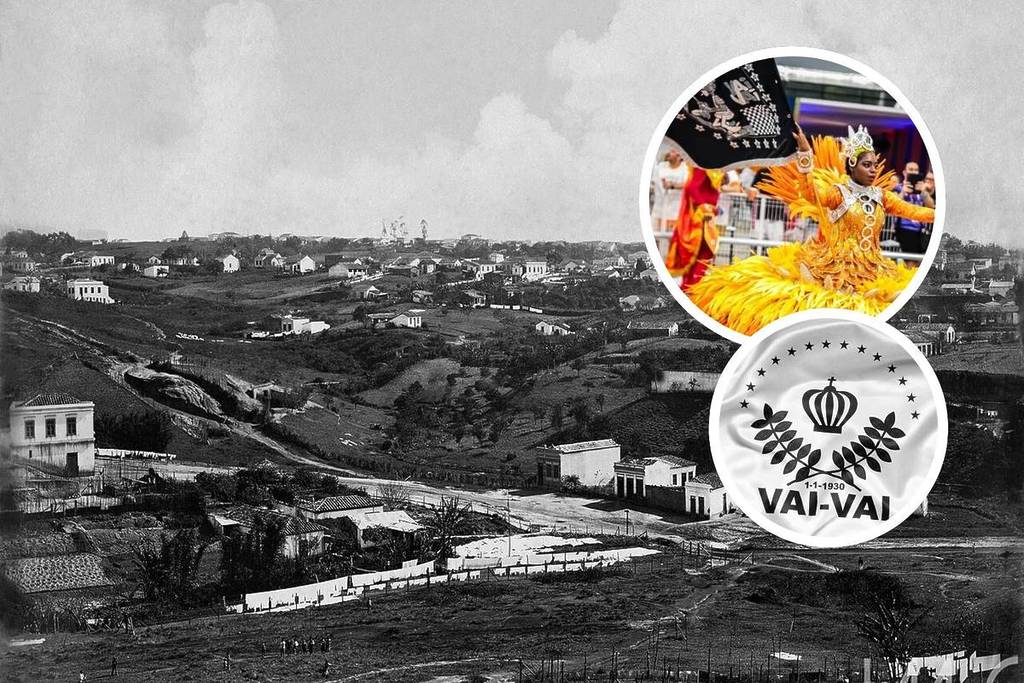

In the 19th century, in the traditional neighborhood of Bixiga, on the banks of the Saracura stream, one of the first urban quilombos in São Paulo was born: the Quilombo Saracura.
The stream, bordered by dense vegetation, had springs that were used as escape routes by enslaved people. Some families lived nearby, mostly herb sellers, food vendors, and laundresses, who used the water for domestic activities. The region was also home to Afro-Brazilian religious spaces.
These characteristics earned it the nickname “Little Africa. “ This expression is used to refer to places that are home to large concentrations of the black population, in addition to having African culture present in everyday life.
The vai-vai and the Quilombo Saracura
Founded in 1930, the samba school is one of the most traditional in the state and was once known as Saracura, because it was part of the region on the banks of the stream. In the beginning, it was just a group of samba dancers cheering on a soccer team, but over time it established itself as a carnival group.
The samba school has had themes in honor of Quilombo Saracura, highlighting the presence of its samba dancers in the region, whether in the terreiros or in the tenements, making the school a spokesperson for local memory. There was even a recent mobilization by the school to demand the preservation of the memory of the quilombo.
Archaeological discoveries
During excavations for the construction of the orange line 6, more than 20,000 archaeological artifacts were discovered. Among them were crockery and ceramics, clothing, pipes, and necklaces associated with African-based religions.
In addition to possible structures of a religious temple. Some items date from the 19th and 20th centuries , reinforcing the hypothesis that they belonged to the Saracura Quilombo.
Currently, the region has become an archaeological site preserved by the National Historical and Artistic Heritage Institute, which is supervising the ongoing excavations.
The construction of Line 6-Orange, renamed Saracura in honor of the neighborhood, is progressing slowly, with more critical activities due to archaeological excavations. Delivery is expected by 2027.