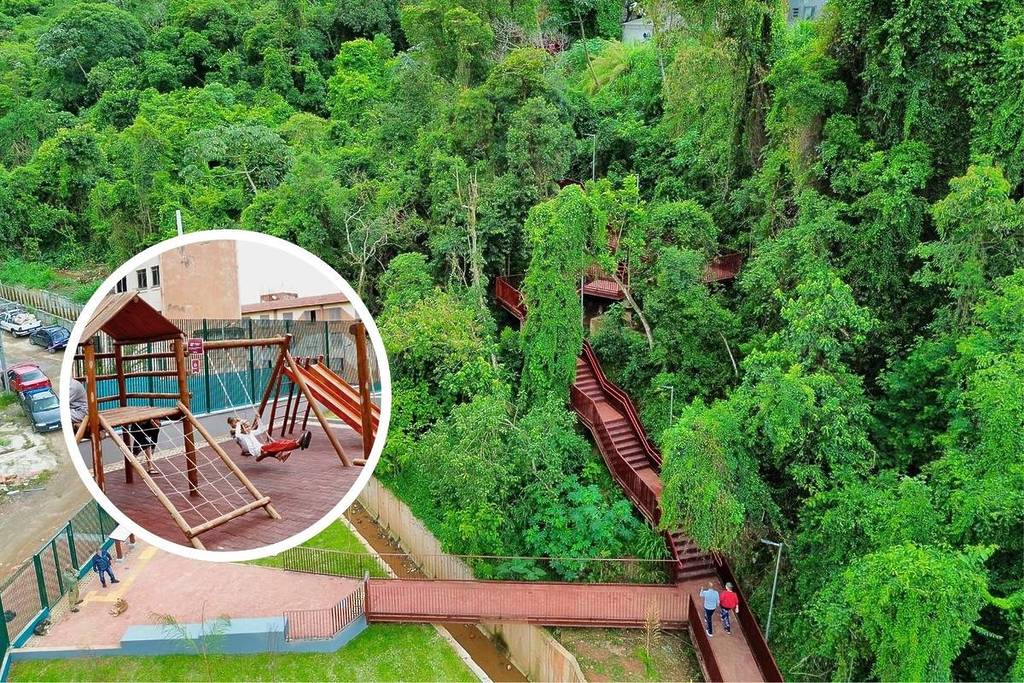
Restored and inaugurated on January 17, 2026, Fazenda da Juta Park has once again received investments. At the request of the population of Sapopemba, it has been transformed into a great leisure option for those who want to enjoy nature without having to go too far. The “Prefeitura Presente em Sapopemba”(City Hall Present in Sapopemba) initiative is part of a plan to deliver eight new municipal parks by 2028.
Municipal Law 16,683 of 2017 enabled the creation of the park through a proposal made by Councilwoman Juliana Cardoso (PT). According to her, because it is an area with socially vulnerable families, residents have the right to a leisure space. The park has suffered in the past from irregular occupations in the surrounding neighborhoods, litter, and degradation, which is why it underwent renovations that, according to City Hall, will be delivered in two phases:
Phase 1: The release of 66,000 square meters as a leisure option for the local population.
Phase 2: Called Agave Dragão, the last phase is expected to make an additional 56,000 square meters available.
Upon completion, the eastern zone will have a total of 122,000 square meters of green areas, with public restrooms, baby changing facilities, and drinking fountains. There will also be lookout points, a community gym, light hiking trails, and playgrounds for children.
The renovation of Fazenda da Juta Park: The sponge park concept
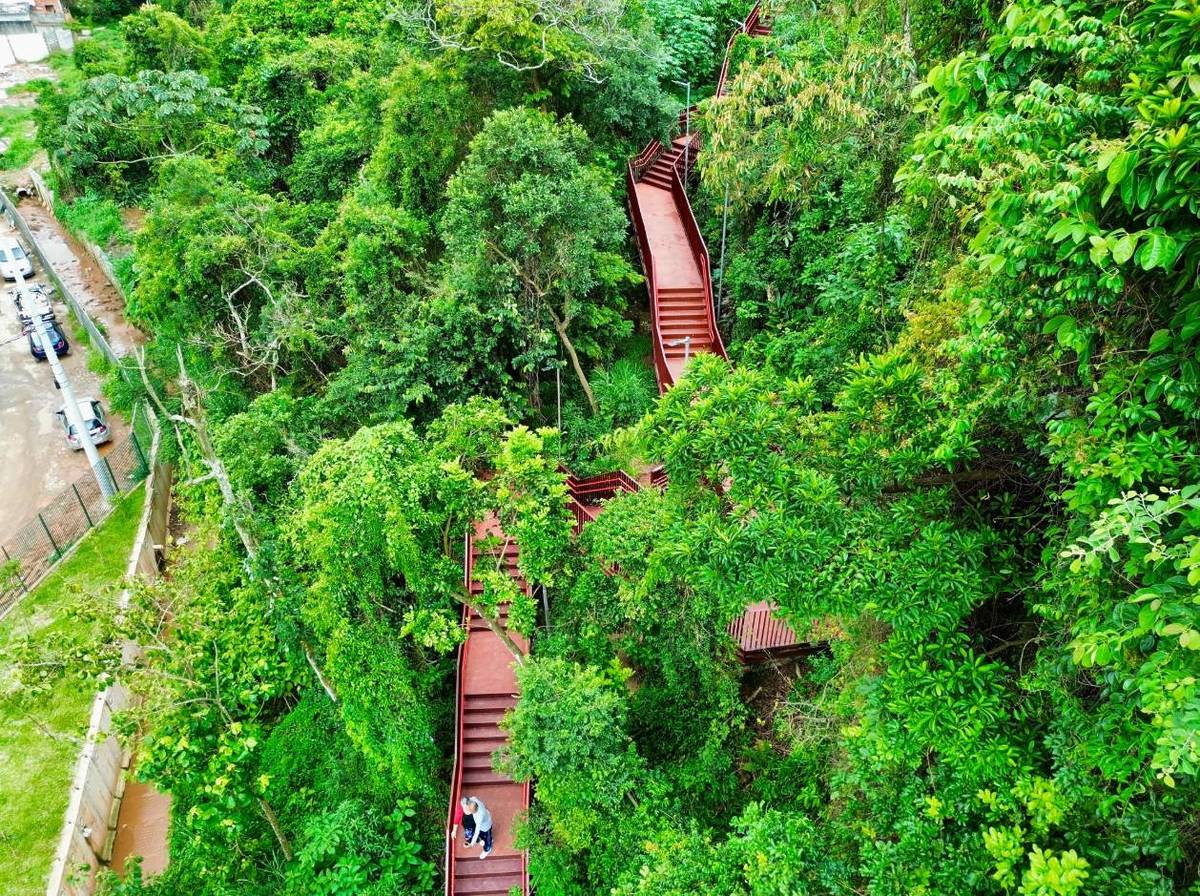 Photo: São Paulo City Hall
As this is an area of great environmental importance, the planning combined architecture with natural preservation. The region is home to around 25 species of birds, such as the rich parakeet and the waxbill, as well as migratory birds such as the suiriri and the peitica. In addition, it has 144 species of trees, such as Tapiá, Jequitibá, and guatambu, native to the Atlantic Forest. Fazenda da Juta Park is also home to bodies of water and stream springs.
The park now has suspended walkways for visitors to walk around and observe nature. The concept of a “sponge park” was designed to maintain soil permeability, as the area has large trees and high humidity. This helps reduce flooding in neighboring neighborhoods, as the soil absorbs, retains, and filters rainwater.
While the renovation was taking place, the population followed it closely. According to the São Paulo City Hall, the works were carried out using the open construction site concept, which, as its name suggests, is a model open to the public that values transparency and invites the population to participate.