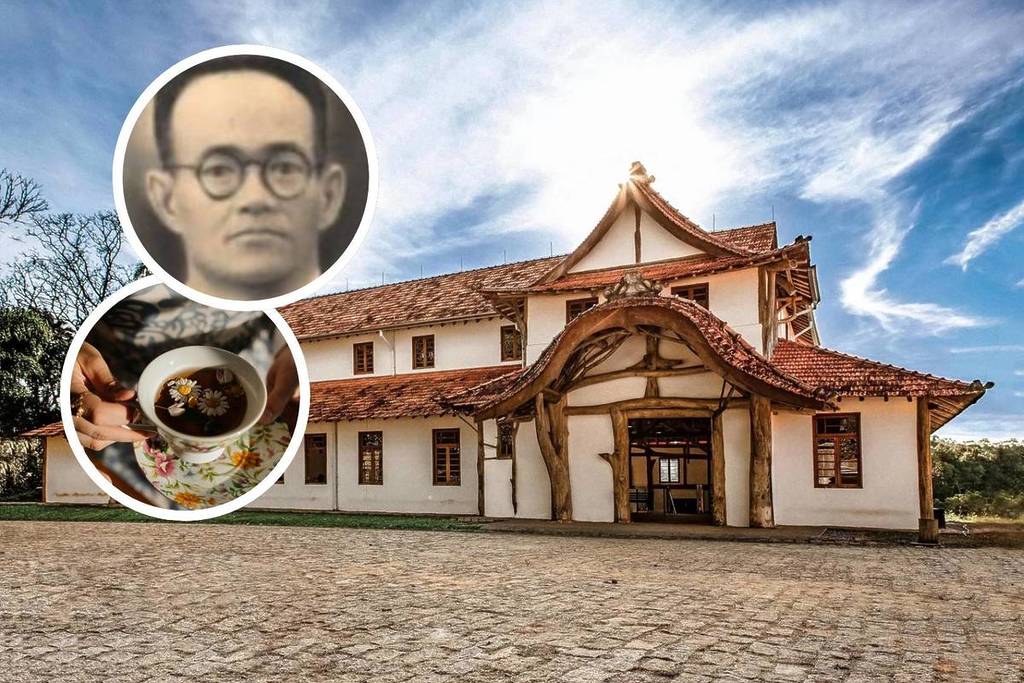

Built and designed in 1942 in Mogi das Cruzes, the Casarão do Chá is a symbol of Japanese immigration in the city. It has been designated a Historic Landmark and is open to visitors.
It is open on Sundays from 9 a. m . to 5 p.m., and admission is free. On other days, guided tours are available. Tour groups must pay an admission fee.
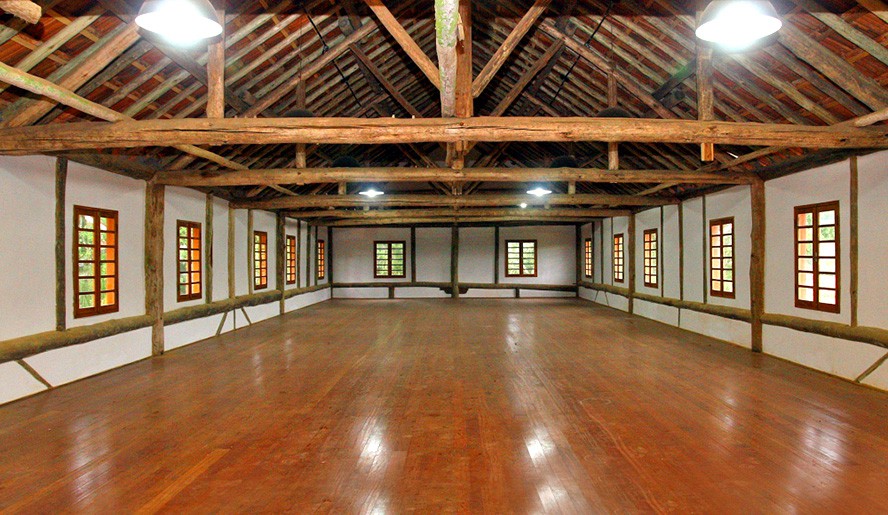
Designed by architect and carpenter Kazuo Hanaoka, the mansion—originally built to serve as a factory—draws attention for its wood-paneled interior.
The construction was based on the traditional Japanese technique called hozo-gumi. The structure was built using a framework of interlocking eucalyptus pieces. The hand-rammed earth walls were added later.
The past at the tea factory
Chá Tokio reached its peak in international sales during World War II. With the Asian market in crisis due to the conflicts, Brazil was the country chosen by the company to meet the demand. Hence the name, Casarão do Chá.
At the time, the factory became a hub for Japanese immigrants, as it employed many of them and their descendants who lived in the region. After years of operation, the Casarão do Chá also became a gathering place for the Japanese-Brazilian community in the region.
After the end of World War II, major Asian producers resumed tea production, and the tea produced here lost its competitive edge. The factory’s decline began around 1940, and it closed its doors permanently in 1968. After that, the building was used as a warehouse for agricultural supplies.
What to do at the Casarão do Chá?
The tour allows visitors to see Kazuo Hanaoka’s architecture up close. In addition to the panels that tell the story of tea and Japanese immigration in Mogi das Cruzes throughout the space.
The mansion also hosts exhibitions, artistic performances, courses, cultural fairs, and events throughout the year. The famous Mogi das Cruzes Ceramics Festival takes place there annually in August, with free admission.