
Located less than 3 hours from the capital, Legado das Águas is the largest private Atlantic Forest reserve in Brazil. Since 1940, it has belonged to the Votorantim group, which innovated and did the opposite of its competitors by preserving the site and practicing economicsustainability.
The idea is simple: preserve the forest so that it “pays for itself” over time, proving that it is possible to maintain a self-sufficient area and have economic development. At the time, the company built seven small hydroelectric plants in the Juquiá River region to supply energy to the Companhia Brasileira de Alumínio plants.
The investment was 7 million reais and included research in the area and local monitoring . The reserve has an area equivalent to 31,000 soccer fields and crosses the municipalities of Juquiá, Miracatu, and Tapiraí to the Ribeira Valley, in the interior of São Paulo. In addition to being a subject of research and generating profit, it also offers ecotourism options to visitors.
The Legacy of Waters
Founded in 2012, 75% of the reserve is in an advanced stage of conservation and is home to about 13% of the Atlantic Forest’s endangered native species . It is also internationally recognized for its priority in conserving rare species such as southern muriqui monkeys.
With the project to bring the Atlantic Forest back to urban centers, it also has a native plant production center. There are 200,000 plant seedlings per year of 140 different species. The reserve has a rare species of orchid discovered in 2017, named after its name, Lepanthopsis legadensis.
It is also responsible for rediscovering a species of orchid in São Paulo that was considered extinct, Octomeria estrellensis, which was reintroduced into its habitat. In addition, a species of butterfly that had not been seen in the state for over 50 years was spotted there.
What to do at Legado das Águas
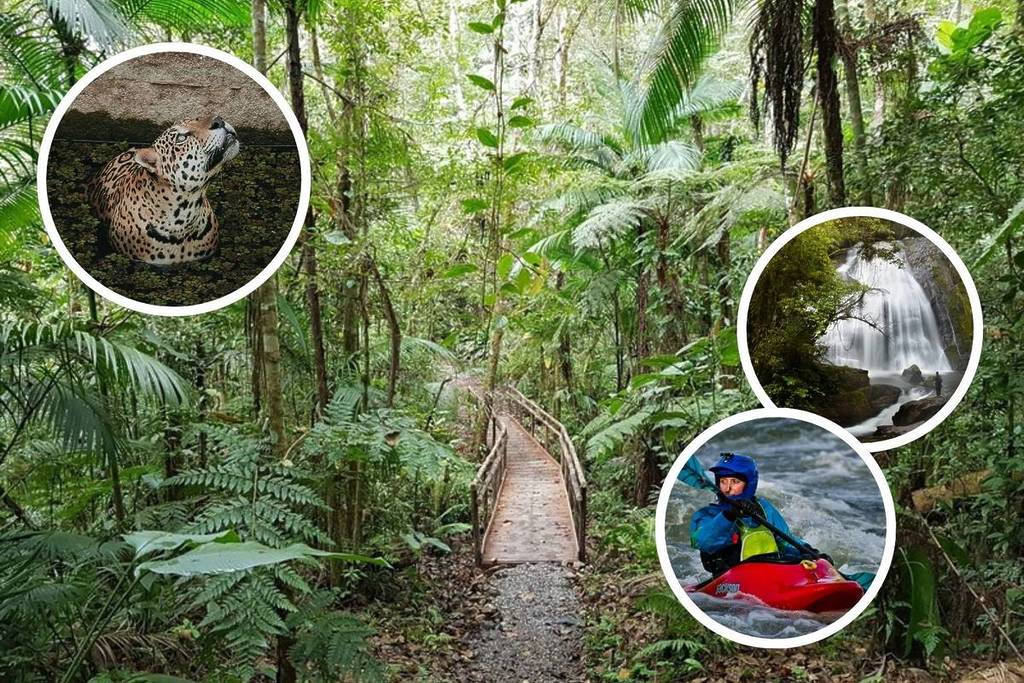
The main attraction is called Legado Experience and lasts seven hours. The program includes a guided walk through the plant nursery, a canoe trip on the reservoir, trails, waterfalls, and lunch, as well as an afternoon snack at the end of the day.
In addition, Onçafari is another experience available, where you can live a day as a biologist and follow the monitoring done by local professionals. In addition to the famous jaguar, you can learn more about animals native to the Atlantic Forest, such as the ocelot and the golden lion tamarin, among others.
Finally, it is also worth observing the night sky or watching the birds during the day. The area has 296 native species , representing 43% of the state’s fauna.