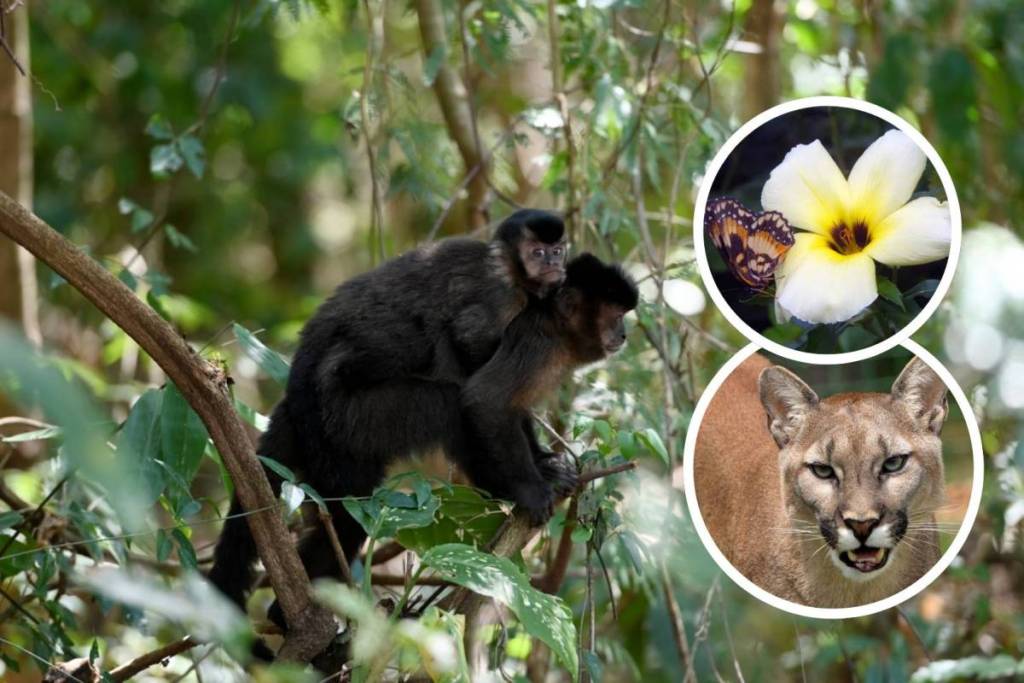

Did you know that Campinas is home to Brazil’s second-largest urban forest? Demonstrating its versatility—from skyscrapers to vast forests—the state of São Paulo reveals yet another of its secrets: the Mata de Santa Genebra.
Located in the Barão Geraldo district, bordering the municipality of Paulínia, the Santa Genebra Forest is considered an Area of Significant Ecological Interest (ARIE). This means that the forest is a hub for scientific research focused on conservation and environmental education.
Second in size only to the Tijuca Forest in Rio de Janeiro, the Santa Genebra Forest covers an area of approximately 251.7 hectares. It has a perimeter of 9 kilometers and an elevation of approximately 670 meters.
Classified as a seasonal semideciduous forest, the Mata de Santa Genebra is predominantly Atlantic Forest across most of its territory. However, it is also influenced by the Cerrado, which increases the number of plant species it harbors.
Currently, the forest is home to 660 plant species and approximately 365 vertebrate animals. Amid an urban landscape filled with buildings, busy roads, and large corporations, the area serves as an important biodiversity hotspot.
Designated as a protected area by CONDEPACC and CONDEPHAAT, the forest welcomes researchers and also serves as a living laboratory for studies in the fields of botany, ecology, and wildlife. It also provides data for research on the impacts of urbanization on forests.
The area’s history and the coffee farm
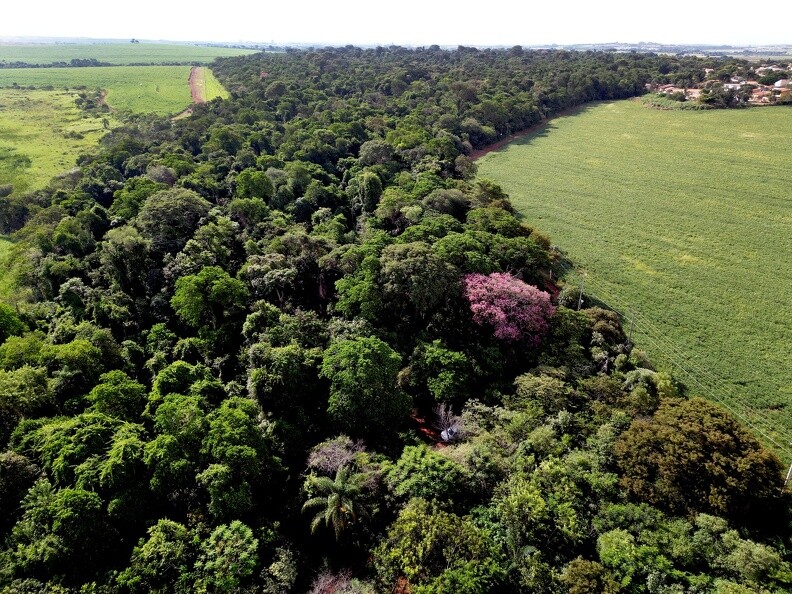
Currently, the area of the Mata de Santa Genebra is, in fact, what remains of the farm of the same name from the past. The property, which was once known as Fazenda Morro Grande, passed through several owners before coming into the hands of Barão Geraldo de Rezende.
One of the most prominent figures in Campinas’ rural community, Geraldo managed the farm until 1907. Under his leadership, the property established itself as the city’s leading coffee producer, thanks to the use of cutting-edge technologies of the time and the country’s most fertile soil.
However, due to the economic upheaval caused by the coffee crisis, the baron declared bankruptcy and the lands were auctioned off. José Pedro de Oliveira acquired the property and, while undergoing treatment for tuberculosis, took advantage of the forest’s fresh air to aid in his recovery.
After his death in 1981, his wife, Jandyra Pamplona de Oliveira, donated the entire forest to the municipality—but only on the condition that the area be preserved. This led to the creation of the José Pedro de Oliveira Foundation.
Visit the Santa Genebra Forest!
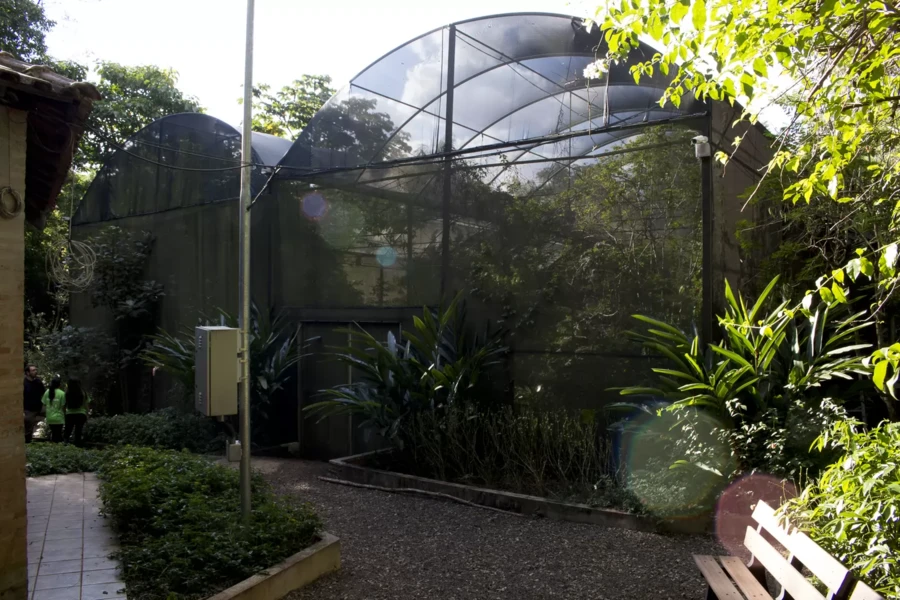
In addition to housing a 3,000-square-meter butterfly garden that monitors approximately 706 species of butterflies, the forest also features a nursery for native seedlings and an orchid garden.
Both sites serve as venues for environmental education, catering to both schools and the general public. There, you’ll learn more about the life cycles of insects and the role of native plants in the environment.
The forest offers free guided tours on the first Sunday of every month. All you need to do is register in advance on the foundation’s website. There are also some self-guided tours—both daytime and nighttime— held every two months, which also require registration and have limited spots!
A good tip is to venture out on the Jatobá and Oeste trails, which range from 1 to 11 kilometers in length. In general, the routes include sections through the forest and along the perimeter road, and you can learn more about nature and local history.