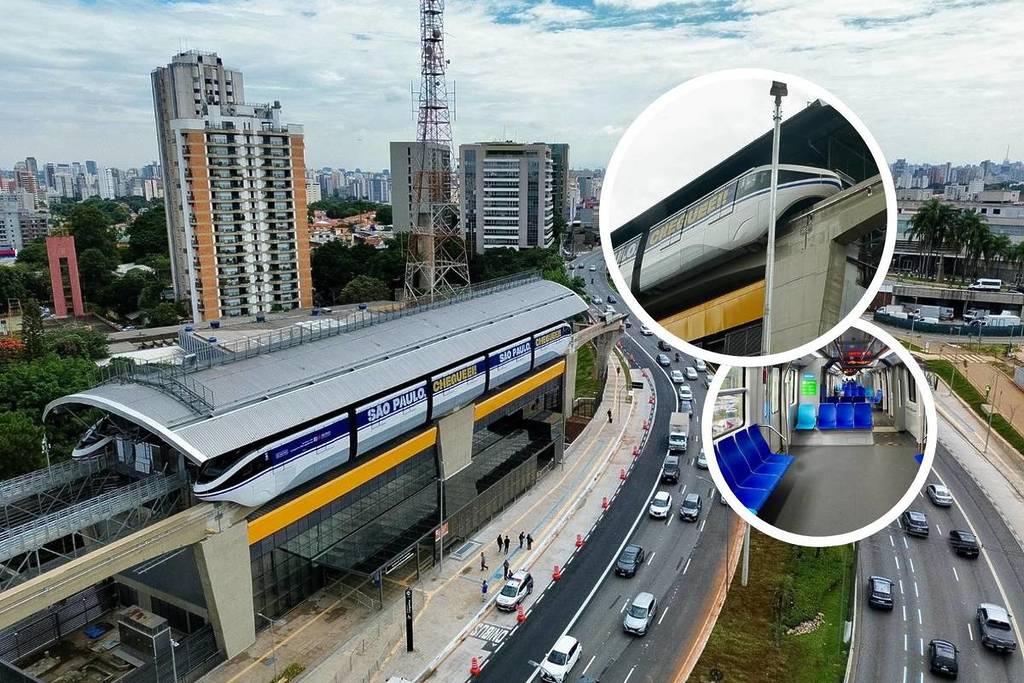

With construction beginning in 2012, in 2026 the São Paulo Metro finally inaugurated Line 17-Ouro. This was after the initial delivery date had been set for the 2014 World Cup. The reason cited is the setbacks during construction, with work stoppages and contract terminations throughout the decade.
Despite the excitement surrounding the launch, the State Government reports that operations will begin on a phased basis. It will run on a limited schedule and be closely monitored. It is still undergoing additional testing.
Line 17-Ouro operates on tires, at a height of about 15 meters . It functions as an elevated monorail. And it arrives with the promise of quieter operation compared to trains.
In addition, it was designed to be the city’s first subway line to connect directly to an airport. It connects Congonhas to the rail network via the station, which features an access tunnel.
Stations open along the route
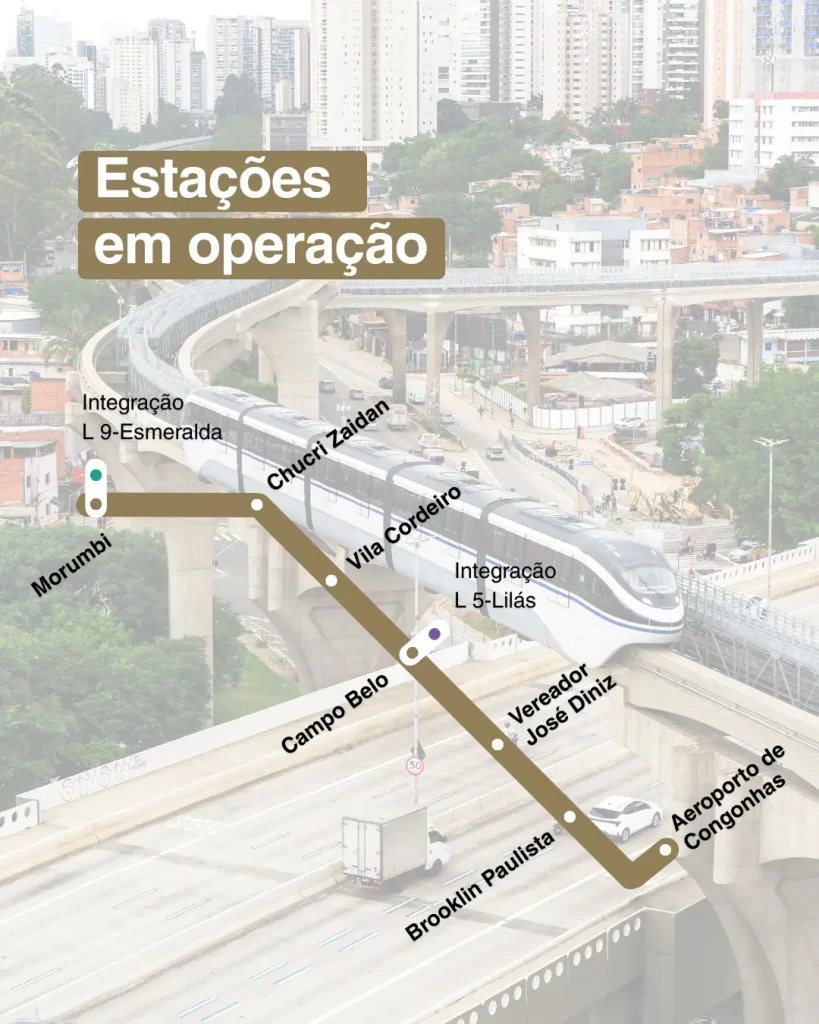
At the inauguration, which took place on March 31, 7 of the 8 planned stations were opened to the public. The priority section will connect Morumbi to Congonhas Airport.
- Morumbi: Where it will connect with CPTM’s Line 9-Esmeralda.
- Chucri Zaidan.
- Vila Cordeiro.
- Campo Belo: Which will connect with Metro Line 5-Lilac.
- Councilman José Diniz.
- Brooklin Paulista.
- Congonhas Airport: Which will provide direct access to the airport terminal.
The Washington Luís station has not yet been unveiled to the public because it required further analysis. The complexity and extended testing period are due to the line’s “Y” shape .
More information about Line 17-Gold
After three World Cups of construction, the total cost is estimated to be around 5.8 to 5.9 billion reais, taking into account cost overruns and contractual issues.
The length of the priority section is approximately 6.7 kilometers. It has three main connections: Line 5-Lilac at Campo Belo, Line 9-Emerald at Morumbi, and Congonhas Airport at the other end of the city.
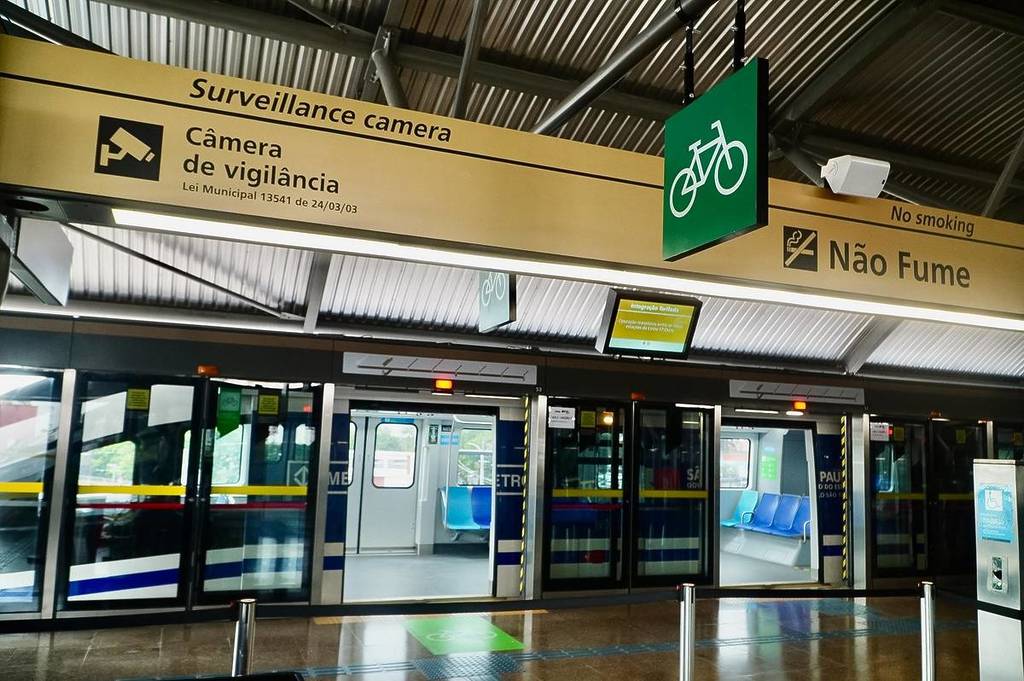
With an estimated travel time of 20 minutes, the trains will operate with a capacity of about 616 passengers per train. They consist of 5 cars, which are smaller than those of conventional trains. According to calculations by the Metro and the State Government, estimated demand ranges from 93, 000 to 100,000 passengers per day on weekdays.