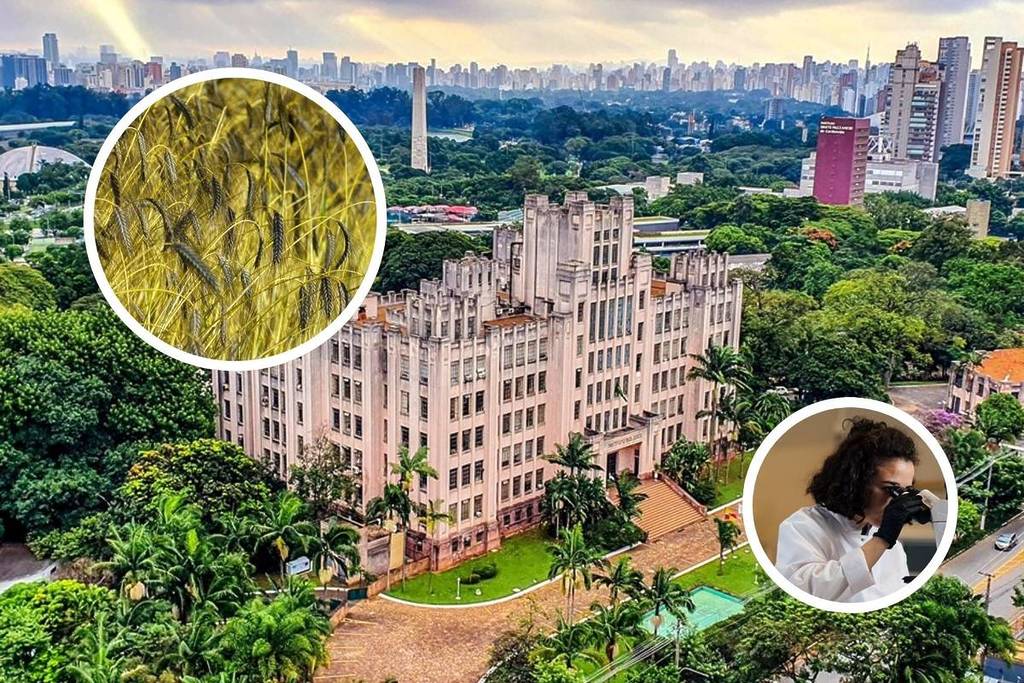

The “world’s largest urban coffee plantation” is located in Vila Mariana, in the southern part of São Paulo, at the Biological Institute. Currently, the site is known as a research and scientific tourism area, as well as a hub for environmental education.
Coffee plantations are, as the name suggests, plantations of coffee. However, this one in particular was designed as an experimental area and functions as an “open-air laboratory.” There, researchers study new coffee varieties, pests, and diseases, in addition to testing more sustainable management practices.
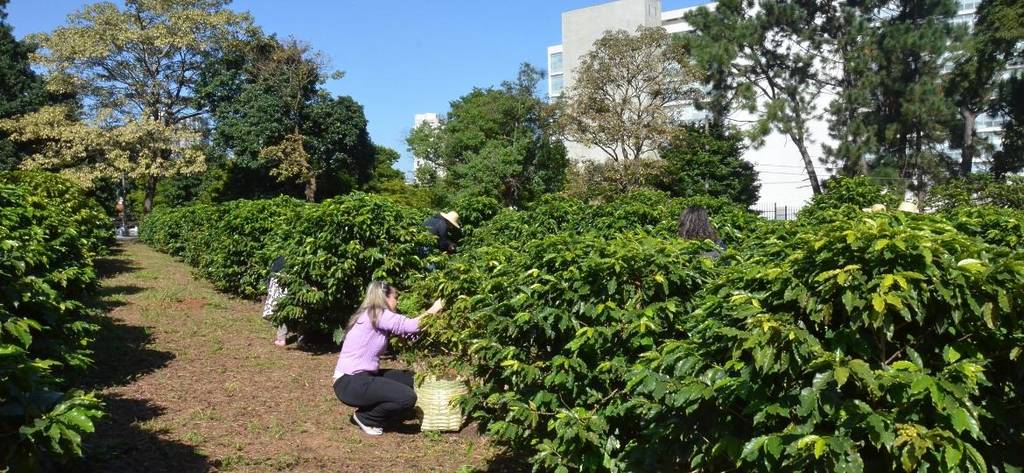
The planted area covers about 10,000 square meters. And, depending on the stage of the plantation’s renewal, it has nearly 3,000 coffee trees. All of this in a 100% urban setting, just a few minutes from Paulista Avenue.
The history of coffee and São Paulo and the creation of the Biological Institute
Introduced to Brazil in 1727 with seedlings brought from French Guiana to Pará, coffee cultivation thrived there, but did not lead to significant economic progress in the region. Soon after, it was brought to São Paulo through the expansion of farming in the Southeast.
As soon as it arrived, it became the state’s major economic driver, even becoming the leading export product in the 19th century. This made it possible to finance highways and the industrialization that turned São Paulo into the metropolis it is today.
However, in 1920, a pest emerged that threatened the coffee cycle and, consequently, the economy of São Paulo: the coffee borer beetle, an insect that began destroying plantations and rendering the beans unusable. Faced with this major phytosanitary crisis, the São Paulo state government created the Institute.
For nearly 100 years, the site has served to research and prevent new crises in coffee crops from arising. Although it is no longer a commercial plantation, it remains fully operational.
Today, the focus is no longer on large-scale production, but rather on serving as a site for research and scientific demonstrations. This includes studies on the behavior of seedlings and plants in an urban environment.
How can you visit the world’s largest urban coffee plantation?
Currently, the site offers free guided tours for limited groups. You simply need to schedule your visit in advance via an online form, as the institute only accepts visitors during specific periods.
The site hosts events such as “Sabor da Colheita”(Taste of the Harvest), where visitors can participate in the harvesting process. They learn about the entire coffee processing cycle and have the opportunity to taste beverages prepared by researchers and baristas at the end of the experience.