
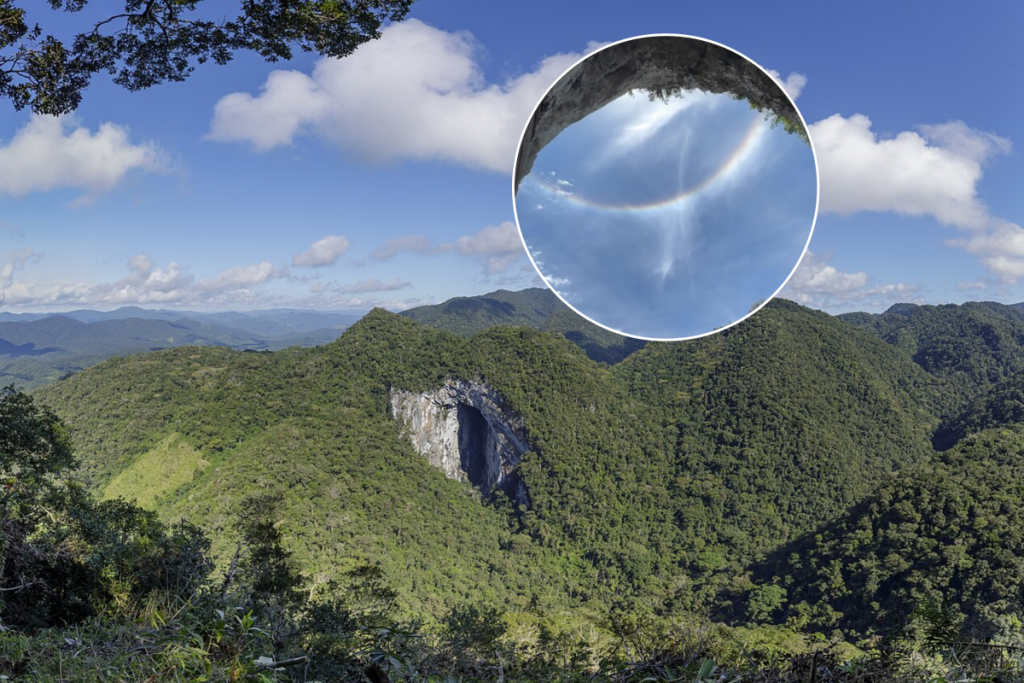

After going viral in a video in which the water appears to “fall from the sky” on a sunny, rainless day, the Casa de Pedra Cave, located in the Alto Ribeira State Tourist Park (PETAR) in Iporanga, is once again capturing the internet’s attention for its grandeur and beauty.
The scene captured by mountain guide Giba Morais shows the waterfall emerging from one of the cracks in the rock. The footage stands out for the sun halo in the background, accompanied even by a rainbow in the sky.
How does this phenomenon occur?
From the angle of the video, the waterfall appears to plunge from the clouds at a single point in the open sky. In reality, it originates from cracks in the rocky ceiling, forming a sort of natural shower.
According to the Institute of Geosciences at USP, the circulation of water through rock fractures is a common feature of limestone caves. Water seeps through the fissures and thus reaches the ceiling of the formations.
Lined with limestone, the Casa de Pedra Cave, like the others in the region, was formed by the dissolution of rock. The stalactites and stalagmites—irregular formations inside the cave—are mineral deposits associated with water dripping from the ceiling.
The former usually grow from the ceiling, while the latter come from the floor. When they merge, they form columns inside the cave.
Although they are distinct formations, both are linked to the continuous circulation of water and the accumulation of mineral deposits in the local underground environment.
The Casa de Pedra Cave and the other wonders of PETAR
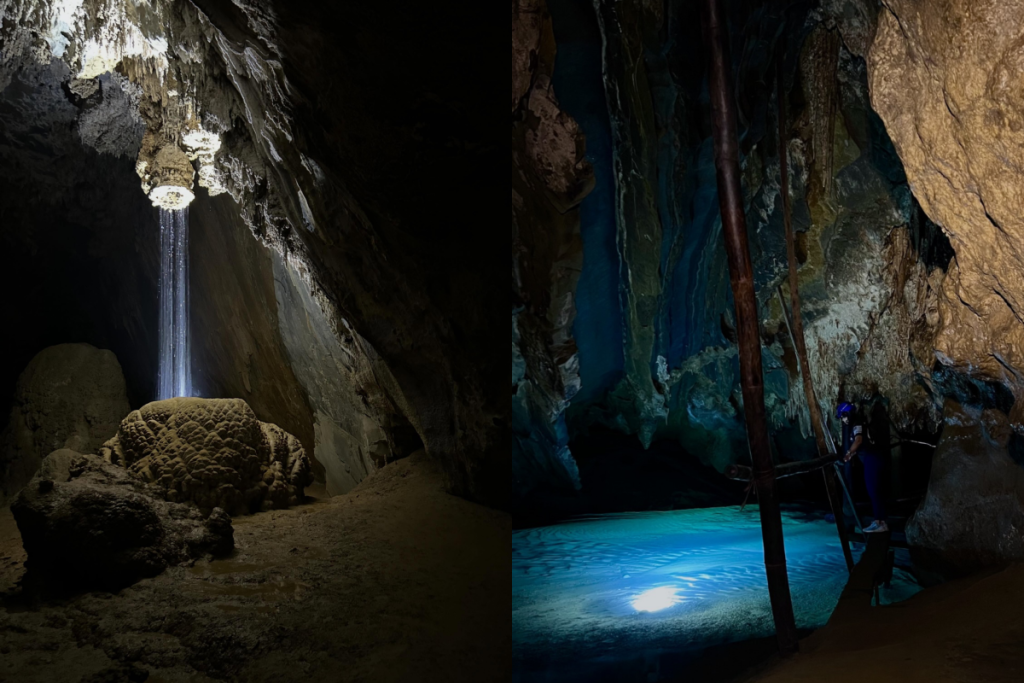
The Casa de Pedra Cave is the best-known attraction in the area of the same name, in Iporanga. In fact, the name refers to its monumental dimensions, which resemble a large house nestled in the mountain.
At 2,930 meters long and approximately 197.1 meters high, Casa de Pedra has the largest cave entrance in the world. In addition, the site housed the ruins of the old Santo Antônio gold mine, dating back to the 16th century.
For anyone planning to visit the site, it’s worth noting an important piece of information: the Protected Areas Guide states that entry into the cave has been prohibited for safety reasons since 2003, following an accident that claimed the lives of a guide and a tourist.
Created in 1958, the Alto Ribeira State Tourist Park (PETAR) encompasses the Ribeira Valley in southern São Paulo state, between the municipalities of Iporanga and Apiaí.
Main centers of PETAR
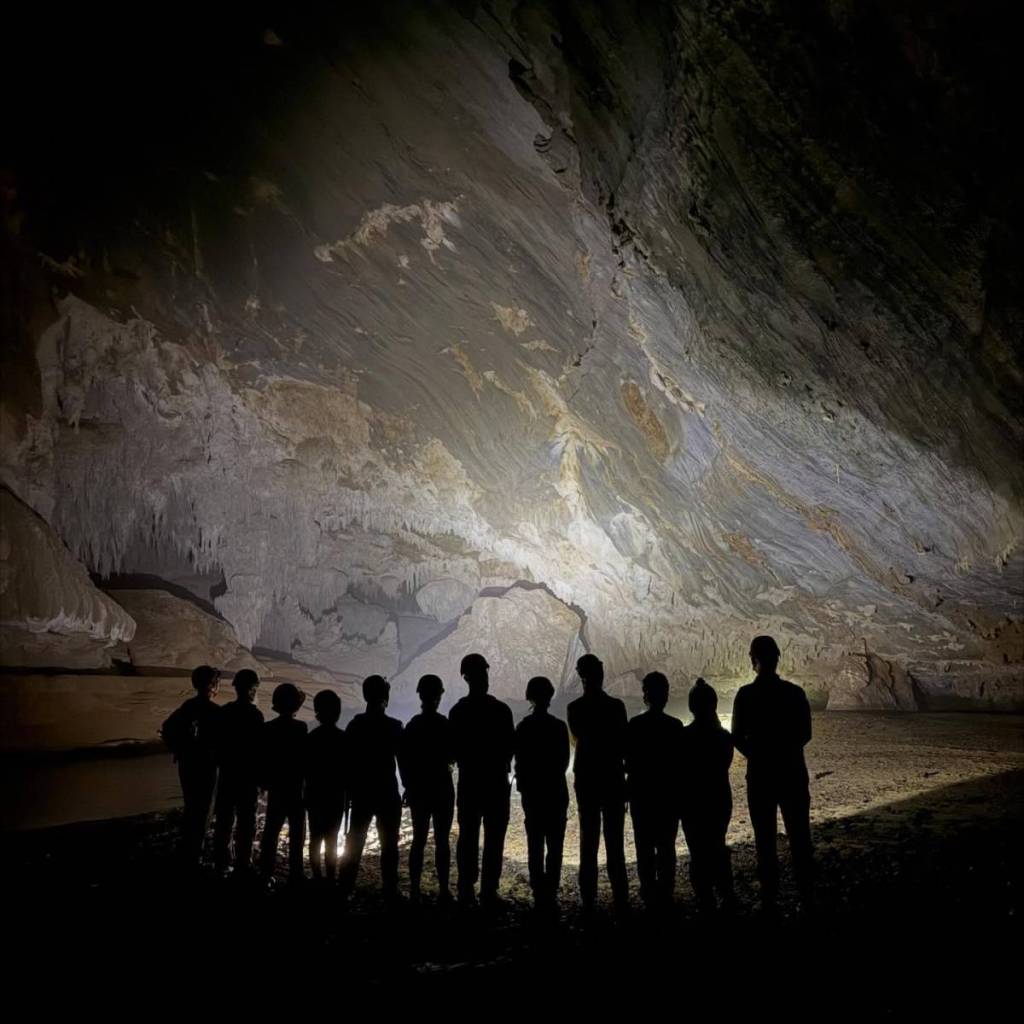
Overall, the main local attractions are caves, rivers, waterfalls, and trails set amid a preserved area of Atlantic Forest. Renowned for its ecotourism and nature trails, the park has four main areas:
- Santana: The most visited area of the park, which includes caves such as Santana, Morro Preto, Couto, Água Suja, and Cafezal, as well as trails and waterfalls in the Betari River region.
- Ouro Grosso: A tour focused on the Ouro Grosso and Alambari de Baixo caves, with access conditions and difficulty level determined by guides.
- Caboclos: Offers hikes and cave tours in the region, with a special focus on Temimina. Access and transportation require advance planning.
- Casa de Pedra: Hike through the Atlantic Forest to the view of the monumental portico, including a visit inside the off-limits cave.
