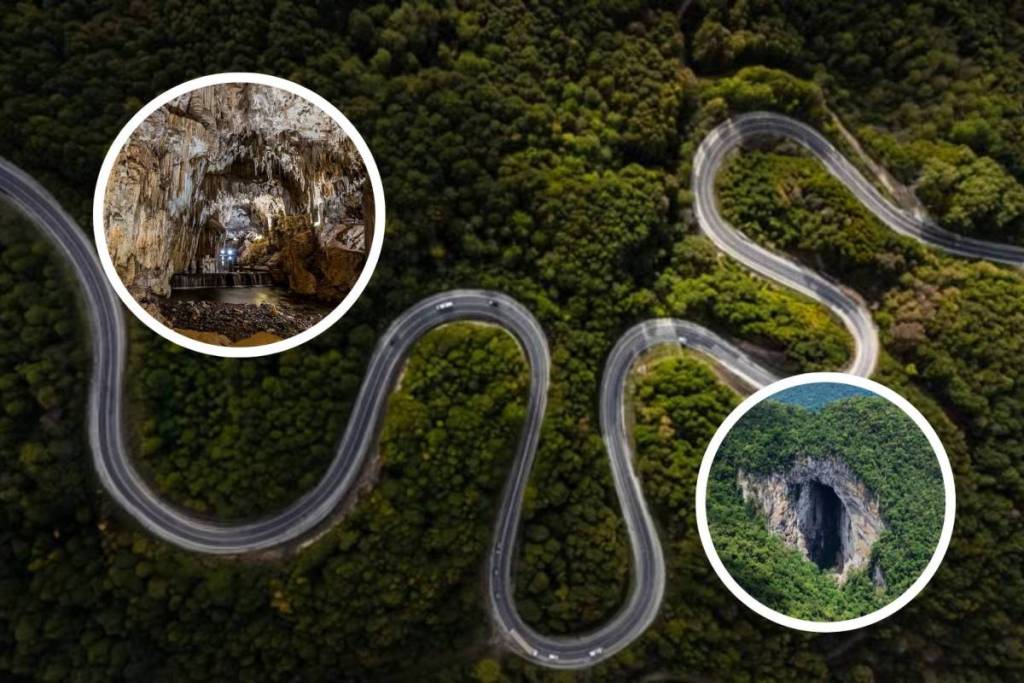

Did you know that São Paulo and Curitiba share one of Brazil’s most impressive mountain ranges? The Rota do Rastro da Serpente has more than 1,200 curves and is an icon of Brazilian motorcycle tourism!
The name “Rastro da Serpente” is a nickname given by Edgar Treis Azevedo, the executive at Harley-Davidson Brazil. After experiencing the route’s curves, he said he felt “like a snake slithering.”
The route is simply the junction of highways SP-250 and BR-476 ( on the Paraná side), which connect São Paulo to Paraná. The entire route spans 263 kilometers.
On the São Paulo side, the route passes through the municipalities of Capão Bonito, Guapiara, Apiaí, and Ribeira, in the region between the Southwest of São Paulo and the Ribeira Valley.
Adventure on Two Wheels: Motorcycle Tourism on the Rastro da Serpente Route
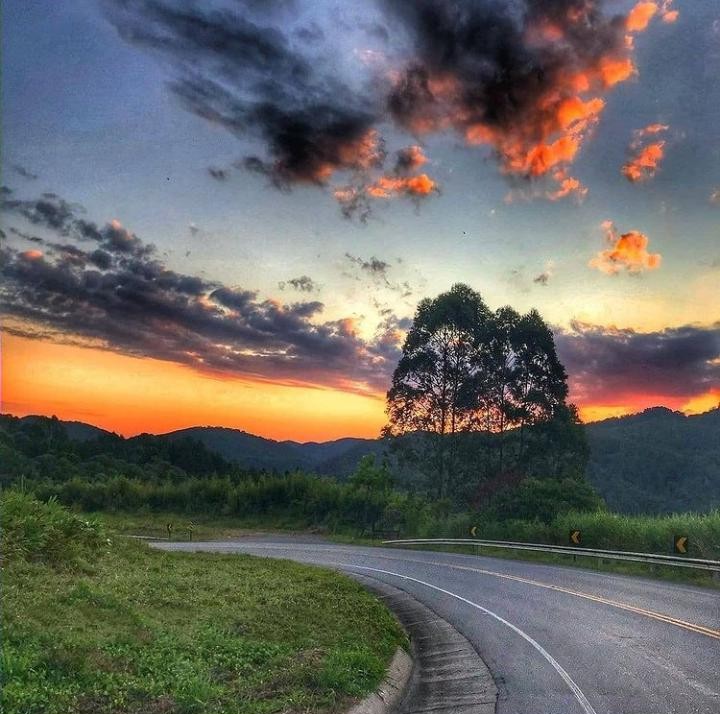
The winding road is practically a must for motorcyclists who enjoy hitting the open road and riding through the area’s wide variety of sharp curves. In addition, they get to enjoy scenery that only the preservedAtlantic Forest can offer.
In fact, for those who enjoy an extra level of challenge, the route also features frequent fog caused by the humidity of the dense vegetation that lines it.
Ranked among the “Top 5 Best Destinations for Motorcyclists, ” the Rota do Rastro da Serpente attracts the attention of motorcycle club enthusiasts. This is especially true in Apiaí, home to the main stop and meeting point.
Attractions beyond the paved route
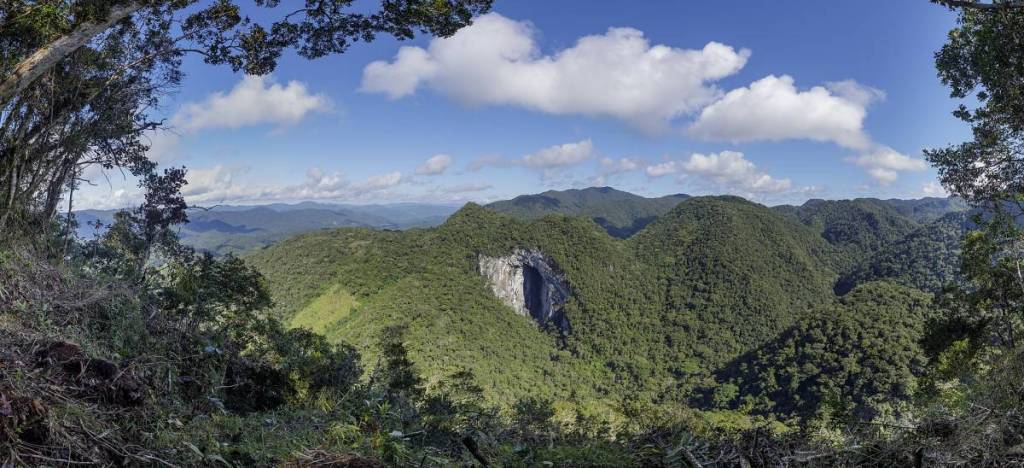
The SP-250 isn’t just a winding road. It also serves as an ecological corridor leading to breathtaking scenery in one of the best-preserved areas of the Atlantic Forest in Brazil.
Neighboring Apiaí, the city of Iporanga is home to PETAR (Alto Ribeira State Tourist Park). It’s one of the oldest parks in São Paulo and well worth a visit!
The park is home to more than 300 cataloged caves in São Paulo, as well as hiking trails, traditional and quilombola communities, and a wide variety of waterfalls. Therefore, its recognition by UNESCO as a Biosphere Reserve and a Natural World Heritage Site is no coincidence.
Among the most popular caves is Casa de Pedra, recognized by the Guinness Book of World Records as the world’s largest cave entrance, standing approximately 215 meters high.
For those who enjoy more classic itineraries, the Santana Cave and the Morro Preto Cave in PETAR SP are perfect. Both feature large galleries, as well as chambers filled with speleothems and underground rivers.
The Viewpoints Along the SP Scenic Route

The São Paulo Department of Tourism has developed projects for lookout points and rest stops along São Paulo’s highways, including the SP-250. In addition to the lookout structures, the initiative calls for the construction of rest areas and parking lots for tourists.
Overall, the goal is also to create a safe place for enjoying the scenery and nature. However, the project is currently still in the implementation phase and seeking funding.