
After years without a permanent home, the Museu da Casa Brasileira (MCB) is finally opening its doors at the historic Olivo Gomes Residence in São José dos Campos. The inauguration marks a new chapter for the institution, which is dedicated to preserving design and ways of living in Brazil, now housed in a landmark of São Paulo’s modernist architecture.
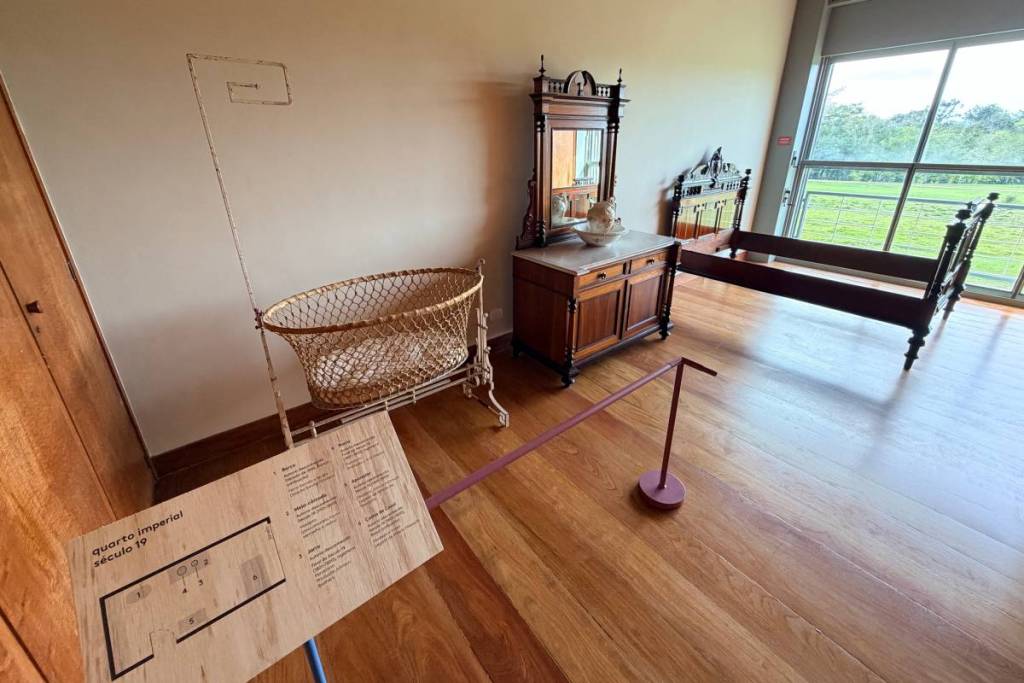
The opening features the exhibition “Beneath the House, Other Houses.” Through household objects from different eras and peoples, the collection demonstrates how the Brazilian home is the result of many histories, cultures, and ways of life.
A museum in dialogue with the city
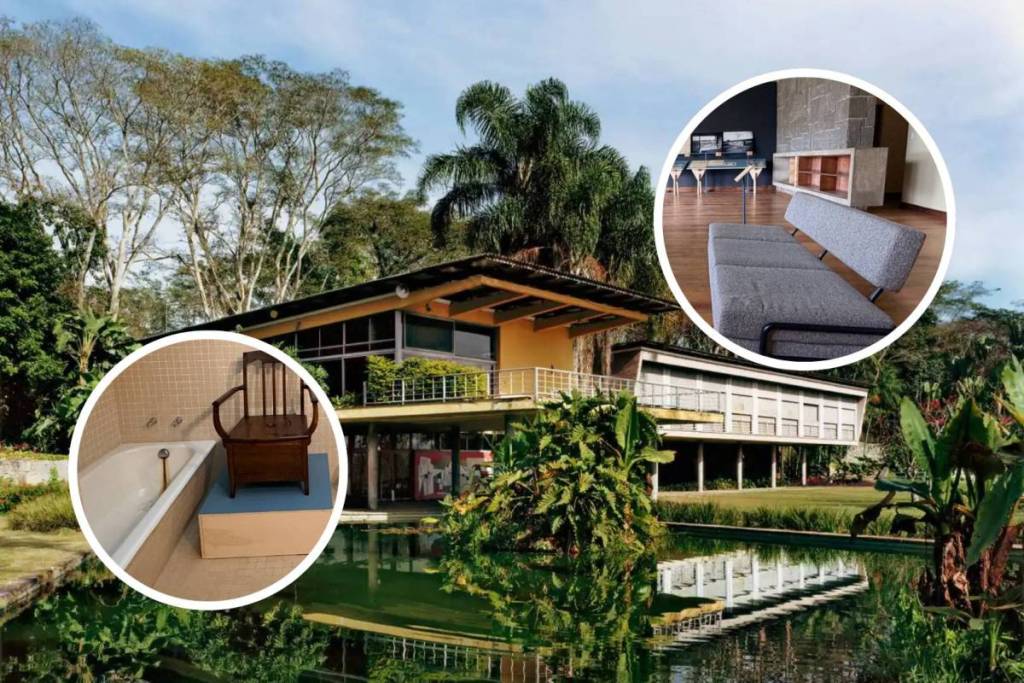
The arrival of the Museu da Casa Brasileira in São José dos Campos brings together two of the state’s cultural treasures. On one hand, the MCB’s collection, with nearly a thousand pieces dating from the 17th to the 21st century. On the other, the Olivo Gomes Residence, designed by Rino Levi in the 1950s for industrialist Olivo Gomes, founder of Tecelagem Parahyba.
The building is located in Parque da Cidade, a preservation area spanning over 960,000 square meters that once belonged to the old textile farm. In addition to being home to one of the largest trees in the state of São Paulo, the park is also renowned for its impressive landscaping by Roberto Burle Marx.
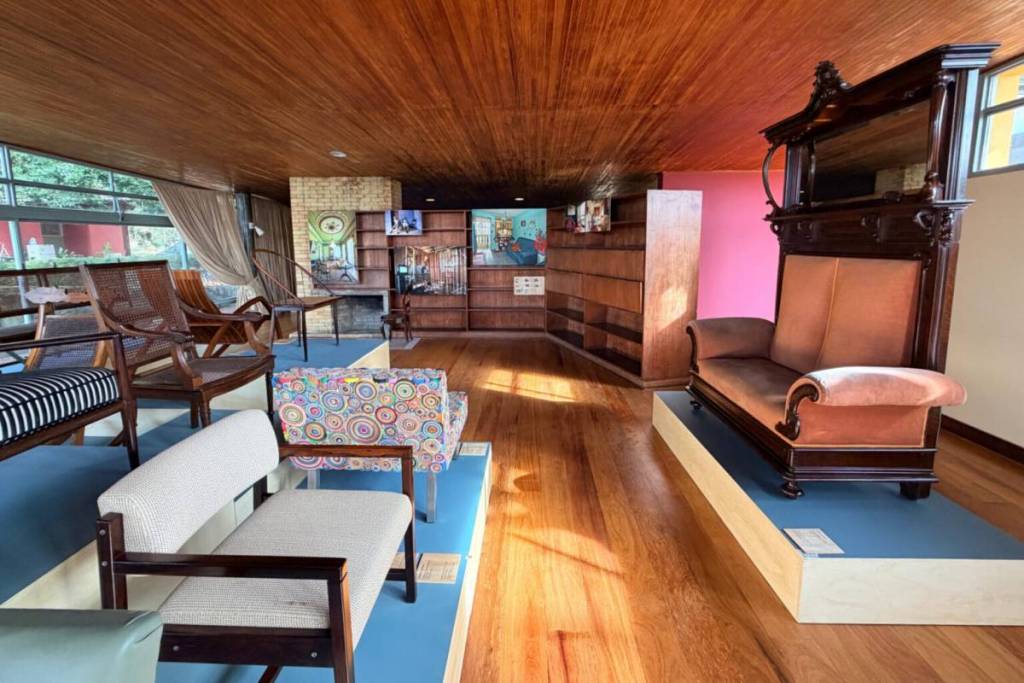
Museu da Casa Brasileira: Explore the opening exhibition
“Under the House, Other Houses” brings together items from indigenous peoples, colonial and imperial objects, modern and contemporary furniture, as well as photographic records from different regions of Brazil. The goal is to show that there is no single “Brazilian home,” but rather distinct ways of living.
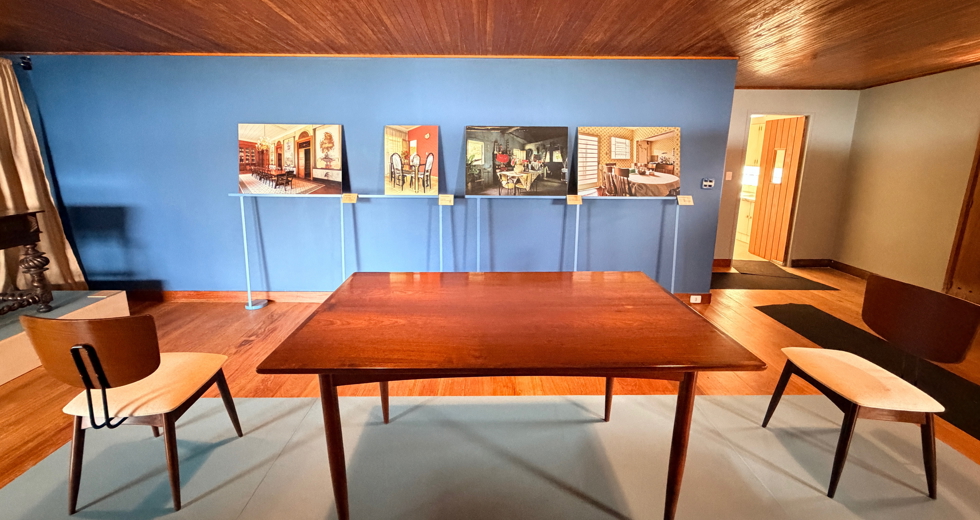
The exhibition features sections such as “Various Ways of Sitting, ” which showcases sofas, mats, benches, and chairs, and “An Approach to the Place, ” which explores the history of the house and the former weaving mill. Another highlight is the return of the Olivo sofa, designed by Rino Levi specifically for the house’s living room.
The Olivo Gomes Residence underwent a major renovation to house the MCB. The renovations included the restoration of windows and wooden floors, preserving the building’s original features. That’s why visiting it now means immersing yourself in the history of Brazilian architecture and design in a place that is, in and of itself, an example of that very narrative!