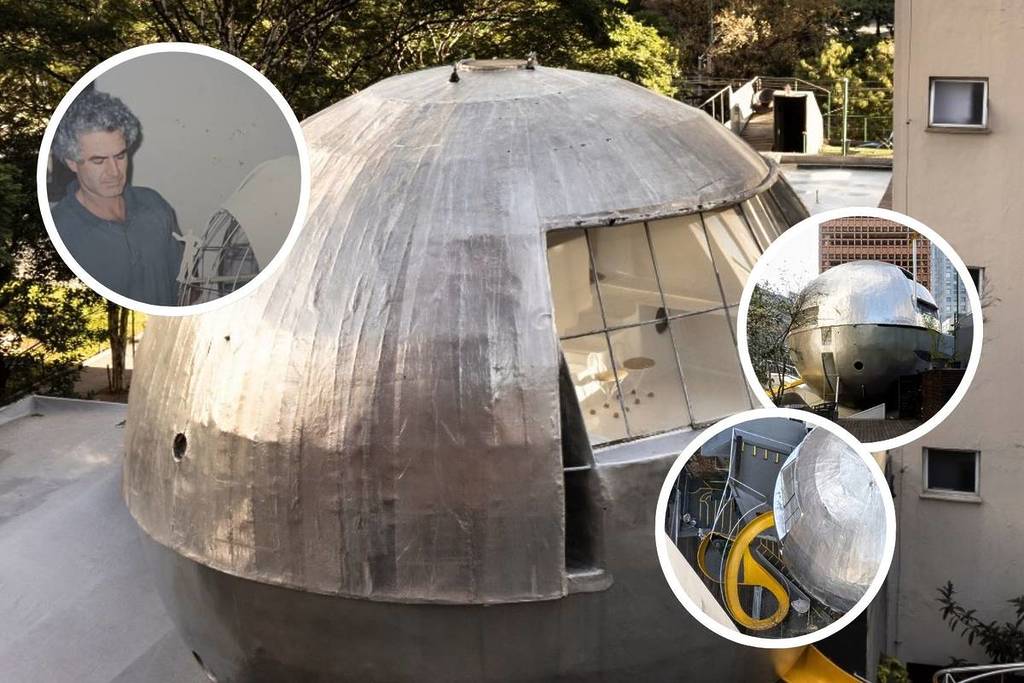

It has always been there, among mirrored buildings and corporate offices, looking like a spaceship landed in the heart of Faria Lima. Photographed from a distance, discussed among architects and curious onlookers, but almost never accessible, Casa Bola finally ceases to be just a landscape and becomes an experience.
After passing through the headquarters of the Fondation Le Corbusier in Paris, the Aberto platform returns to São Paulo for its 5th edition, officially occupying the residence. Between March 8 and May 31, the public will be able to walk through its internal curves for the first time in decades.
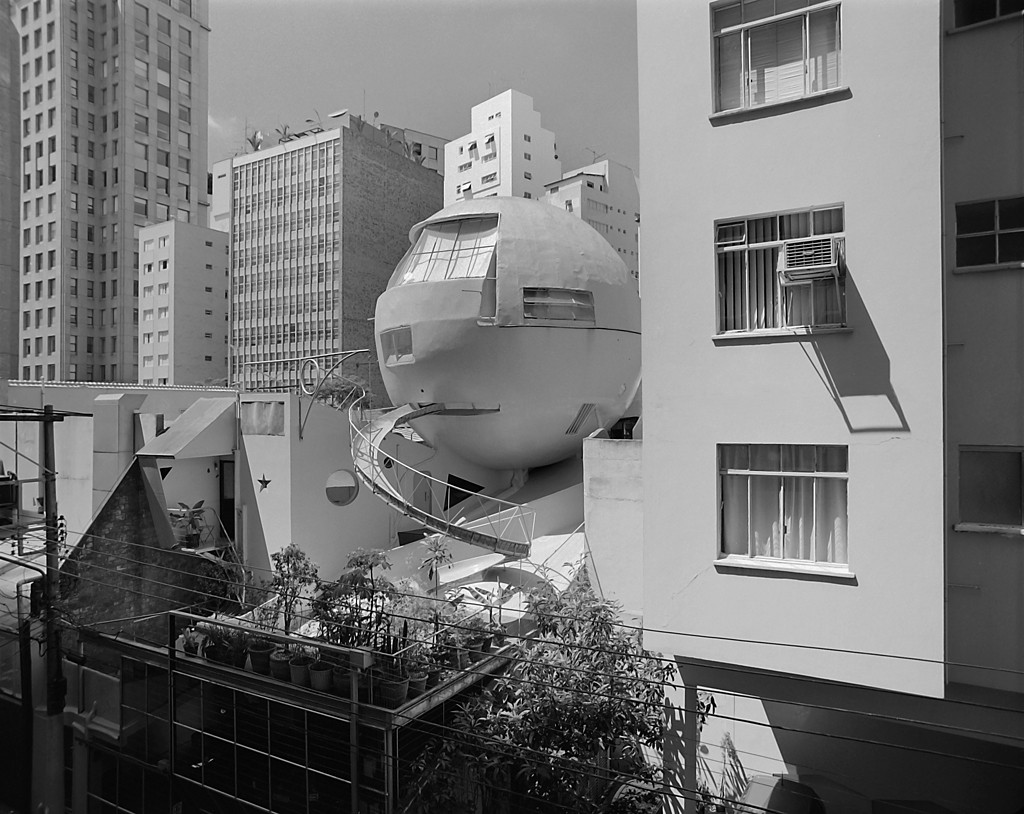
Casa Bola on Faria Lima: when architectural utopia becomes an immersive experience
Designed by architect Eduardo Longo, Casa Bola is a built manifesto. The residence has always stood out as an organic oasis amid the corporate rigidity of Avenida Brigadeiro Faria Lima. After all, its spherical structure and internal modules break with the traditional logic of straight walls.
Entering Casa Bola is not just visiting an exhibition: it is experiencing a proposal for fluid living. This was Longo’s proposal, where environments connect without hierarchy and architecture challenges the conventional concept of housing. It is Brazilian modernism in its boldest form.
The occupation is part of the Aberto platform, conceived by Filipe Assis, which transforms modernist residences into spaces for dialogue between art, design, and contemporary architecture. The exhibition returns to its birthplace in São Paulo, expanding its proposal: in addition to Casa Bola, urban interventions are also spread throughout Faria Lima.
In this edition, works and design objects converse directly with Longo’s experimental geometry. In this way, they create an encounter between the European legacy of modernism and the Brazilian inventiveness of the 1970s.
Why this opening is historic for São Paulo
In a city marked by rigid verticalization and repetitive glass facades, walking through the interior of Casa Bola represents the breaking of a symbolic barrier. After all, for decades, the property was more myth than visitable space.
Now, the opportunity to walk through its circular rooms and understand its spatial logic places the public inside one of the most unique projects in Brazilian architecture.
Therefore, more than an exhibition, it is about access to an icon that has always been in sight, but almost never within reach.