
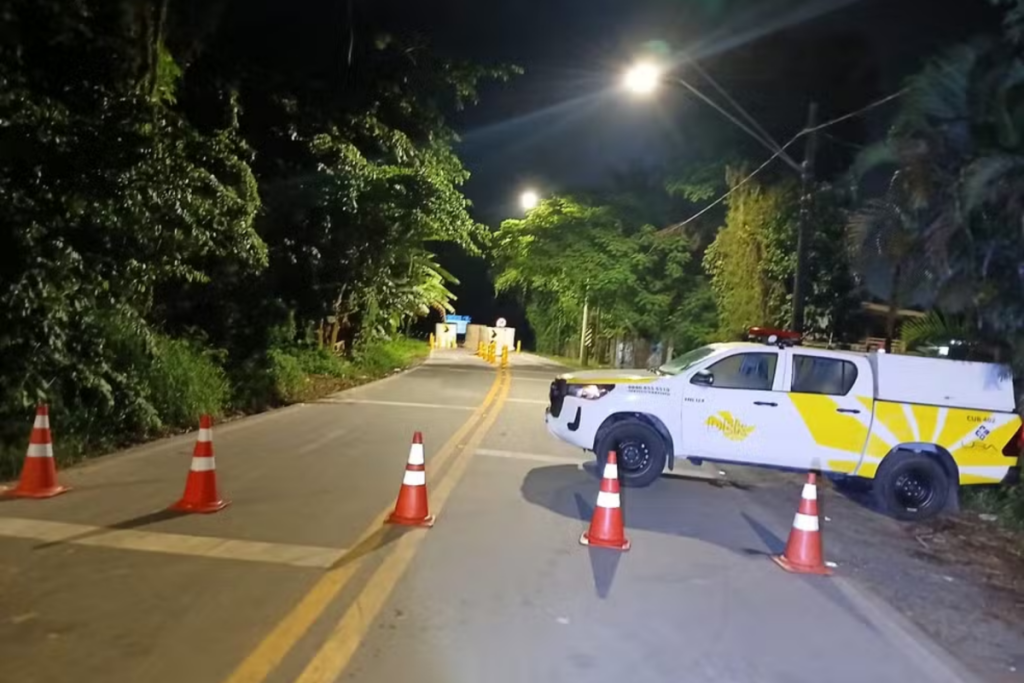

Closed since 2025, the crossing that connected Santos to Cubatão in the Baixada Santista region is now completely closed to vehicles on the section of the Casqueiro River Bridge on the Caminho do Mar Highway (SP-148). This year, the Department of Highways filed a report regarding the risk of the structure collapsing.
The Casqueiro Bridge, named after the river it crosses, is located at km 59 of the Caminho do Mar Highway, also known as the Estrada Velha de Santos —a historic and tourist destination between the Planalto Paulista and the Baixada Santista.
The highway is home to Caminhos do Mar Park, which features trails through sections of Atlantic Forest and overlooks. In addition, the region has eight historic monuments linked to Dom Pedro I and Brazil’s independence.
The Problems with the Casqueiro River Bridge
During an underwater inspection, the Department of Highways determined that the bridge’s foundation had shifted. This finding raised concerns about the structure’s stability.
However, the suspension of traffic through the closure was a preventive measure, intended to prevent vehicles from using the compromised structure.
Since September 2025, the bridge’s instability has affected Vila dos Pescadores and Vila Pelicas in Cubatão, as well as Jardim Piratininga in Santos. According to local merchants, the bridge is essential for travel to Santos and for supplying their businesses.
In fact, the rerouting of truck and heavy vehicle traffic has caused disruptions in the Jardim Piratininga and Vila dos Pescadores neighborhoods, as it has damaged the pavement and utility lines.
Repairs and Reopening Forecast
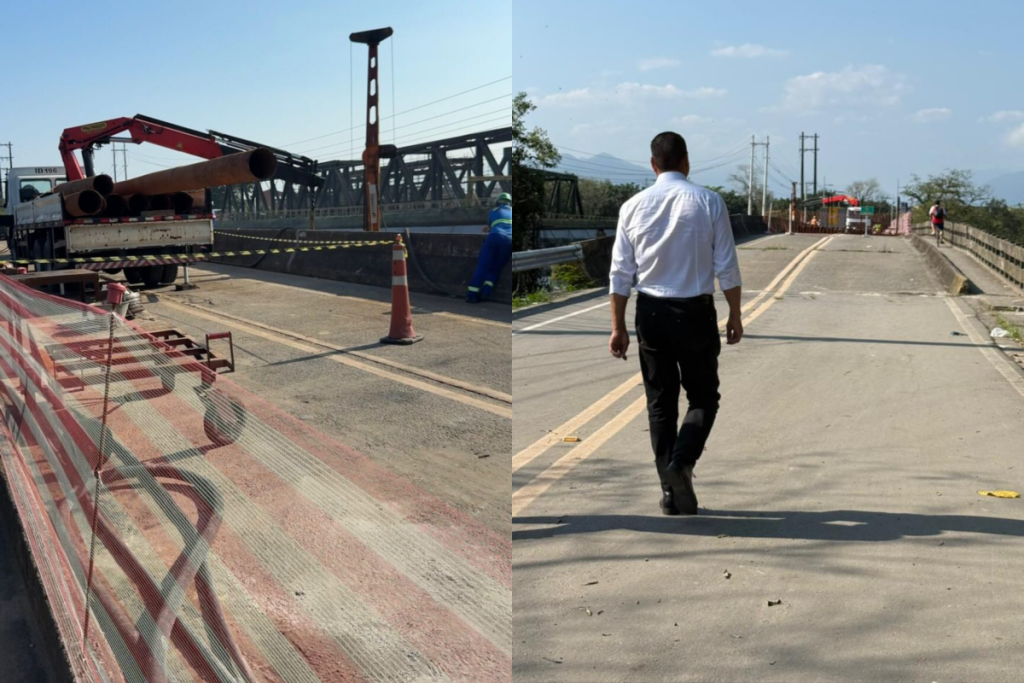
Currently, there is a two-phase restoration plan with distinct objectives:
Emergency phase: The goal is to reinforce the bridge’s compromised supports in order to stabilize the structure. In July, when work began, this phase was expected to be completed by the end of November of this year.
Once completed, the bridge will undergo testing to assess whether light vehicle traffic can resume.
Complete restoration: In this second and final phase, the project will be more extensive. In September, the deadline for completion was set at up to 20 months after the end of the first phase, with completion projected for 2028.
The plan also mentions studies on accessibility and safety for pedestrians, as well as evaluating the possibility of building a bike path at the site.
