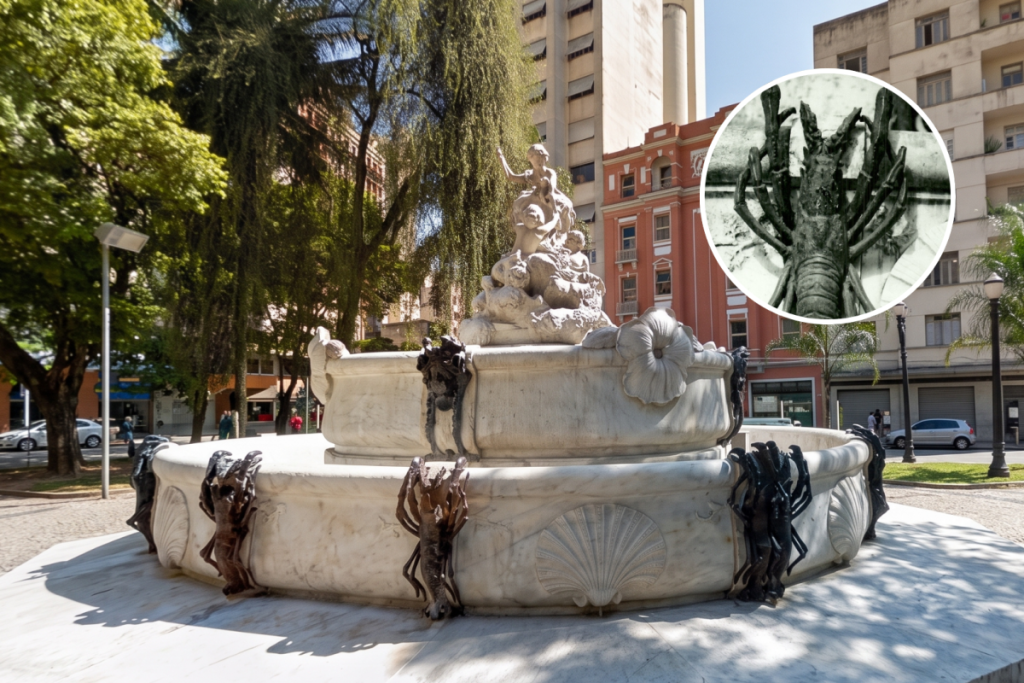

The Monumental Fountain— better known as the Lobster Fountain —is one of many forgotten monuments in downtown São Paulo. Inaugurated in 1927 at Praça Júlio Mesquita, this marble and bronze work carries a history that spans the presence of women in the arts, urban transformation, and even music.
Designed by Nicolina Vaz de Assis Pinto do Couto, the Fonte das Lagostas was the first public artwork in São Paulo created by a woman. At a time when sculpture was a predominantly male art form, the artist created a large monument in one of the city’s most important areas.

Discover Nicolina Vaz’s pioneering work
The history of the Monumental Fountain begins in 1913, when São Paulo was undergoing renovations to modernize and beautify its streets. City Hall commissioned Nicolina Vaz to create a large fountain that was initially intended for Praça da Sé, in front of the Cathedral. The inauguration, however, did not take place until 1927 at a new location: Praça Vitória, which would later be renamed Praça Júlio Mesquita.
The fountain has a maritime theme, featuring a fisherman surrounded by mermaids, flowers, shells, and gargoyles. The most striking element, however, are the lobsters that adorn the sides of the monument. They were so popular that they gave rise to the nickname “Fonte das Lagostas,” by which the work is known to most residents of São Paulo.
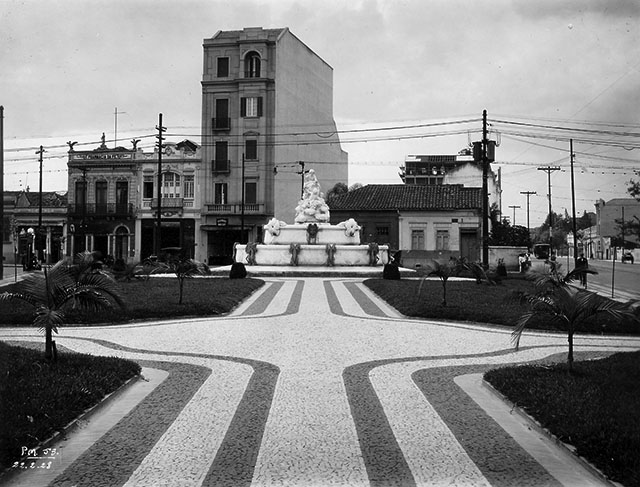
What is the state of the “Fonte das Lagostas” today?
As the downtown area began to deteriorate in the 1960s, the Monumental Fountain became a target of vandalism and fell into disrepair. Not even the bronze lobsters, which gave the fountain its name, were spared: there were so many thefts that City Hall removed the original pieces and replaced them with resin replicas.
In 1979, an act of vandalism caused such a stir that it even inspired a song:“Roubaram a Lagosta”(They Stolethe Lobster), by Adoniran Barbosa and Tasso Bangel. In the song, the artists use the disappearance of the sculpture to criticize the neglect of São Paulo’s monuments, which to this day suffer from abandonment by public authorities and part of the population.