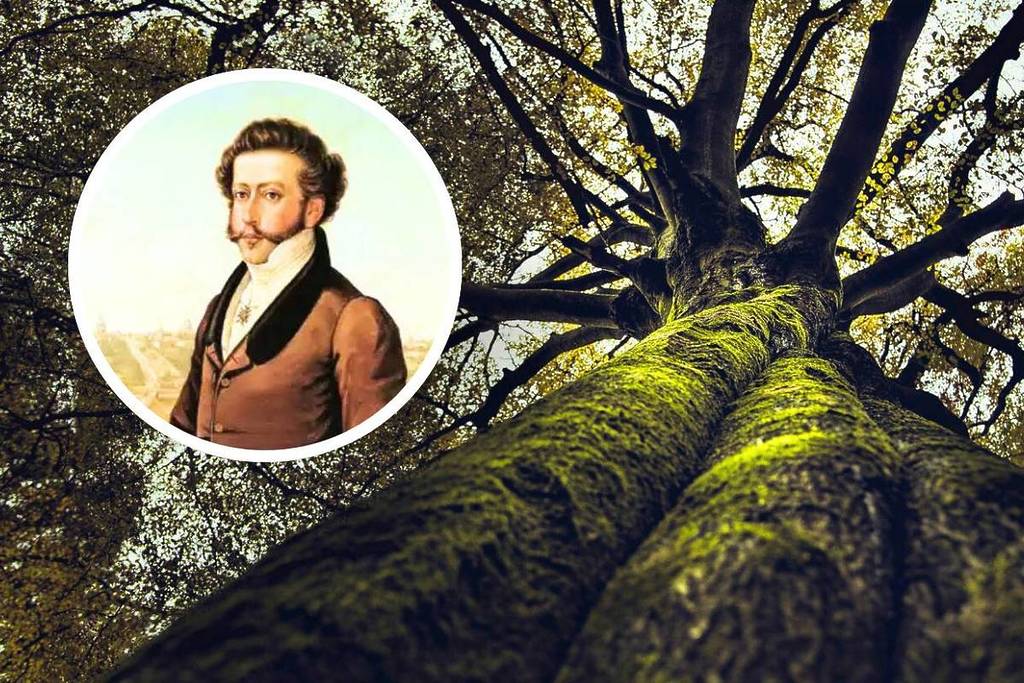
Despite its reputation as the “Stone Jungle”, São Paulo is home to many natural treasures. One example is the Figueira das Lágrimas, which surprises both with its imposing size and longevity. Over 200 years old, it is considered to be the oldest tree in São Paulo and has witnessed important historical events in the city
The Figueira das Lágrimas remained forgotten for a long time in the midst of urban sprawl, almost felled and abandoned. Even so, it continues to stand firm as an attraction in Sacomã, in the South Zone, and is a living landmark in the history of São Paulo.

The oldest tree in São Paulo may have been Dom Pedro I’s resting place
The history of the Figueira das Lágrimas begins between the 18th and 19th centuries, when it began to grow in an area that, at the time, was used by travelers and drovers. Although it is not possible to determine its exact age, experts claim that it is 240 years old, making it the oldest living thing in the capital.
Its trunk shows the scars of decades on Estrada das Lágrimas, 515, in Sacomã. But some of its most impressive memories have left no physical marks – such as the passage of Dom Pedro I through the area.
Historical maps confirm that the prince regent passed by the fig tree on his way to Ipiranga, before proclaiming Brazil’s independence. Some even say that the future emperor stopped to rest in its shade.

Despite its historical and environmental importance, for decades the Figueira das Lágrimas suffered from neglect. In 1909, for example, urban planners cut off its largest branches, mutilating the tree to such an extent that it almost succumbed. After popular pressure, however, the old fig tree received some attention from the government, which built a wall to protect it in 1920.
In 2019, however, the (almost) century-old wall was torn down by order of the City Hall, which wanted to build an open square there. Shortly afterwards, however, the risk of depredation led to another wall being erected in its place. Today, the fig tree survives with the help of Yara Rodrigues Caldas, who lives next door and has been taking care of the “old woman” voluntarily for 54 years.

Why is it called Figueira das Lágrimas?
Since the 19th century, the old fig tree has served as a place to say goodbye. People leaving São Paulo would gather under the tree to say goodbye to friends and family – moments often marked by tears.
At that time, for example, recent graduates from the Largo São Francisco Law School had a tradition of gathering in its shade before returning to their hometowns. With the start of the Paraguayan War in 1864, the tree also became the place where families said goodbye to their sons who were going to serve in the Brazilian army.
So many touching encounters have earned the oldest tree in São Paulo the nickname Figueira das Lágrimas. Although few know its history today, the name eternalizes it as a space full of memories, farewells and reunions, marking the affective memory of the city of São Paulo.