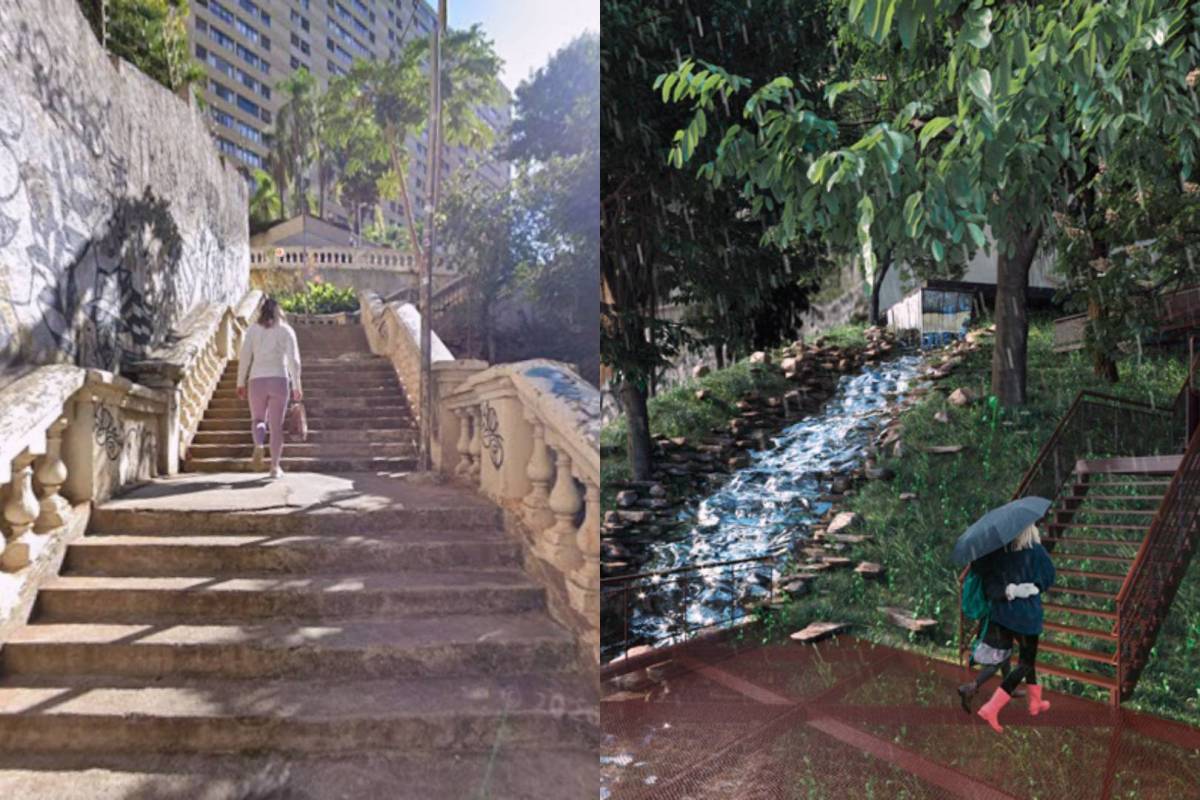

Beneath the asphalt of Rua Augusta, in downtown São Paulo, there is a buried stream that almost no one knows about: an ancient and picturesque waterfall hidden by concrete. The history of the so-called Avanhandava Waterfall is intertwined with that of so many other rivers in São Paulo, which continue to flow hidden beneath our feet.
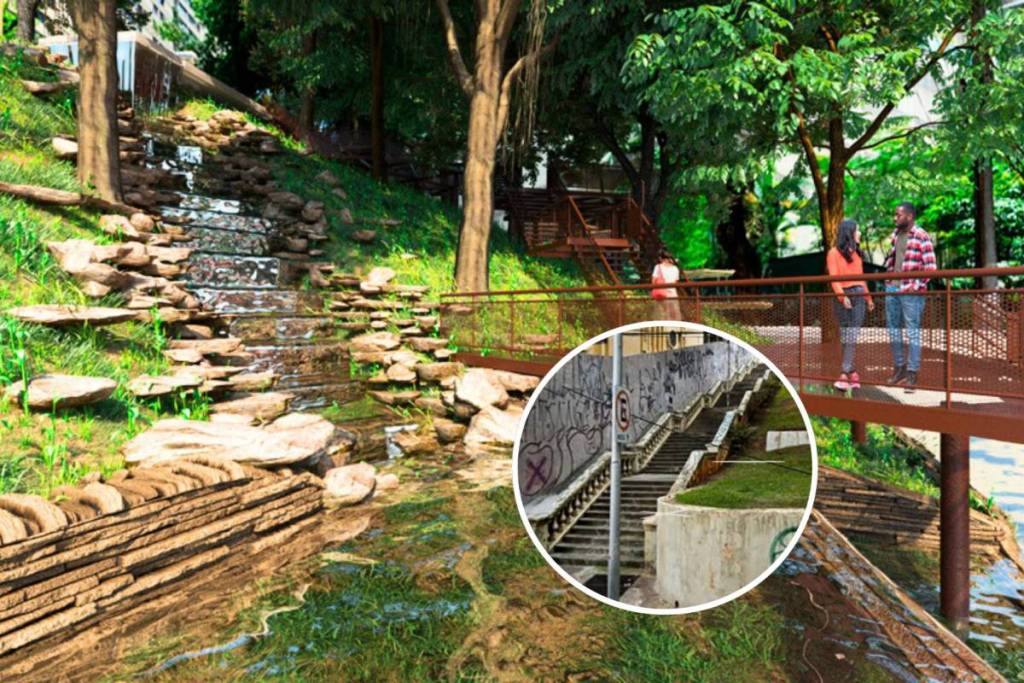
After years of being forgotten, the waterfall is reappearing in the public’s imagination through a project that aims to bring this water back to the surface. In partnership with Guajava Landscape Architecture and Urbanism, the Rios e Ruas Institute is one of the organizations fighting for the “revival” of the Augusta Stream, transforming it into an urbanwaterfall in the heart of São Paulo.
Augusta Stream: Invisible Waters Beneath the City
Anyone passing through the intersection of Paulista Avenue and Augusta Street would never imagine that there is a hidden spring there. The stream follows practically the entire length of the street that bears its name until it meets the Saracura Stream, near the 9 de Julho Viaduct.
Like so many rivers in São Paulo, the Augusta Stream was channeled and buried during the 20th century, making way for streets, avenues, and buildings. Even its natural rapids, located in the depression between what are now Frei Caneca and Avanhandava streets, ended up hidden in tunnels beneath the Frei Caneca Staircase.
Thus, the public ended up forgetting the Avanhandava Waterfall entirely. However, anyone passing by the steps with a keen ear can hear the water flowing underground24 hours a day, 7 days a week, showing that nature persists even in the depths of São Paulo.
Project Proposes to Reopen the Avanhandava Waterfall
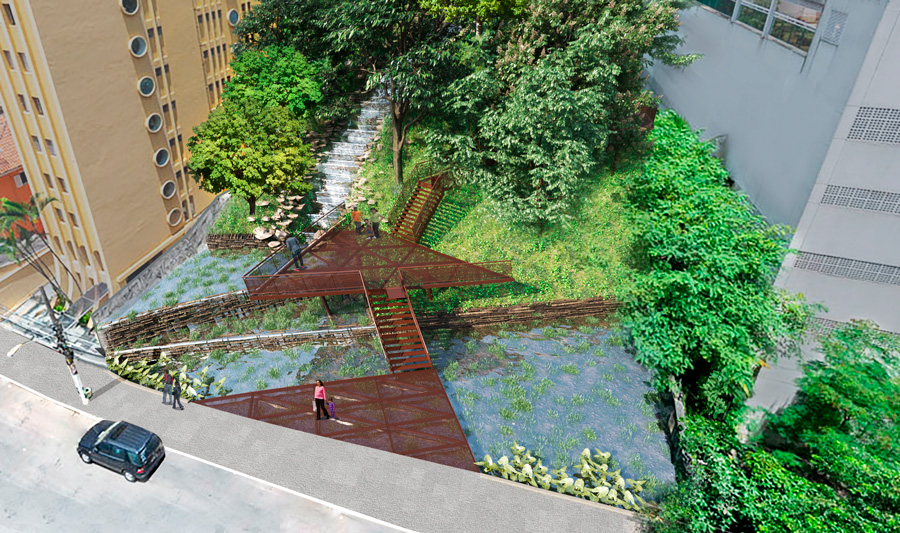
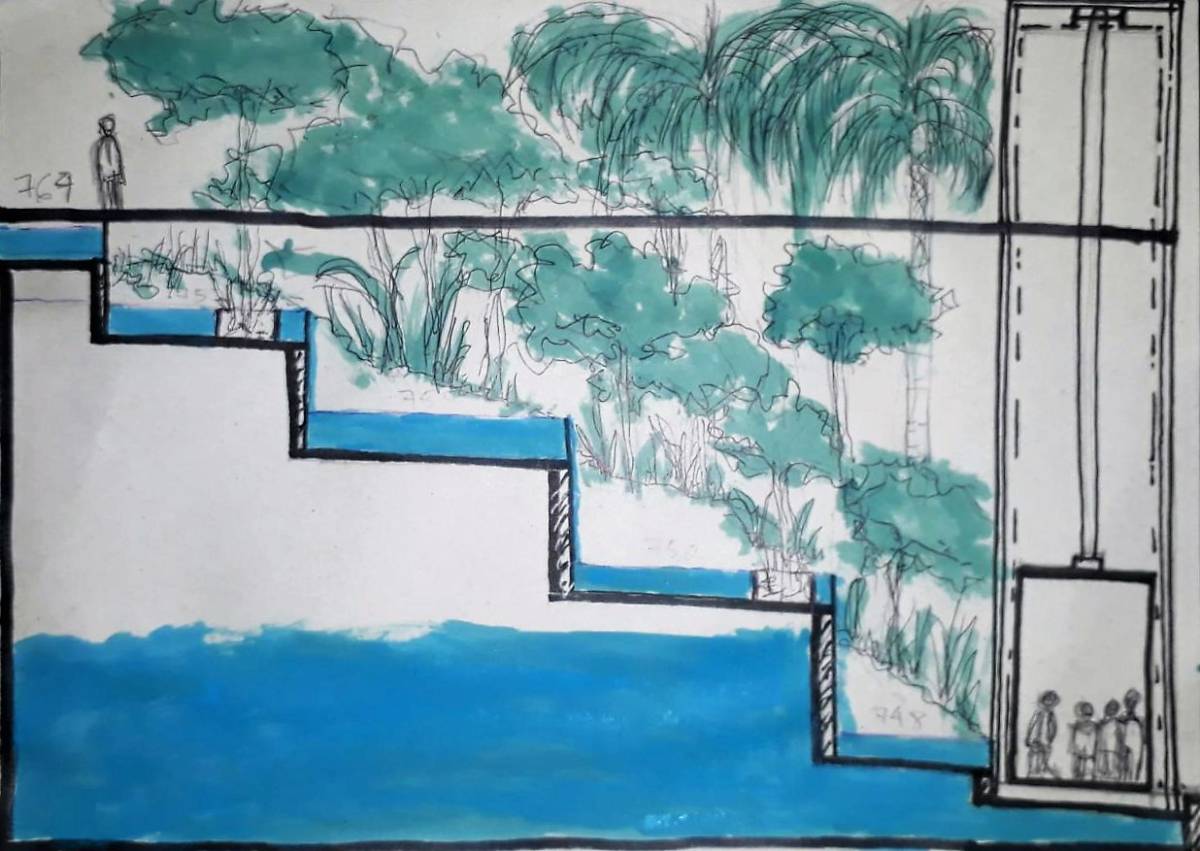
In 2021, Guajava Landscape Architecture and Urbanism presented a project to reopen a section of the stream in downtown São Paulo, bringing it to the surface as a natural rapids among the buildings.
The proposal calls for intervening in a 1,650-square-meter area in the Anhangabaú basin, , creating an oasis of nature right in the heart of the Augusta neighborhood. Currently, the firm and the Rios e Ruas Institute are working together to secure approval and funding to turn this idea into reality.
Although an intervention like this poses an engineering challenge, it offers an opportunity to rethink the city’s relationship with water. Furthermore , it can help mitigate flooding and minimize heat islands —proving that the revitalization of rivers benefits not only the environment but also the quality of life for all citizens of São Paulo.