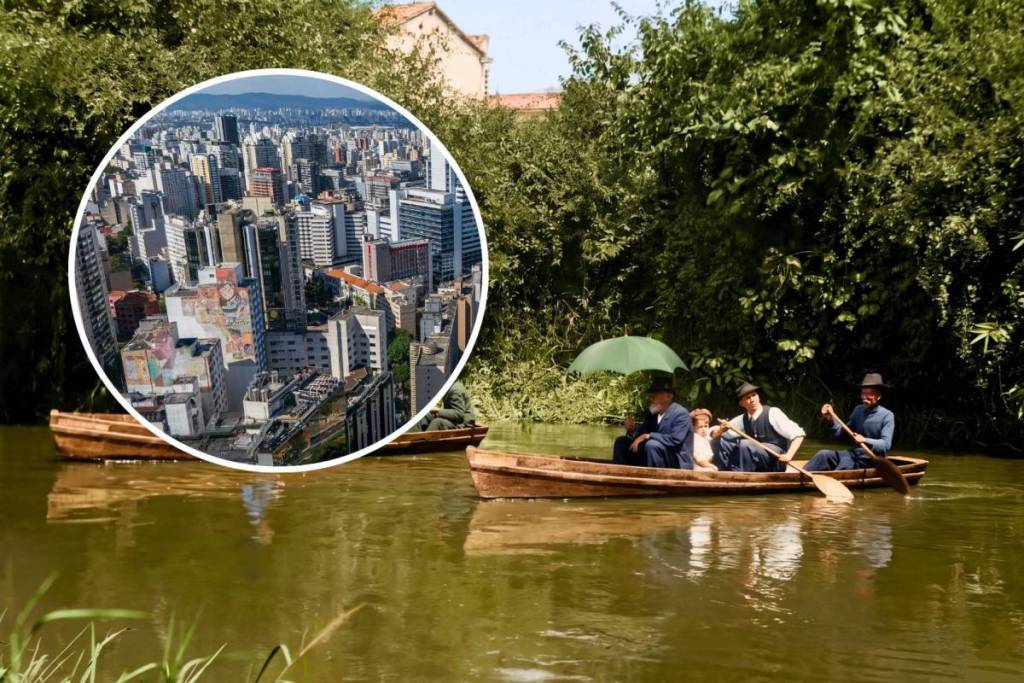

Beneath the asphalt where people battle daily traffic, hundreds of hidden rivers continue to flow underground in São Paulo. To reveal this invisible hydrography, initiatives such as the Rios e Ruas Institute organize educational tours that show where water still flows beneath the metropolis, connecting residents to the history of São Paulo’s rivers.
The practice of burying rivers gained momentum in the late 19th century, when the coffee elite began moving to the capital. The new urban planning viewed the rivers as obstacles to São Paulo’s progress, leading officials to channel them and bury them to make way for avenues.
The Hidden Course of the Saracura River
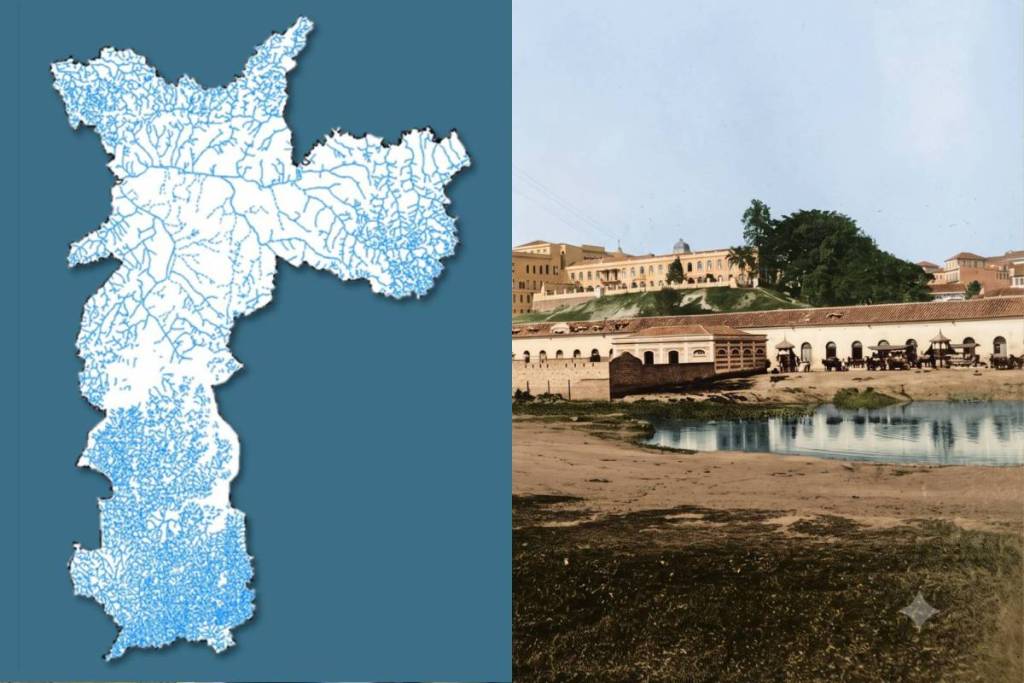
One of the most classic examples of these buried rivers in São Paulo is the Saracura River. It originates at the end of Paulista Avenue, flows down the slopes of Bixiga, and continues its course until it empties into the Anhangabaú Valley. Thousands of people pass through this area every day without realizing they are walking right above a living waterway.
The scale of this intervention in São Paulo’s geography is staggering. While some surveys record 300 rivers erased from the landscape, experts estimate that the number of buried streams and waterways exceeds 800.
Through urban and cultural walks, activists and researchers map these springs and channeled routes. This work of reidentifying them on the map revives the city’s memory and reveals the path of the waters that persist beneath the concrete jungle.
Culture and Memory of the Capital’s Waters
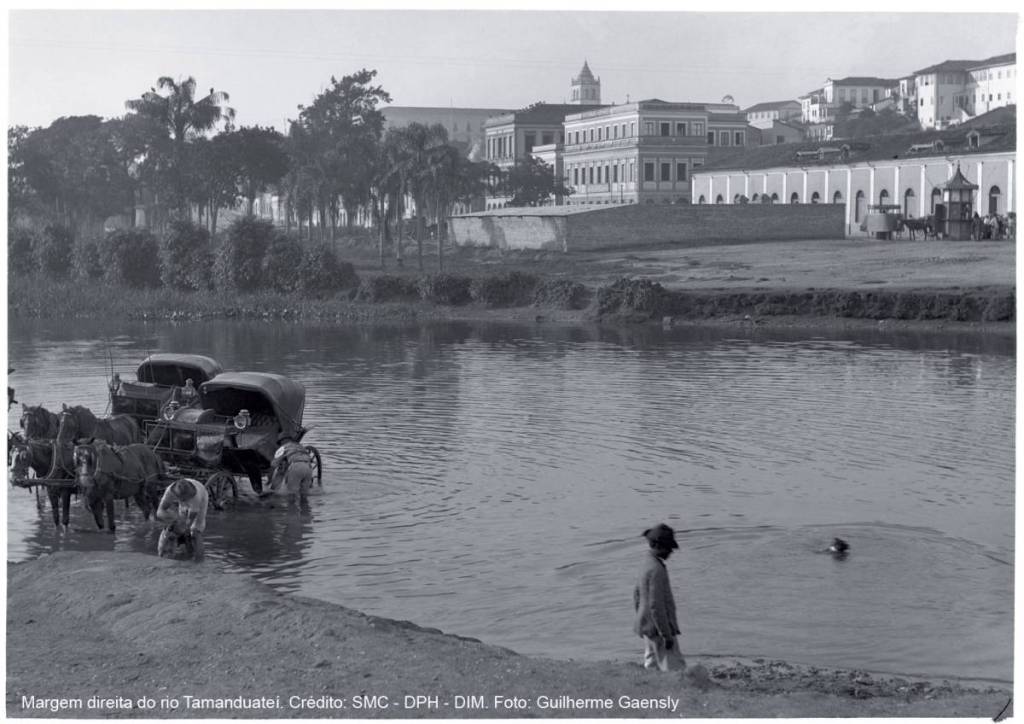
Rediscovering these buried waterways goes beyond geography: it is a cultural revival of São Paulo’s very identity. Neighborhoods such as Bixiga and Vale do Anhangabaú bear in their topography the marks of the rivers that have shaped the city’s growth over the centuries.
Today, walking through São Paulo with a keen eye allows you to see the city from a new perspective. That is why the Rios e Ruas Institute invites the public to discover the springs that persist beneath sidewalks and major avenues.
Preserving the memory of these watersheds strengthens the debate about the future of urban planning and sustainability in the capital. By bringing water back into the daily lives of São Paulo’s residents, the population gains new ways to engage with urban space and appreciate their city’s natural heritage.
Editor’s note: Article written in collaboration with Pryscila Carmo, video producer at São Paulo Secreto.