
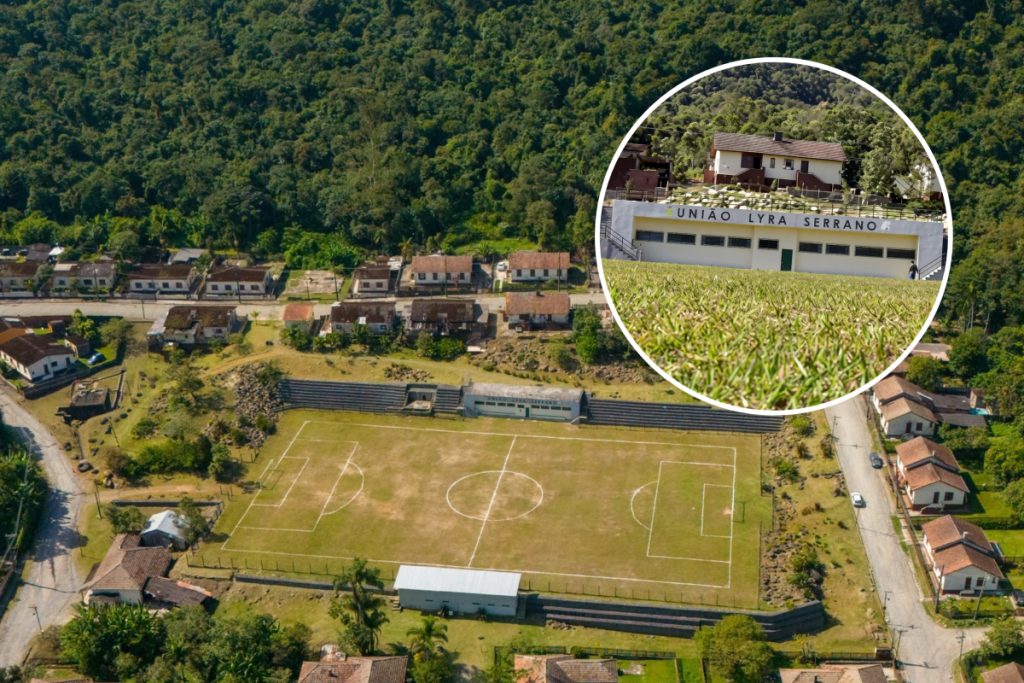

Did you know that São Paulo is home to Brazil’s first soccer field? The charming and historic village of Paranapiacaba reveals this secret dating back to 1894—a pioneer in the country with official dimensions. Decades later, the site still serves the same purpose, associated with the Serrano Athletic Club, currently known as Clube União Lyra Serrano.
The need to create a soccer field arose to provide recreation and social interaction for the British engineers and laborers who came to Brazil to build the railroad. The sport was part of the English way of life; in the midst of the Serra do Mar mountain range, they sought moments of social interaction during their breaks from work.
Another aspect that followed the European model was the village itself. Initially called Vila de Alto da Serra, the village of Paranapiacaba was planned by the São Paulo Railway (SPR) according to the model of an English village to house the workers during construction.
Charles Miller and his connection to the field
Considered one of the pioneers of soccer in Brazil, Charles Miller—also known as the “father of Brazilian soccer”—was born in Brás in 1874 and learned to play soccer when he visited England to study.
One of the employees of the São Paulo Railway (SPR), Miller, and his colleagues rolled up their sleeves and built the necessary infrastructure, with men leveling the ground and organizing recreational games.
Upon returning from England in 1894, Charles Miller brought essential equipment: balls, cleats, and an item that was unprecedented at the time—the sport’s official rulebook. It’s no wonder that history has enshrined him as the great popularizer of soccer in the country.
Chronicles from that era and accounts from railroad workers show that the matches were initially recreational, played among the employees themselves as a weekend social gathering. Even so, the games strictly followed the standards of British clubs.
The story behind the Serrano Athletic Club
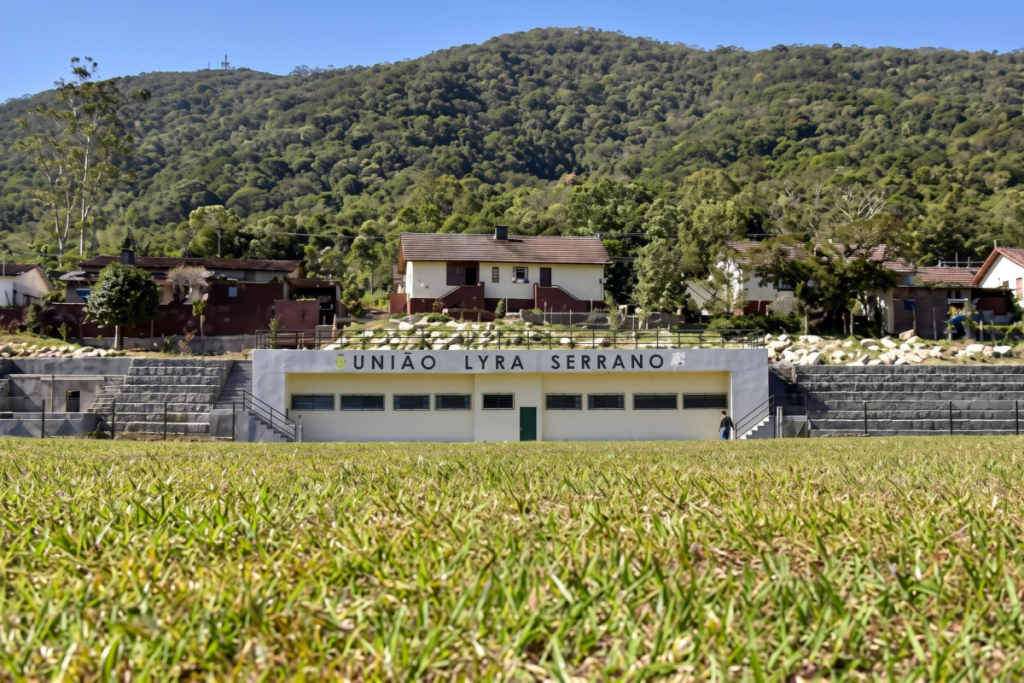
Founded on December 3, 1903—years after the field opened—the Serrano Athletic Club brought together the British railroad workers of the SPR. The team began by playing friendly matches and games against clubs from outside the region.
In fact, the team gained state-wide notoriety by facing powerhouses such as Corinthians and Santos. One of the most memorable matches on the Paranapiacaba field took place in July 1925, when the local team defeated Corinthians 2–1.
In 1926, Serrano merged with the Sociedade Recreativa Lyra da Serra, adopting the name by which it is known today: União Lyra-Serrano (ULS).
Brazil’s first soccer field today
Even after more than a century, the field remains in use. The field hosts commemorative matches and regional tournaments, as well as events dedicated to preserving the nation’s sporting heritage.
The site is part of the village’s listed historic complex and remains under the management of the Santo André City Government for the preservation of this historic heritage.
Recently, the site underwent restoration work: the original wooden bleachers and the fence made from railroad tracks were restored. In addition, the facility gained renovated locker rooms and a retaining wall that can be used as bleachers.
Plan your visit!
The Paranapiacaba soccer field welcomes visitors Tuesday through Sunday, from 10 a.m. to 4 p.m., with free admission. The tour also includes access to the memorial dedicated to Charles Miller.
Opened in July 2023, the memorial brings together images, historical artifacts, and period documents that chronicle the early days of the sport in Brazil. Currently, the museum is open on Saturdays, Sundays, and holidays, from 10 a.m. to 4 p.m.
