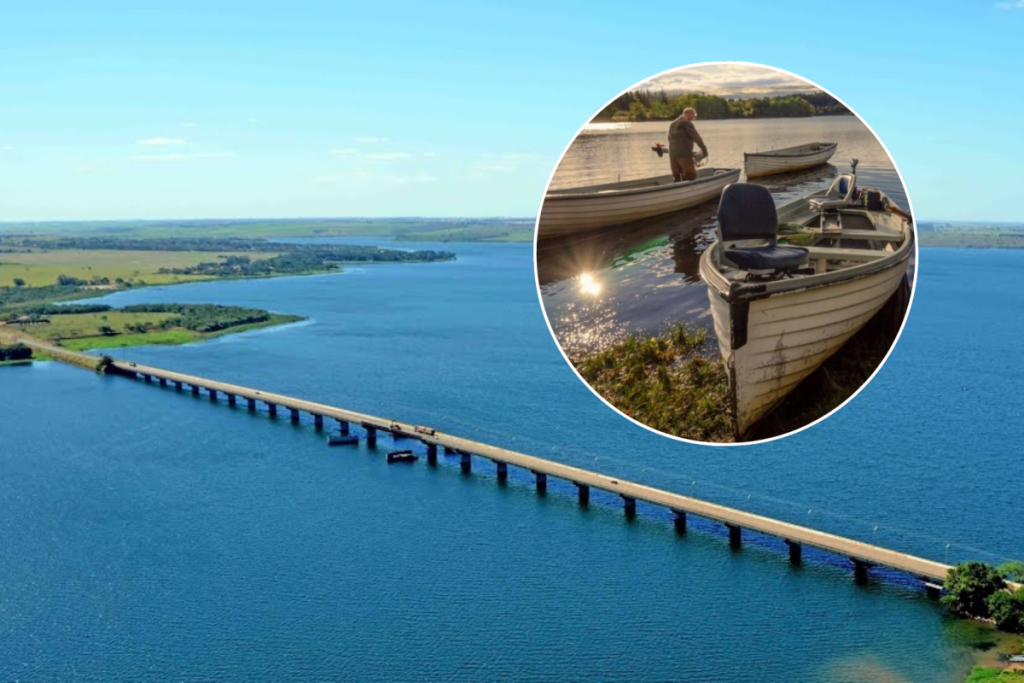

Nicknamed the “Capital of the Fat Cattle” due to its ties to agribusiness and livestock farming, Araçatuba, in northwestern São Paulo, still has a strong connection to the Tietê River: it is the only municipality not located on the river’s banks that draws water from the river for household use.
Historically, the municipality is also linked to the expansion of the railroad system in São Paulo, as it originated from a train station inaugurated in 1908.
The Northwest Railway of Brazil was a federal project that carried passengers from Bauru to Mato Grosso. As settlements formed around the railroad, economic opportunities and the fertile soil fostered the development of the community at that time.
However, before the advent of the railroad, Araçatuba was the territory of indigenous peoples such as the Kaingang and the Coroados. The lands underwent processes of occupation amid conflicts and the expulsion of the region’s original inhabitants.
Furthermore, years later, the municipality received waves of immigrants, mainly Italians and Japanese interested in the coffee industry and agricultural activities. In fact, Araçatuba is home to a municipal roundabout featuring a torii erected in honor of the local Japanese community.
Connection to the Tietê River
Although it is not a riverside city, Araçatuba draws its water from a point on the Tietê River outside the urban area. The proposal dates back to 1990 and emerged as an option to supplement the city’s water supply.
The water travels 15 km through pipes to the treatment plant. Since 2013, approximately 14% of the population in the 56 neighborhoods of the northern zone has been using the water supplied by the system.
According to city officials, monthly production reaches approximately 720 million liters of treated water for households in the region.
Despite the Tietê River’s reputation for pollution, the stretch in northwestern São Paulo features clean water in good condition, surpassing even some urban segments of Greater São Paulo, such as the Alto Tietê.
What to do in Araçatuba?

Araçatuba offers a variety of attractions for visitors, combining water recreation, railroad heritage, local culture, and cuisine—with “cupim casqueirado” standing out as the region’s signature dish.
In the water tourism sector, Hot Springs Water Park—a thermal water park—stands out as an excellent option for a day trip.
In addition, the area surrounding the river is home to the “Prof. Milton Camargo” Municipal Beach, a recreational area offering an unmissable riverside landscape. The Tietê River in this region has also established itself as a fishing destination, offering a variety of fish species and opportunities for relaxation along the water’s edge.
For those seeking a cultural itinerary, Araçatuba offers four museums that help tell the local history: the “Moisés Joaquim Rodrigues” Railroad Museum, the “Rintaro Takahashi” Indian Museum, the Araçatuba Museum of Fine Arts, and the Marechal Cândido Rondon Historical and Educational Museum.