
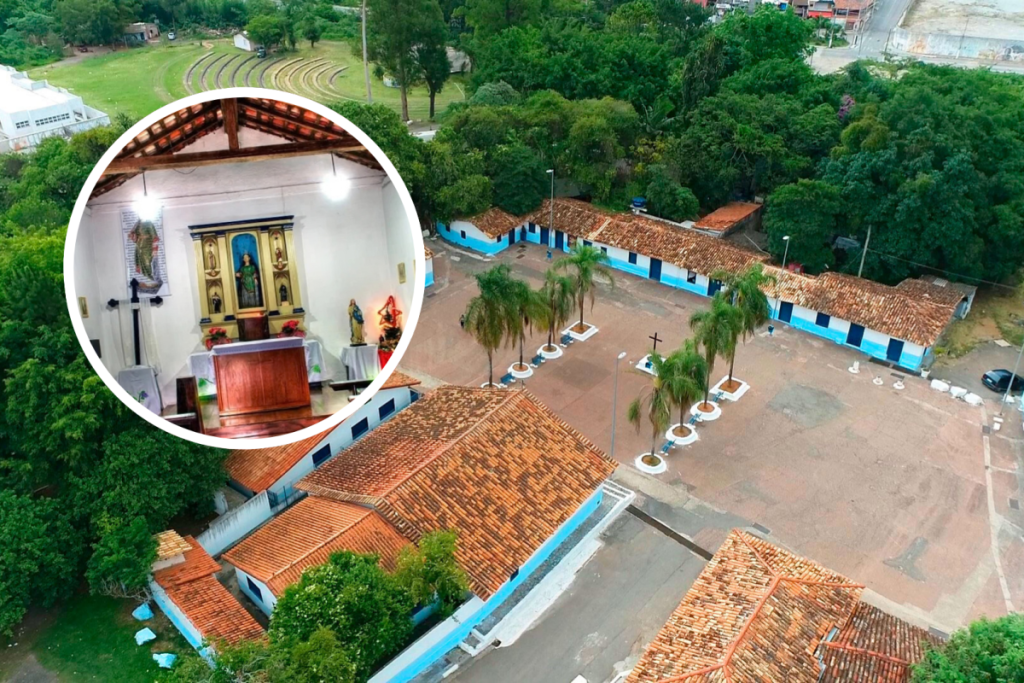

São Paulo still preserves much of its history in every corner of the state. The Carapicuíba Village, in Greater São Paulo, is a living example of this and one of the most important remnants of Jesuit colonization in the Metropolitan Region.
According to historical records, the lands were occupied by Indigenous peoples when they were donated by Jerônimo Leitão and Afonso Sardinha to the so-called “Indigenous reservation, ” administered by Father José de Anchieta. The goal was to catechize the Indigenous peoples.
Amid Portuguese expansion into the São Paulo highlands, the Society of Jesus established about twelve missionary villages scattered throughout São Paulo. Dating back to 1580, the Carapicuíba Village is the only one founded in the 16th century that remains preserved to this day, according to city officials.
The preserved historic complex
Designated a historic landmark by IPHAN in 1940, the Carapicuíba Village is recognized as an architectural complex of national historical importance. Well-preserved, the site offers a glimpse into the spatial layout of settlements from that era, with buildings arranged around the central square.
At the center of the complex stands the Chapel of St. John the Baptist, rebuilt in rammed earth in 1736 to replace the former Chapel of Our Lady of Grace. Recognized by IPHAN as a protected site, the building has also been listed as a historic landmark by Condephaat since 1974.
Overall, around the square, there are 21 wattle-and-daub buildings in full use, serving various cultural and community purposes.
The Indigenous Presence Before and During the Establishment of the Villages
According to studies, the composition of the settlements in the Carapicuíba region was very complex. In addition to the Guaianás or Guaianases —the first residents associated with the village—there were also Tupi and Guarulho groups, as well as various other communities, including people displaced from other areas.
With the arrival of the Jesuits and the construction of settlements in the already occupied territory, many Indigenous people were subjected to forced religious conversion. There were also instances of the exploitation of Indigenous labor and the reorganization of already established communities.
The House of Culture

It is possible to learn more about this history through material evidence of the Indigenous presence in the region.
Located within the village, the Casa da Cultura preserves in its collection the history related to the village’s founding. It houses images, indigenous artifacts, and sculptures that help preserve local history.
In addition, archaeological remains were recently identified at the site. According to the Carapicuíba City Government, researchers found objects such as ceramic fragments, tableware, and glassware from different phases of the site’s occupation, mainly related to more recent periods.
While preserving its cultural heritage, the village also promotes cultural events such as the Dance of Santa Cruz—a ritual resulting from Jesuit influence that blends elements of Catholic traditions with indigenous singing and dancing practices.
The ceremony begins in front of the Church of Santa Catarina, in Praça da Aldeia. During the procession, guitarists, singers, and dancers gather and make their way toward the cross erected in the square.
The celebrations generally take place in May and are accompanied by Catholic observances such as novenas, processions, church fairs, and the raising of the flagpole.
How to visit the Carapicuíba Village?
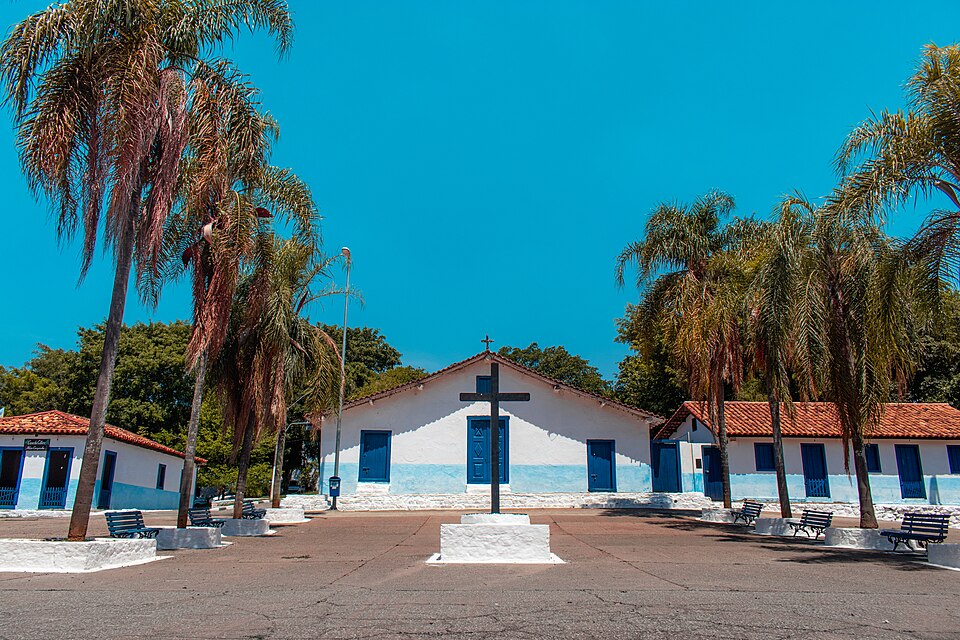
The plaza and the historic surroundings can be visited without an appointment. However, to ensure that the Casa da Cultura is open and to check whether the chapel is accessible, it is recommended to contact them in advance.
In fact, the Casa da Cultura often hosts free school field trips with guided tours and supervision, by appointment through the Carapicuíba Department of Culture and Tourism.
In addition, the village hosts events such as “Amigos da Viola,” cultural activities, exhibitions, workshops, discussion groups, and other initiatives open to the community.
