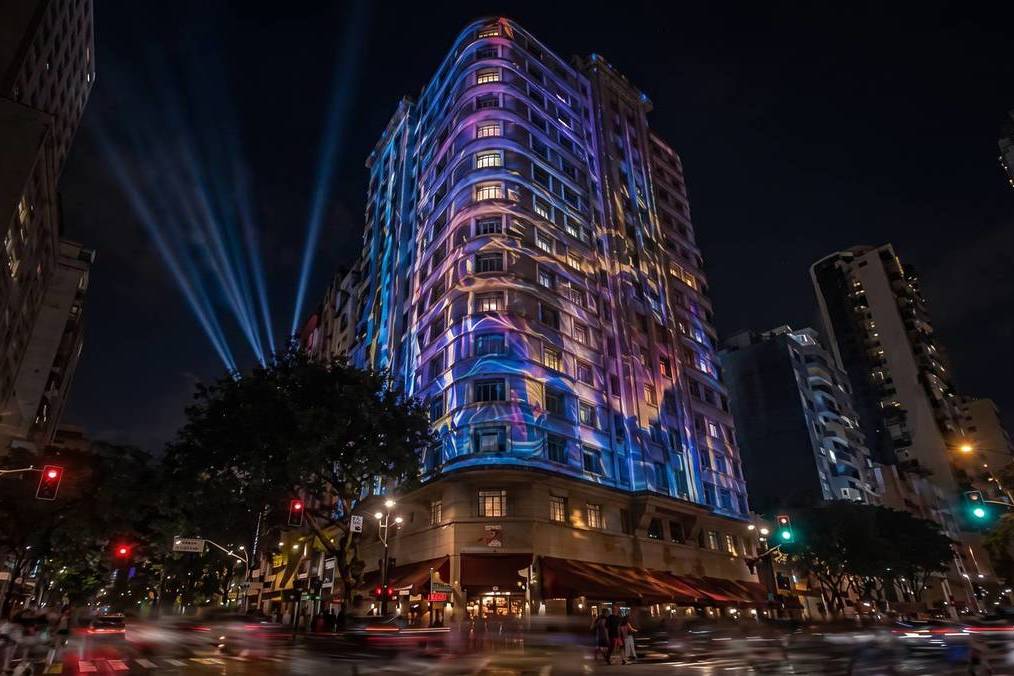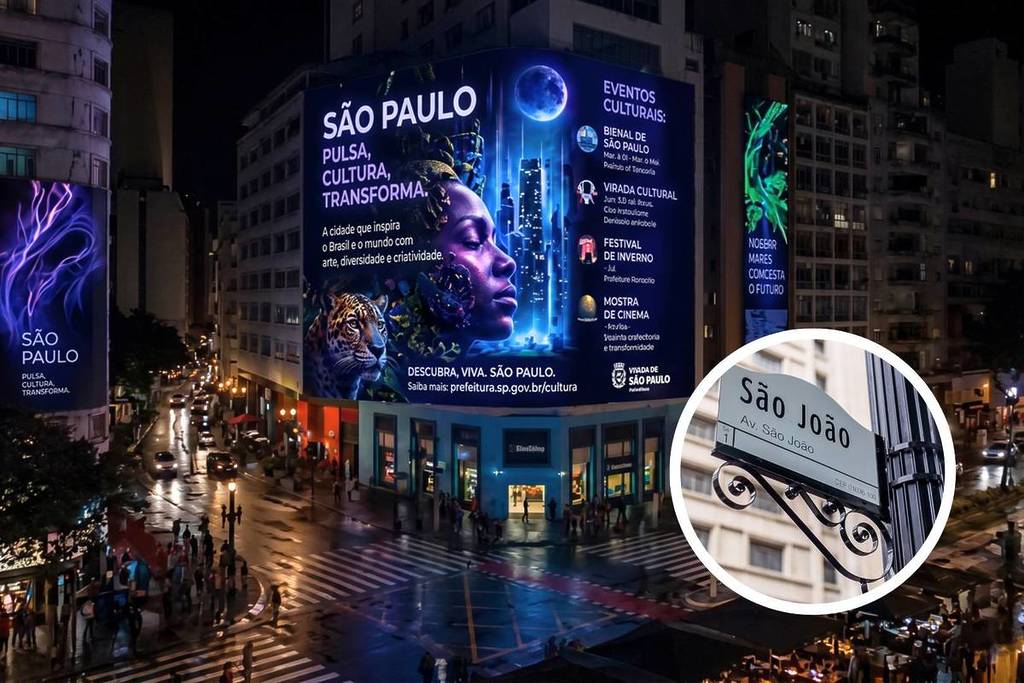

“Times Square Paulistana, “ an initiative that has divided opinion since its announcement in February of this year, has just been suspended by the courts. Signed as a preliminary injunction by Judge Celina Kiyomi Toyoshima of the 4th Court of Public Finance of São Paulo, the measure temporarily halts the installation of giant screens in the Historic Center.
The ruling highlights concerns about the proposal’s impact on the urban landscape, preventing—even if only temporarily—the creation of a New York-style block in the metropolis.
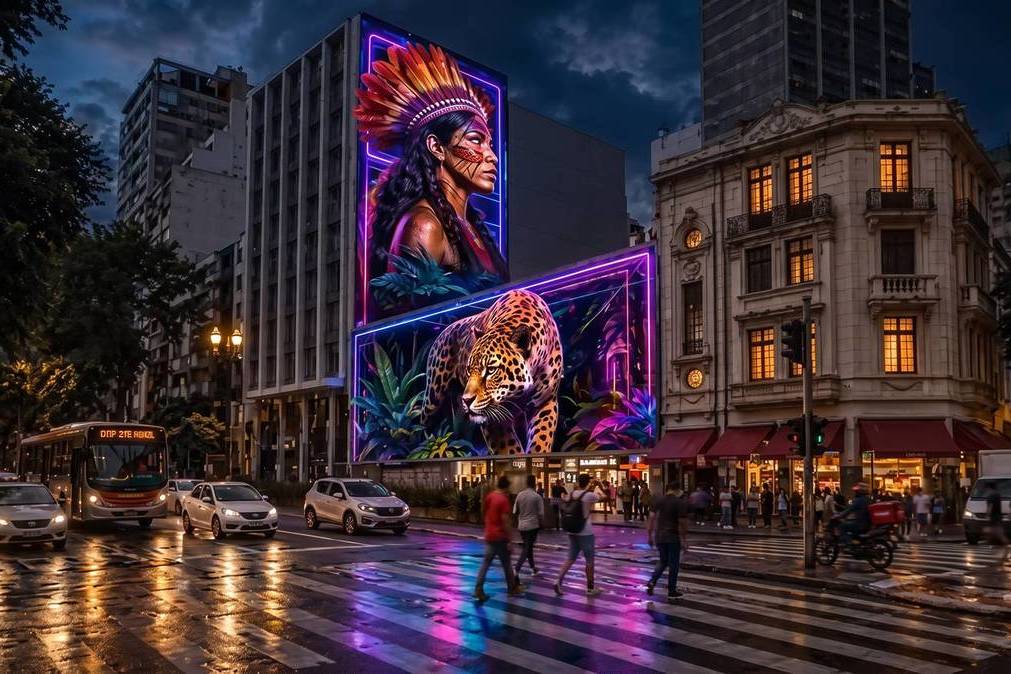
Recall the “Times Square Paulistana” project
Officially known as Boulevard São João, the plan proposes installing LED panels on the facades of historic buildings in the Republic district. The chosen area is the intersection of Ipiranga and São João avenues, near Bar Brahma and iconic buildings such as the Copan and Ipiranga 165, the former Hilton Hotel.
City Hall argues that the project would create an entertainment hub similar to New York’s “Times Square, ” attracting tourists and boosting the local economy. The government also maintains that a greater flow of people would improve safety in the area, curbing the deterioration of public spaces.
On the other hand, critics of “Times Square Paulistana” argue that the proposal weakens the Clean City Law, which combats visual pollution in the capital. Experts also warn that the installation of LED screens in the Historic Center would degrade the region’s heritage and would not actually solve the problem of public safety.
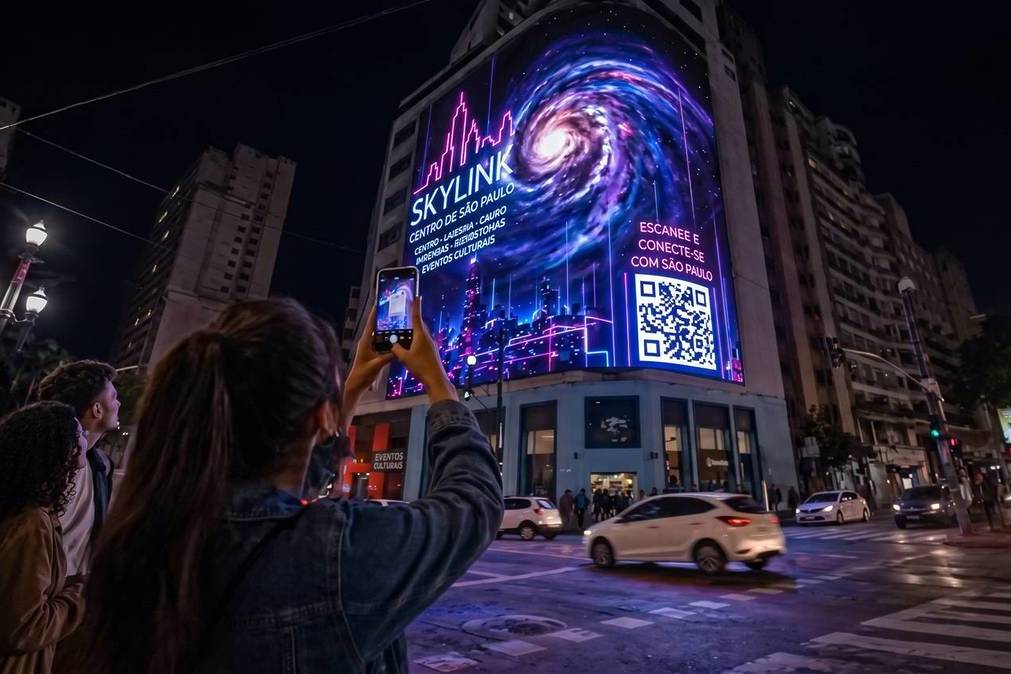
Court ruling points to risk of damage and lack of transparency
The suspension of “Times Square Paulistana” occurred after a class-action lawsuit challenged the impacts of the interventions planned by the government. In justifying the preliminary injunction, the court cited the lack of transparency regarding agreements with the private sector, the scale of the project, and the potential harm to the public.
The judge also required the City of São Paulo and the other parties involved in the project to submit a series of documents. Among them are the cooperation agreement with the private sector and technical opinions from urban planning and heritage agencies.
The proponents can still file an appeal with the São Paulo courts, requesting that the preliminary injunction be relaxed or overturned. In the meantime, any work related to the project is prohibited, and the Historic Center remains as it was, without the lights of a potential Times Square.