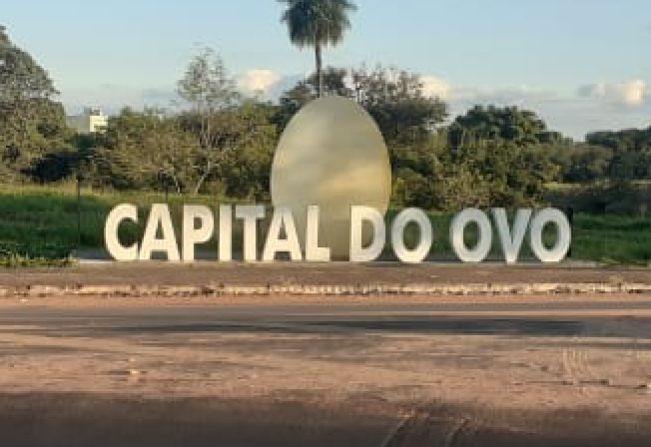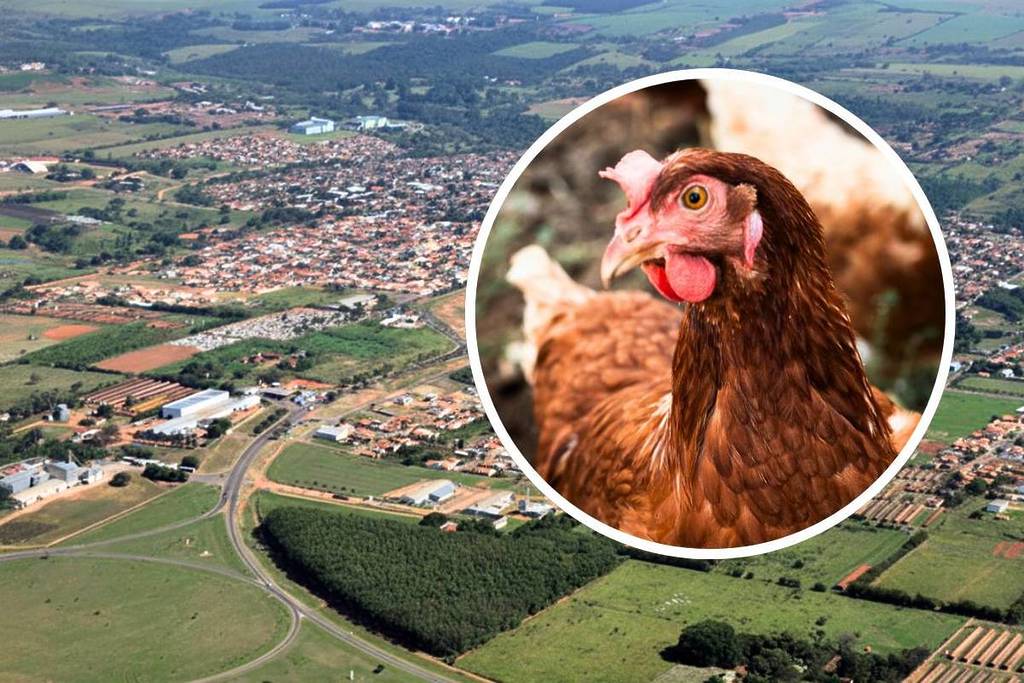
The news that the city of São Paulo has more rats than people surprised many people – not always in a positive way. However, there is another municipality in São Paulo whose human population is outnumbered by an animal species – this time, one that is more beloved by the population. We’re talking about Bastos, a small town in the center-west of São Paulo that is home to more chickens than people.
Today, the population of Bastos is 21,500. There are more than 11 million chickens, which means that there are around 510 birds for every human. This curious fact is explained by the large concentration of farms in Bastos, which account for 20% of national egg production.

The National Egg Capital is in the interior of São Paulo!
Since it was founded in 1928, Bastos has had a predominantly agrarian economy. After years of investing in coffee and cotton, in the 1950s the municipality turned to egg production, also known as laying poultry, and became a reference in the national market.
Founded by Japanese immigrants, Bastos has 60 farms, whose production can reach up to 15 million eggs a day. This is due to the adoption of Japanese farming techniques and the intensive use of technology, which maximizes productivity in a municipality with a small population.
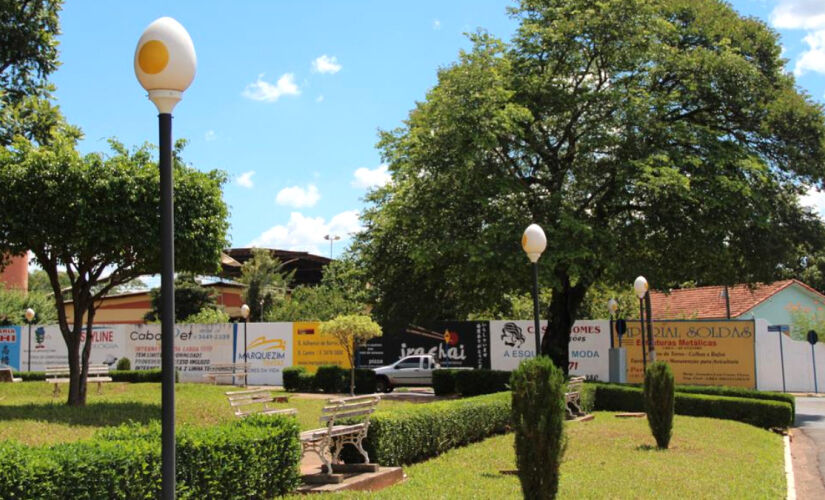
For this reason, Bastos has been given the curious and well-deserved title of Brazil’s Egg Capital. To give you an idea, one of the city’s most famous squares is called Praça do Ovo (Egg Square), with lamps in the shape of the egg.
What to do in Bastos?
Bastos is not all about eggs. The town attracts visitors for its unusual title, of course, but also for its cultural attractions. Due to its Japanese origins, Bastos has several attractions that mix the culture of Japan and Brazil.
The Saburo Yamanaka Regional Historical Museum, for example, preserves the history of Japanese immigration through photos and objects; while the Friendship Garden has a miniature replica of Mount Fuji. Finally, the Nambei Honganji Buddhist Temple offers an immersion in Eastern spirituality through celebrations and meditation practices.