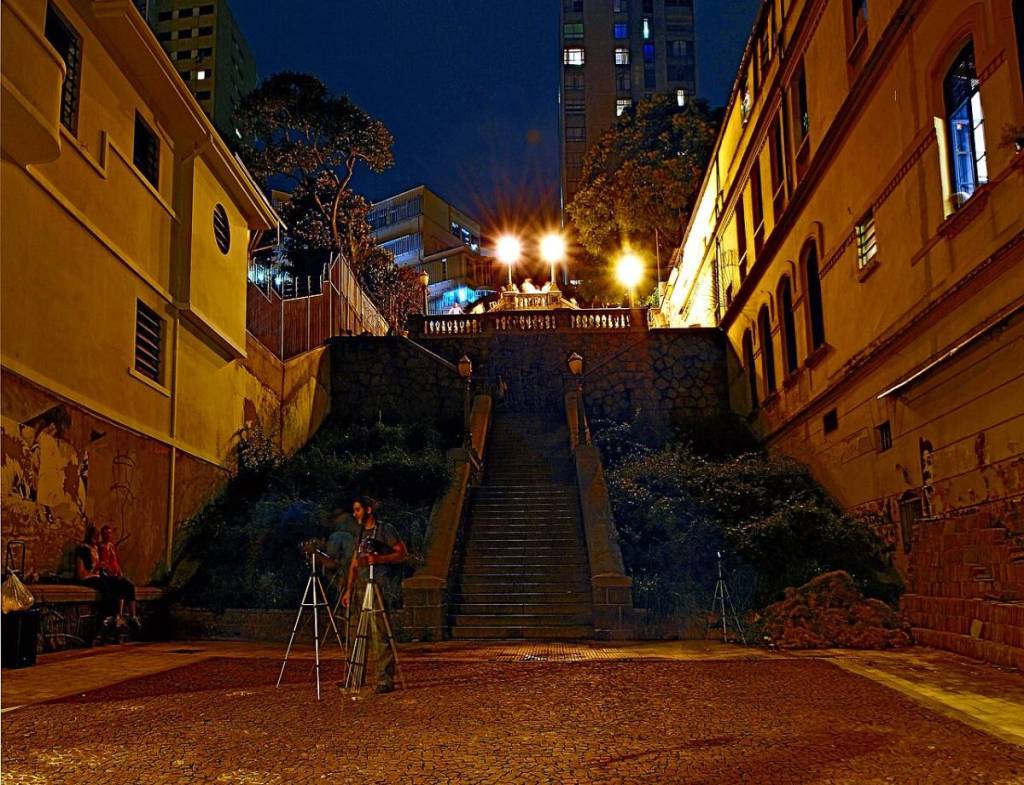

The Bixiga Staircase is one of the region’s major landmarks, often associated with Italian immigration in São Paulo. But its steps hold much more than just a simple thoroughfare: they represent encounters, social contrasts, and the urban transformation of a neighborhood whose identity extends far beyond São Paulo’s Italian-style cantinas.
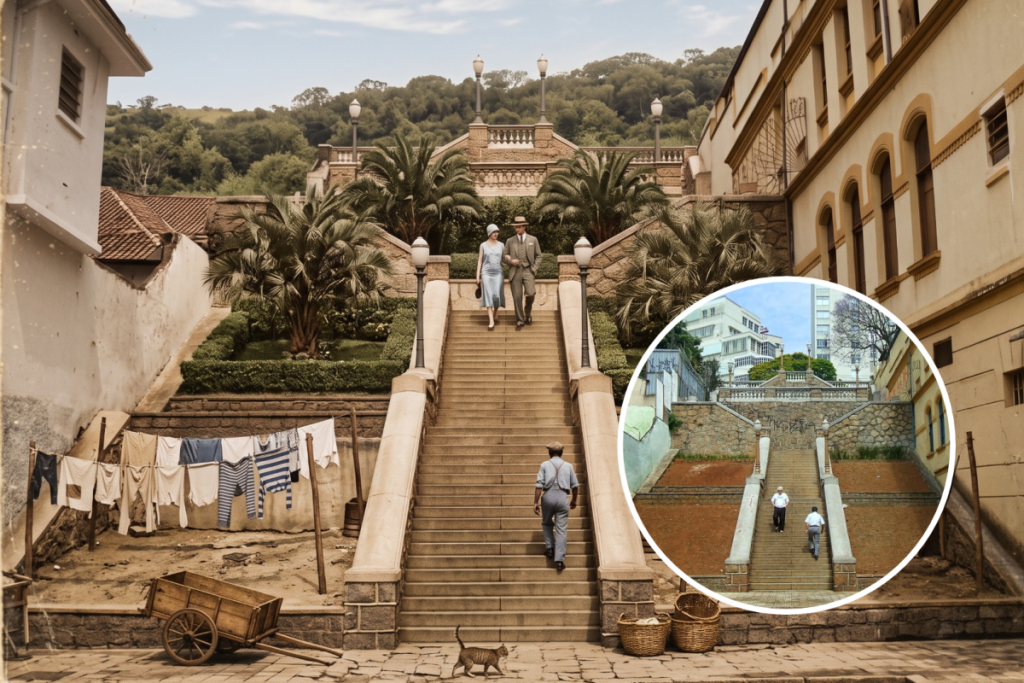
Opened in 1929, the Bixiga Staircase was built to connect Rua Treze de Maio to Morro dos Ingleses. However, it also revealed inequalities, connected different social classes, and demonstrated São Paulo’s urban expansion in the 20th century.
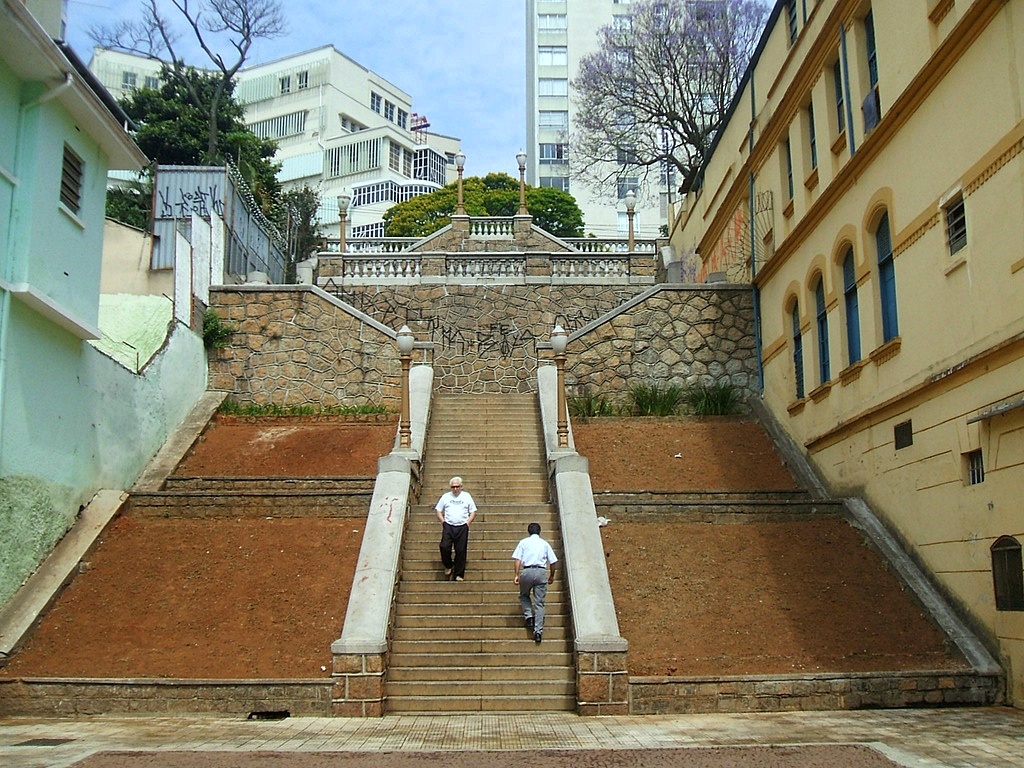
With 84 steps and a 16-meter elevation change, the structure is a municipally designated heritage site and one of the greatest symbols of the Bela Vista neighborhood. Shall we learn about its history?
A link between distinct worlds
The staircase was built during the administration of Mayor José Pires do Rio, at a time when São Paulo was rapidly urbanizing. The project facilitated pedestrian traffic between two areas separated by topography —and by social differences.
In the lower part of the neighborhood, Treze de Maio Street was home to small businesses, tenement buildings, and a population made up of poor workers, Italian immigrants, formerly enslaved people, and their descendants. The street’s very name refers to May 13, 1888— the date slavery was abolished—proving that Bixiga’s history is not exclusively Italian.
Meanwhile, up above, Morro dos Ingleses attracted high-income residents. Its name refers to the former São Paulo Country Club golf course, which welcomed English visitors and the city’s privileged classes.
The Bixiga Staircase thus created a direct connection between the two sides, physically bringing very different territories closer together. But this did not eliminate the inequalities that separated them, of course. In fact, many passersby were lower-class people leaving Treze de Maio to work in the wealthy homes of Morro dos Ingleses.
What does the Bixiga Staircase represent today?
In addition to serving as a passageway, the staircase has now established itself as a cultural landmark in Bela Vista. It can be included, for example, in an itinerary for those looking for things to do in Bixiga: a visit here pairs well with the Antiques Fair at Praça Dom Orione on Sundays, as well as performances at the Ruth Escobar Theater and the neighborhood’s restaurants .
The structure has also left its mark on Brazilian audiovisual culture. Over the decades, it has served as a backdrop for films, soap operas, and commercials, including productions by comedian Amácio Mazzaropi from the 1950s and 1960s.
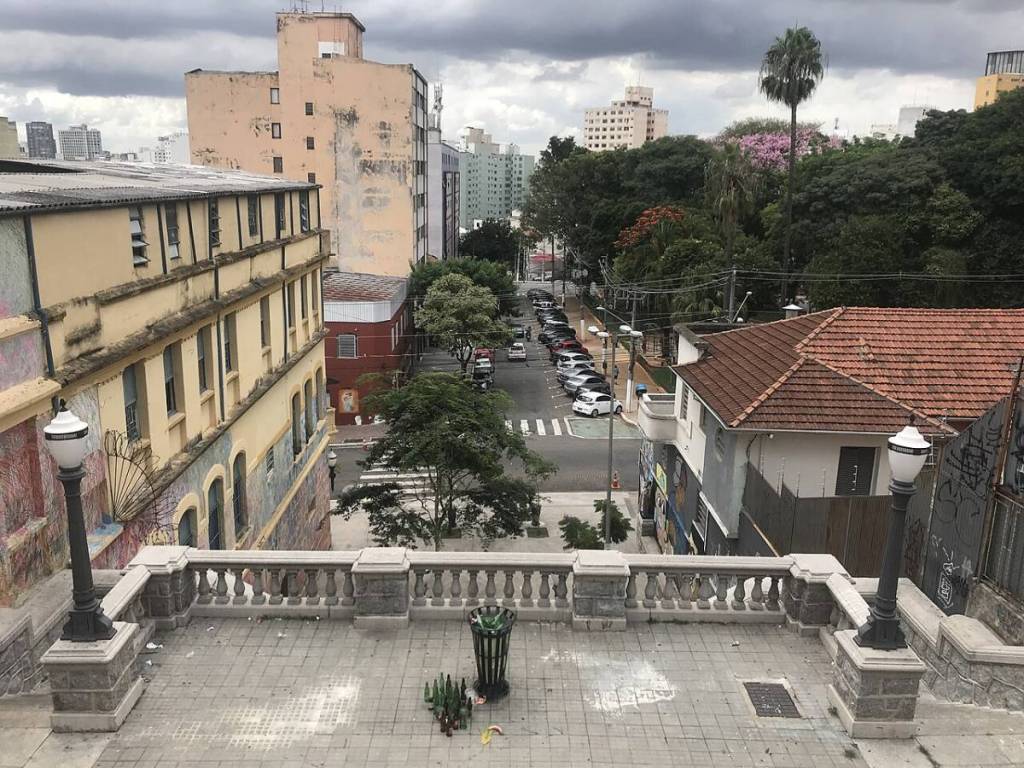
Despite its historical value, the site faces safety and conservation challenges. There are recurring reports of structural deterioration, graffiti, and illegal dumping, as well as numerous incidents of theft and mugging in the area, especially at night.
In other words, the Bixiga Staircase remains a place of contrasts: a heritage site where culture and neglect go hand in hand, and which is, at the same time, both cherished and forgotten by the local population.