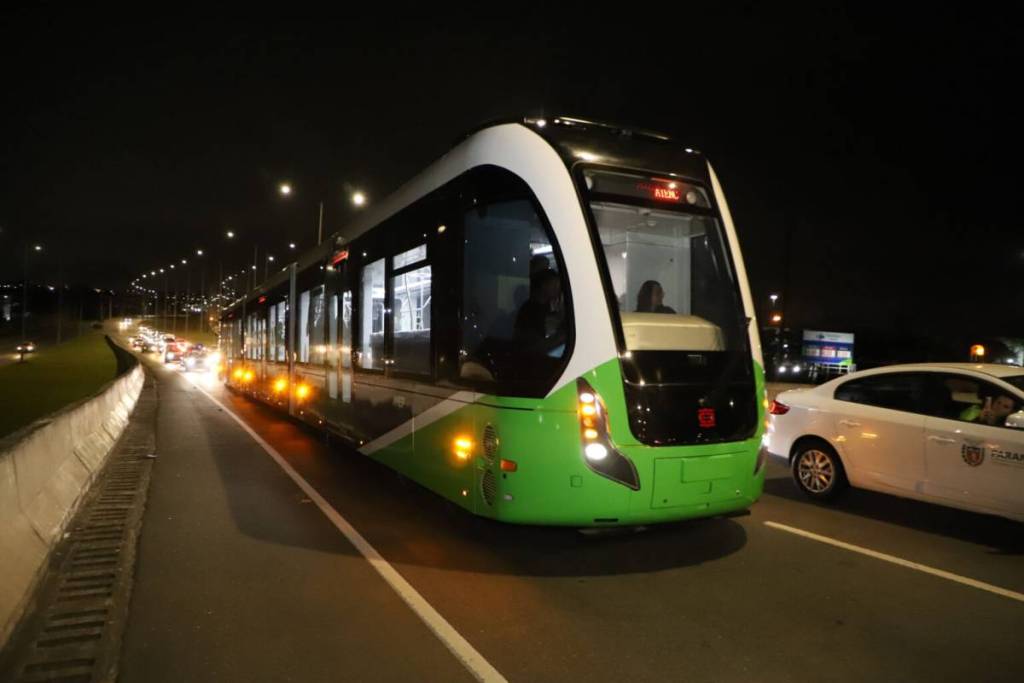

The tram is back in São Paulo— but not like the ones you’ve seen in sepia-toned photos and old postcards. After years of debate, City Hall has decided to invest in the Light Electric Vehicle (VLE), a kind of “trackless tram” that runs along a “virtualrail line.”
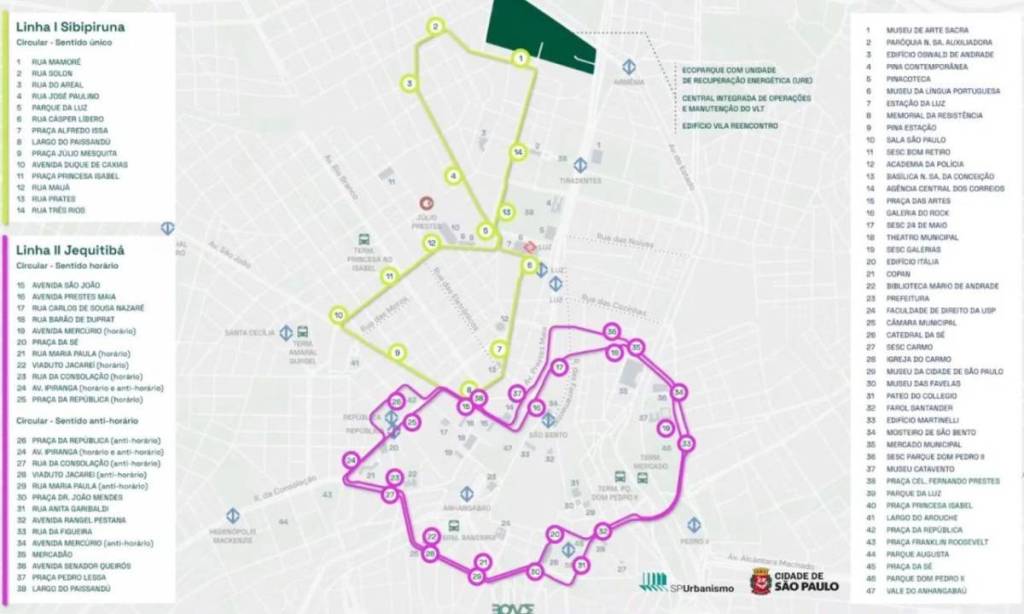
The plan is for the system to traverse the Historic Center, connecting the Municipal Market, Rua 25 de Março, and other points of interest in the city.
Will we see trams return to São Paulo?
The discussion about the return of streetcars to the city has gained momentum in recent years as part of the plan to revitalize the downtown area, with a focus on sustainable mobility.
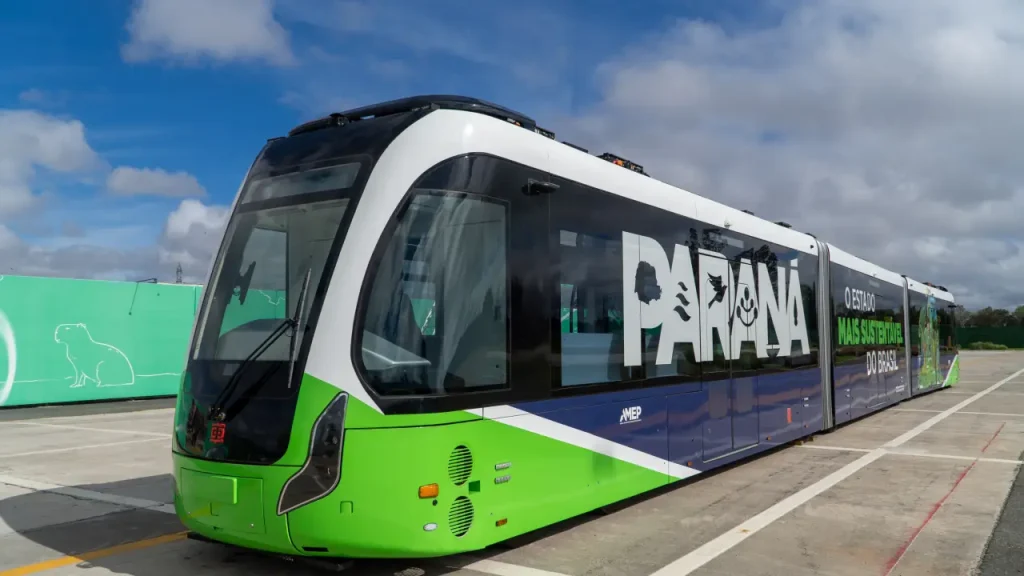
Initially, the project was called Bonde São Paulo and called for a traditional Light Rail Vehicle (LRV). In April 2026, however, city officials announced the replacement of the LRV with a VLE, whose technology is already being tested in Curitiba.
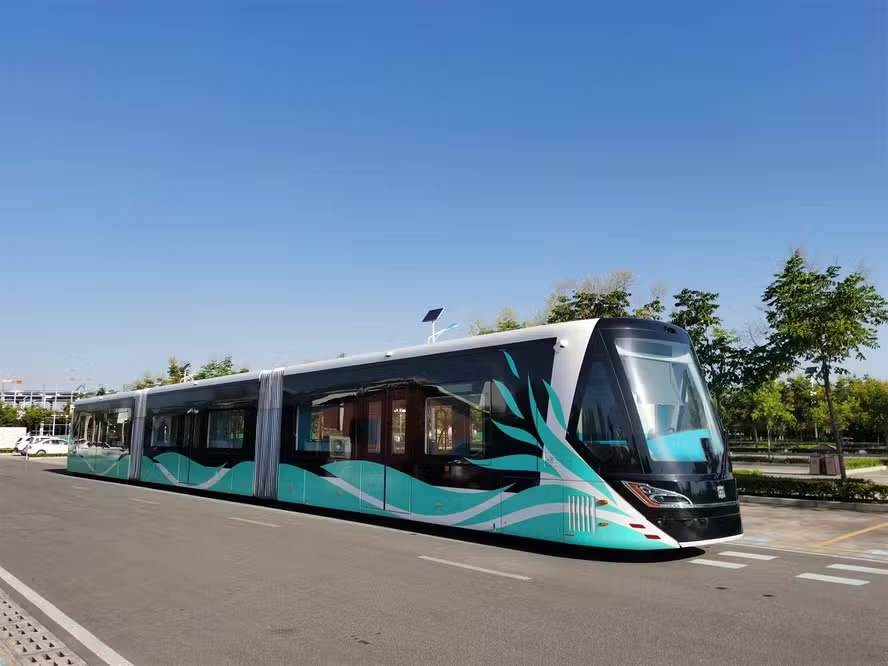
It is a vehicle on tires guided by “virtual tracks”: magnetic sensors embedded in the asphalt define the route. According to City Hall, the change will save R$ 2 billion, as it requires less heavy construction and minimal ground excavation.
Critics of the project, however, question whether the VLE will be nothing more than an “expensive, upscale” bus. Many also argue that the VLT would mark a symbolic return of the “real streetcar” to São Paulo.
Where will the “trackless tram” run in São Paulo?
The VLE project initially calls for two lines, each about 12 kilometers long. They will connect neighborhoods such as Brás and Bom Retiro to the Historic Center, serving the city’s cultural attractions and shopping districts.
It is also estimated that the “trackless tram” will connect with five bus terminals, nine subway stations, and two train stations. In this way, it could also help alleviate the heavy traffic from other modes of transportation in the capital.
The project will be carried out through a public-private partnership, with the bidding process scheduled for 2026. If the timeline remains on track, São Paulo’s “trackless tram” is expected to be inaugurated by early 2030.