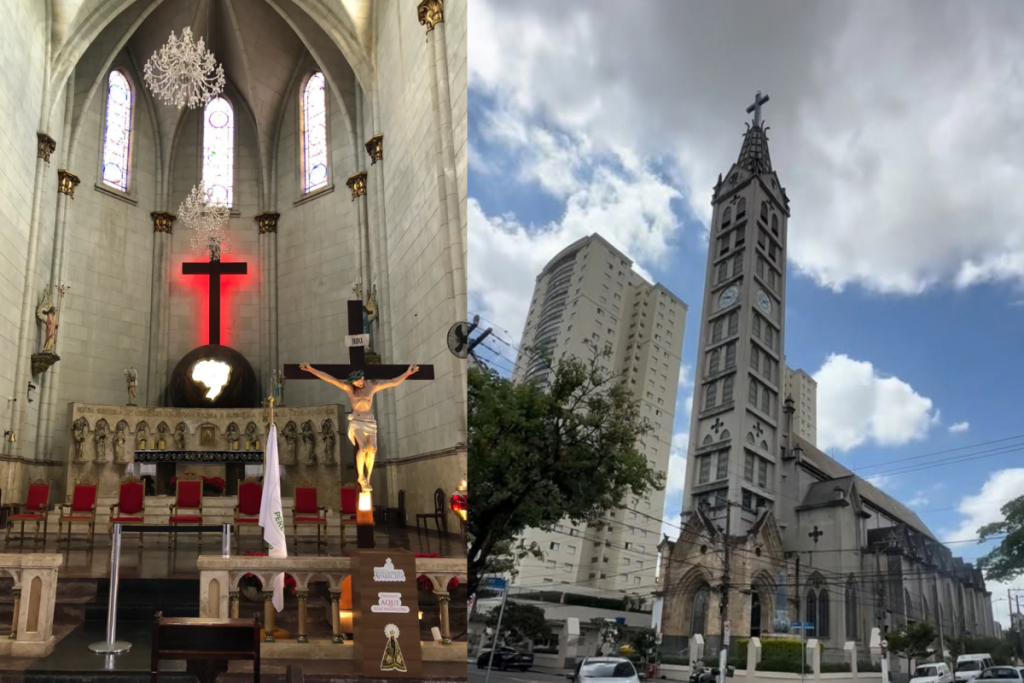

Located in Ipiranga, the Church of Our Lady, also known as the Archdiocesan Shrine of Our Lady of Aparecida, originated from a parish church built in 1942 to receive the pilgrim image that was brought from Aparecida for the Fourth National Eucharistic Congress.
Currently, in addition to regular parish activities, the Catholic church serves as a place of pilgrimage and devotion to Our Lady of Aparecida, the patron saint of Brazil. The church is part of the Ipiranga Episcopal Region, in the São Marcos Deanery, of the Archdiocese of São Paulo.
Architecture of the Church of Our Lady
With an appearance comparable to that of the Sé Cathedral, the church in Ipiranga features a Neo-Gothic architectural style, a reinterpretation of medieval Gothic architecture. It features striking elements such as pointed arches and stained-glass windows incorporated throughout the building.
The first structure to be erected, the central nave, was inaugurated in 1955, even before the completion of the construction work. Today, it serves as the main space for accommodating the faithful.
On the other hand, the tower was completed in 1991, reflecting a gradual construction process carried out through fundraising campaigns led by Father Mário Marques e Serra and the neighborhood residents.
Through raffles, festivals, and especially through initiatives such as the “golden book”campaign, the community raised the necessary funds to carry out the construction work.
One of the church’s most striking features is its pipe organ, installed in 1997. During the dedication ceremony, the church hosted the Cantate Domino choir.
In addition to the main space, dedicated to the celebration of Masses and religious activities, the church features structures such as a grotto and a chapel of rest, which expand the spaces for devotion beyond the altar.
The Church’s Connection to Pilgrimage
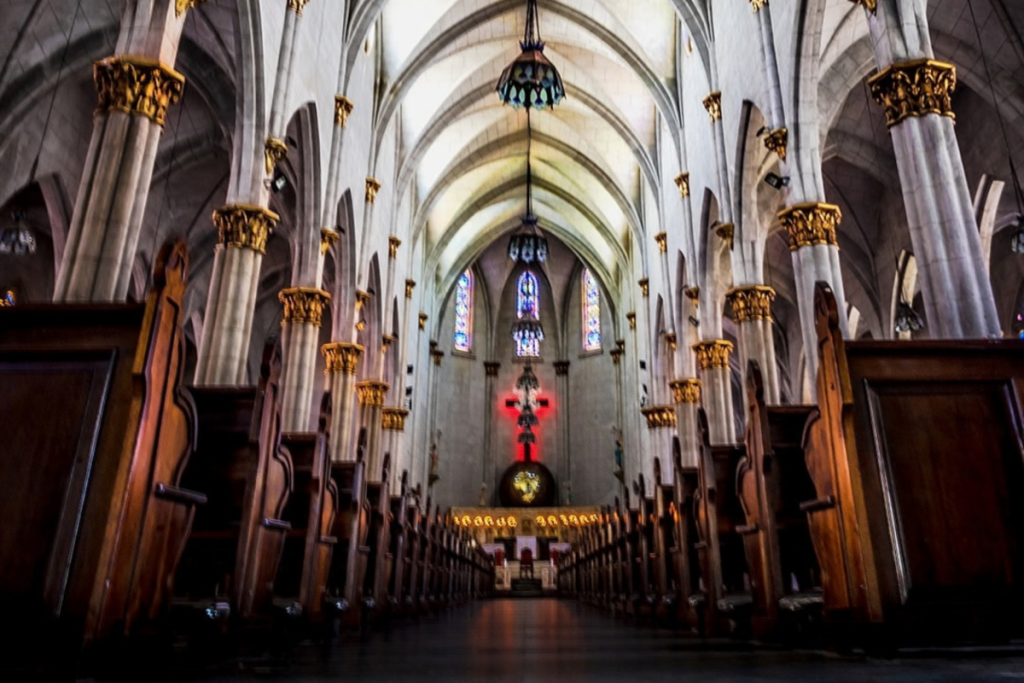
This connection stems from the church’s very origins. In 1942, the then-archbishop, Dom José Gaspar d’Afonso e Silva, chose Our Lady of Aparecida as the “first pilgrim” of the Fourth National Eucharistic Congress.
The statue was then carried in procession to Várzea do Ipiranga. On that occasion, Bishop José Gaspar blessed the cornerstone of the church built to house it. The statue remained in the temporary location until it was transferred to the new church in 1960.
Thus, the pilgrimage gave rise to the Church of Our Lady of Ipiranga, since the church was built specifically to house the image during its visit to São Paulo.
In fact, this historic event earned the church recognition as an archdiocesanshrine, granted in 2017.
And finally, years later, in 2025, the church reaffirmed its tradition as a pilgrimage site by joining the group of 12 churches selected to welcome the faithful on the special Jubilee Year itinerary.