
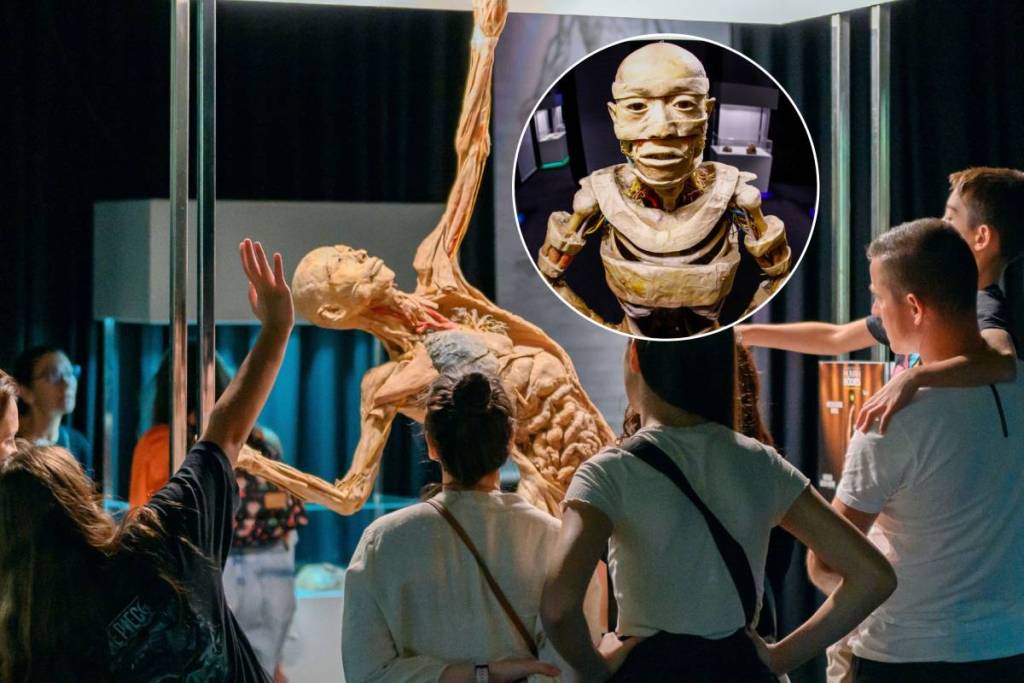

Walking, digesting a meal, or the “simple” act of breathing are examples of tasks the human body performs daily, without us even realizing it. But what happens inside us when we take a step, take a deep breath, or put a forkful of food in our mouths? The exhibition “Human Bodies – Wonders of the Human Body” has just arrived in São Paulo to answer this and other questions—without you having to open a biology textbook or look at plastic skeletons.
Since early October and for a limited time, Shopping Anália Franco, in the eastern part of São Paulo, has opened its doors to an immersive journey into the fantastic world of the human body. To this end, the exhibition—which has already captivated millions worldwide and more than 300,000 visitors in other Brazilian cities—features 100% real bodies and organs, allowing you to learn and reflect more on your own habits. It’s a unique outing suitable for all ages, which can easily be combined with a shopping trip, a break at the food court, or a movie.
11 November 2026 14:00 + more dates
Shopping Anália Franco
More than just a biology lesson
Forget about classes, books, and 2D illustrations. At “Human Bodies – Wonders of the Human Body,” you’ll learn much more than in a biology class and even gain insights to improve your own habits for a healthier life. Covering a total area of 700 square meters, the exhibition features seven themed galleries and a special room.
Where science and art intersect
The exhibition in São Paulo features an immersive room created by artist Henrique Roscoe. The experience combines large-scale projections, an original soundtrack, and a narrative that draws you in from start to finish. It’s a journey into ourselves, where the precision of science and the emotion of art intersect.
3 lessons (at least) you’ll learn
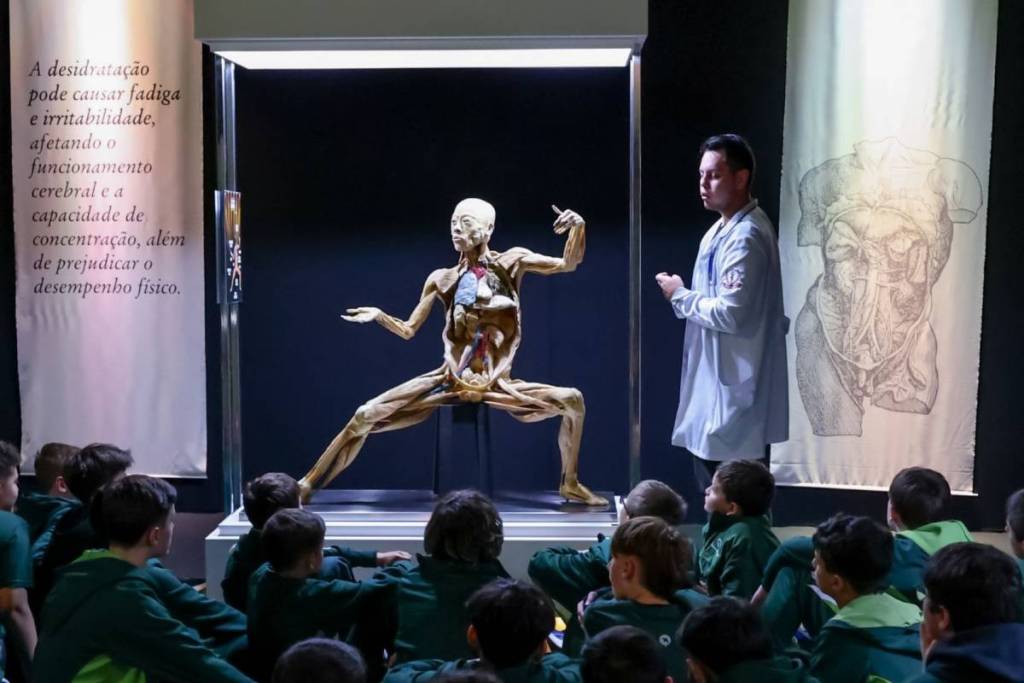
Both the number of visitors in other cities and the physical space the exhibition occupies speak for themselves—we’re looking at a massive cultural exhibition. There, in addition to the photographs, you can take home a wealth of knowledge. That’s why we’ve decided to list some interesting facts and/or practical lessons that “Human Bodies – Wonders of the Human Body” has to teach you.
The ‘secret’ of preservation
The exhibition impresses visitors by displaying real bodies and organs, all thanks to a special and advanced preservation technique called plastination. This process was created in the 1970s by German anatomist and scientist Gunther von Hagens and involves removing bodily fluids and soluble fats from the tissues and replacing them with polymers, such as silicone, which keeps the tissues intact. The result is on full display and rich in detail: from the texture of the largest muscle to the branching of a blood vessel.
The visual impact of daily choices
Reading online that “smoking is bad for you” or that you need to watch what you eat to avoid obesity is one thing; seeing the consequences of daily choices in person and in full color is quite another. And throughout the exhibition, you can not only explore the nervous, respiratory, digestive, and reproductive systems, but also see with your own eyes the effects of diseases and habits on the body.
What Lies Behind Every Movement
The exhibition features bodies depicted in natural poses, such as those of a tennis player and an acrobat. This allows us to observe the tension in a body in motion—whether we’re running or simply stretching—and realize that, beneath the skin, there are muscles, tendons, and bones working in a synchrony that’s hard to imitate. Are we, or are we not, the most fascinating “machine” in the world?
