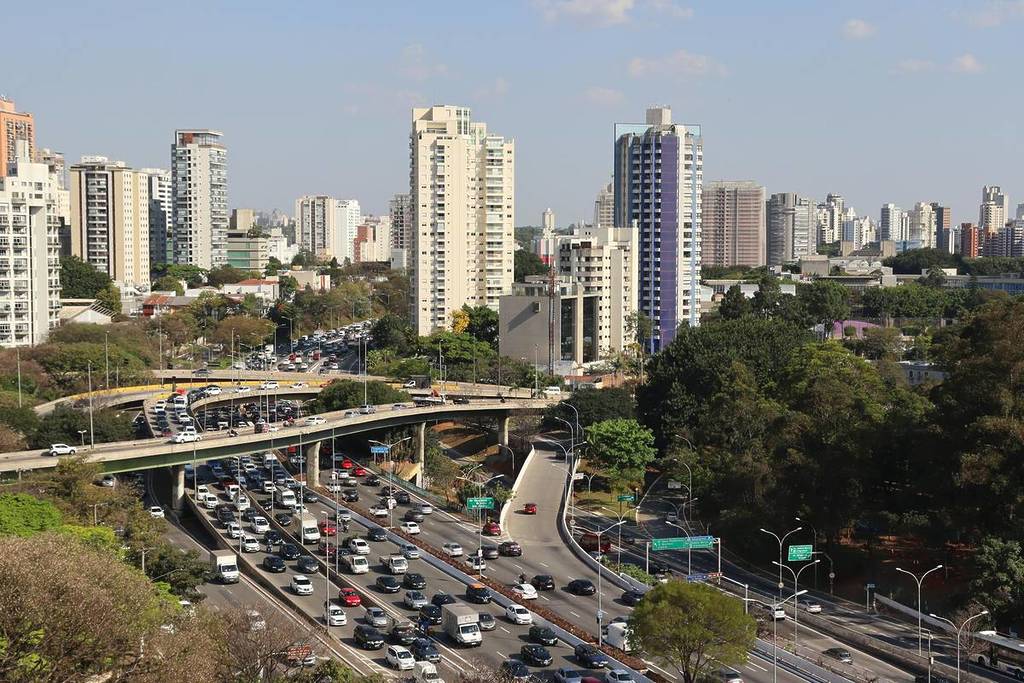
The average time São Paulo residents spend daily on public transportation has increased by nearly an hour since the end of the last century. In the 1990s, traveling through the city took between 1 hour and 30 minutes and 1 hour and 50 minutes. Today, the scene at subway stations and bus stops reflects a considerably longer commute.
The trend in the numbers reveals that the biggest jump occurred at the turn of the millennium. In the 2000s, the average travel time rose to between 2 hours and 15 minutes and 2 hours and 25 minutes. This daily routine is marked by a constant flow of passengers in a system that repeatedly suffers from delays and overcrowding.

São Paulo residents spend nearly 10% of their day in traffic
In 2010, the time spent in traffic continued to rise, reaching between 2 hours and 28 minutes and 2 hours and 45 minutes. Sixteen years later, São Paulo residents have reached the peak average: up to 2 hours and 47 minutes daily on public transportation—or more than 10% of the day.
Recently, a survey by Folha de S.Paulo using data from SPTrans explained the delay: during peak hours, buses in São Paulo travel at an average speed of 12 km/h. This speed—slower than that of chickens or electric scooters—is due to the lack of priority given to public transportation on the roads, which are increasingly crowded with private vehicles. Will this number increase even further in the future?
Editor’s note: Article written in collaboration with Pryscila Carmo, video producer at São Paulo Secreto.