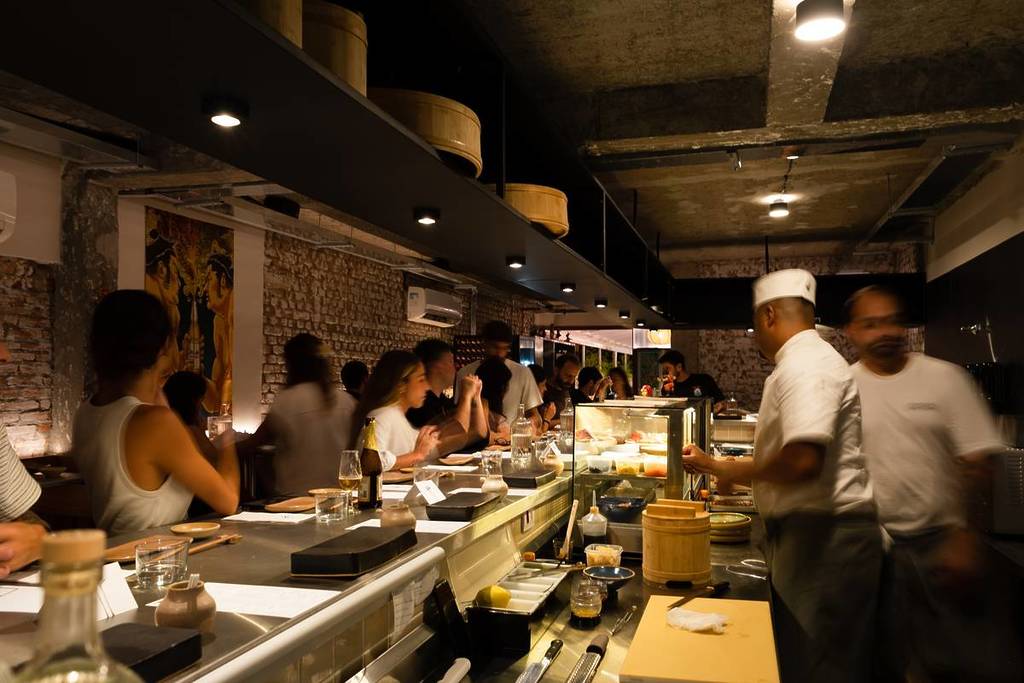

Eating sushi standing up may seem like just another curious experience in São Paulo, but in Japan this practice has a name and a rich history. And it took just a few minutes at the Standing Sushi Bar in Pinheiros for us to realize that the absence of stools is only a small part of the experience.
The restaurant was a pioneer in Brazil for embracing tachigui sushi, a traditional Japanese style in which customers eat standing at the counter, directly in front of the person preparing each piece. The concept harkens back to sushi’s very origins as street food and emphasizes quicker, more informal meals—and, above all, conversation with the itamae, the master chef at the counter.
We went to experience it on a special evening, during a collaboration with chef Rhaiza Zanetti of Miyabi, and took the very spot we consider the most interesting in the restaurant: the counter. Between dishes created especially for the dinner and favorites from the regular menu, we left with two certainties: the value for money surprised us, and we’d happily return just to spend the evening ordering hand rolls.
Why is it worth eating standing up at Standing Sushi Bar?
It’s at the counter that the concept truly comes to life. During our visit, Chef Rodrigo Santos introduced the fish and explained what was being served right in front of us as we put together our meal practically piece by piece.
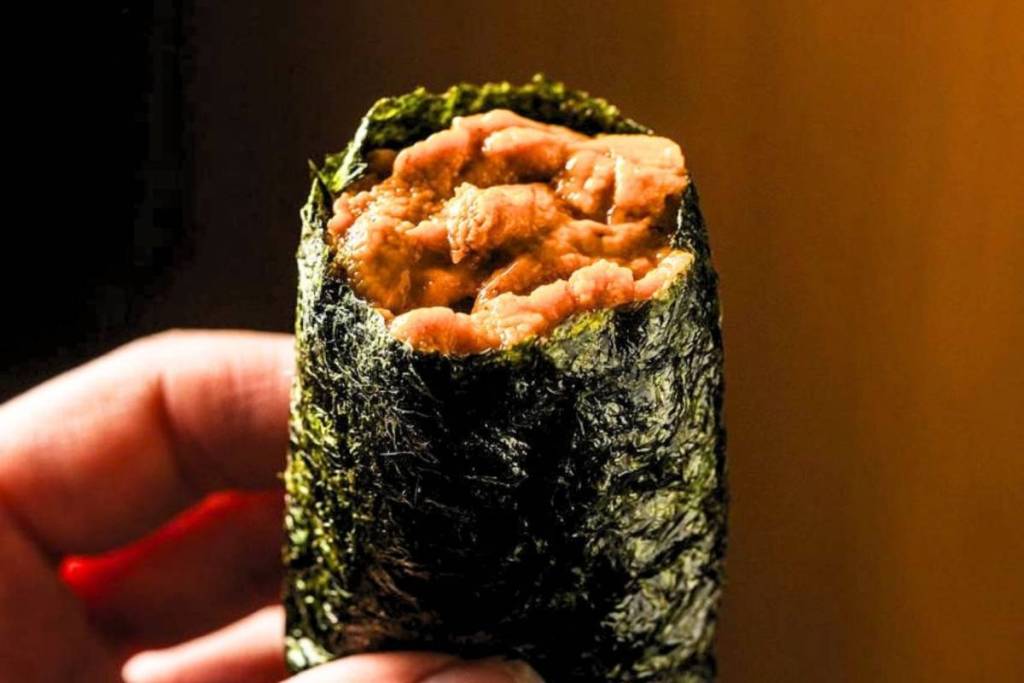
And there’s a practical advantage to choosing this spot: the hand rolls are exclusive to the counter. They’re prepared and handed directly by the itamae so that the nori reaches the customer’s hands still crisp, without even passing through a server.
The restaurant also takes an interesting approach to its seafood. Instead of relying on the ubiquitous farmed salmon, it prioritizes white and blue fish, including species caught along the Brazilian coast, which are aged to develop flavor and texture.
We went on a collaboration night, and we wanted to order some dishes again right away
We were lucky to choose a night when Rhaiza Zanetti was in charge of part of the menu. The chef brought three creations to Standing Sushi Bar, and we started with what became our favorite: a hand roll featuring beef eye, shiso tempura, yuzu, and karasumi. Crispy, fresh, and full of texture, it was one of those dishes that, once finished, immediately makes you wonder: should we order another?
But the collaboration also served to confirm that the regular menu is worth a visit in its own right. We continued with our orders from the counter and went with the zuke Brazilian tuna nigiri, with Kewpie mayonnaise, layu, and karasumi—currently R$20 each—which was easily another of our favorites of the night.
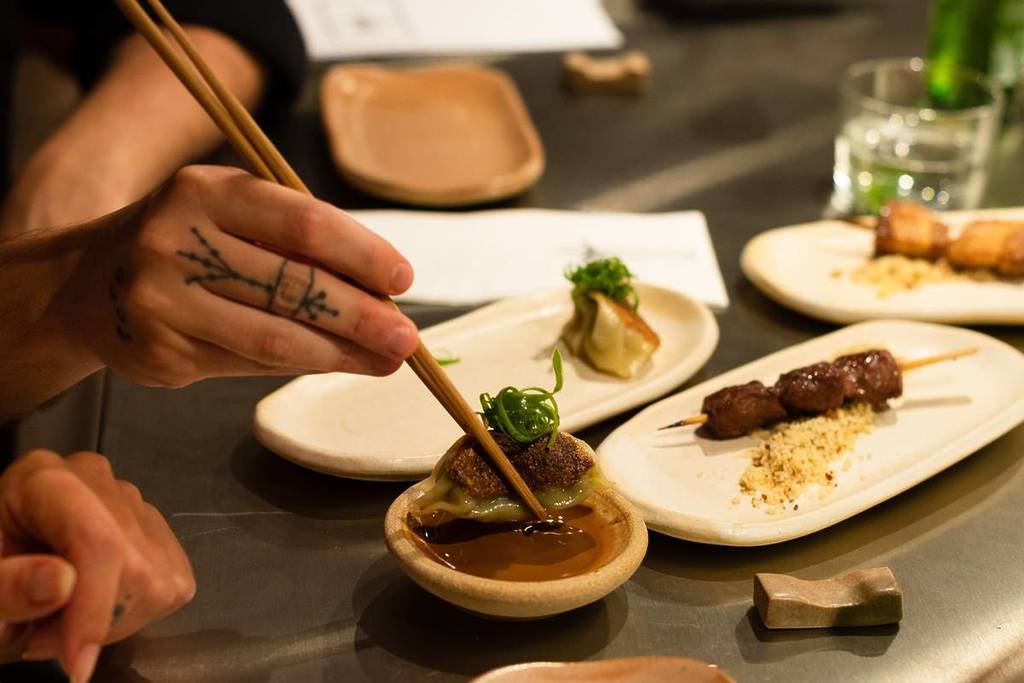
Next, we returned to Rhaiza’s menu with the hot dish of grilled shrimp and asparagus, ikura, and bisque served over shari. Between one creation and the next, we also ordered the wagyu, magret, and pancetta gyoza with the house tataki sauce: a succulent filling, delicate dough, and yet another of those dishes that vanished from the table far too quickly. On the current menu, the serving of three pieces costs R$ 36.
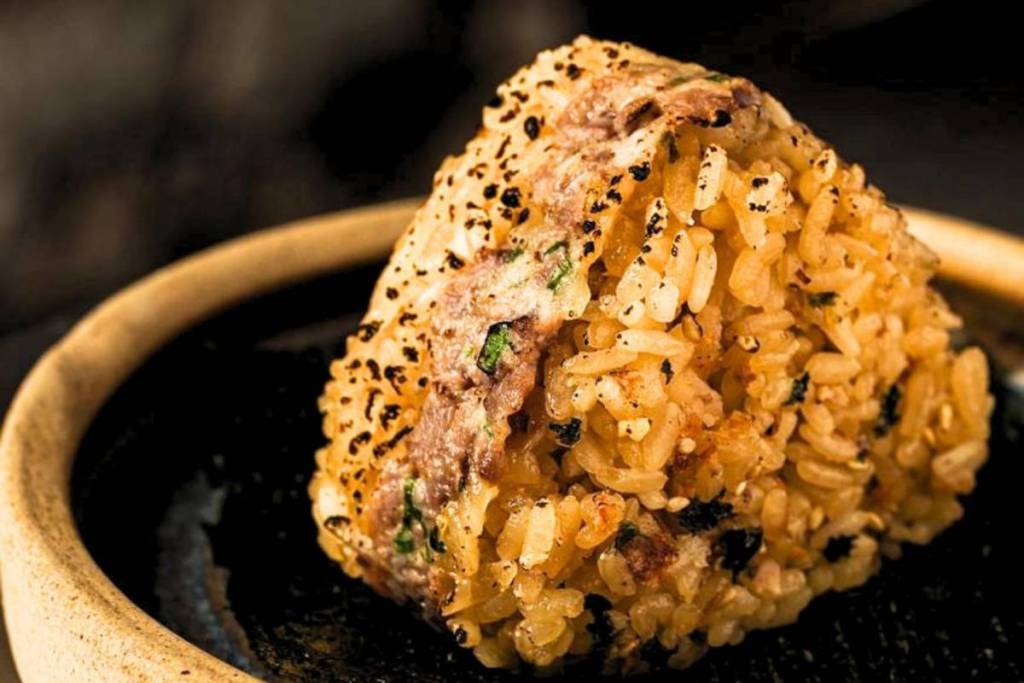
We also sampled bluefin and white fish onigiri before returning to the format that had already won us over at the table: hand rolls. This time, we chose the Spicy Siri, with seared crab, Kewpie mayonnaise, sriracha, layu, sesame seeds, fleur de sel, and masago. And that was it—the decision was made. On our next visit, we want to sit—or rather, stand—at the same spot and essentially do a hand roll tasting. In fact, these are exclusive to the counter and appear on the menu starting at R$ 32.
The meal concluded with another of Rhaiza’s creations: a sundae made with coconut and corn ice cream topped with miso caramel. A dessert that plays on fond memories and gently wrapped up a meal in which, between special dishes and regular menu items, Standing Sushi Bar managed to leave us with that feeling we love most when discovering a new restaurant: already thinking about what we’d order on our next visit.
A Japanese spot to return to without having to wait for a special occasion
Without a doubt, this was our biggest surprise. The quality of the ingredients and the proximity to the itamae could place Standing Sushi Bar in that category of Japanese restaurants reserved for special occasions. But the spirit of tachigui does exactly the opposite.
The current menu features nigiri starting at R$ 12, gyoza starting at R$ 20, and hand rolls starting at R$ 32. This allows you to either put together a more complete meal or simply drop by to grab a few pieces at the counter—exactly like the Japanese concept that inspired the restaurant.
For us, this is Standing Sushi Bar’s greatest strength: turning top-quality sushi into a casual outing. You can walk in, chat with the person preparing your food, ask which fish is the best that day, eat a few pieces standing up, and go about your day.
Or do what we’ll probably do on our next visit: stay much longer than planned because we decide to order “just one more” hand roll.
📍Rua Ferreira de Araújo, 690 – Pinheiros