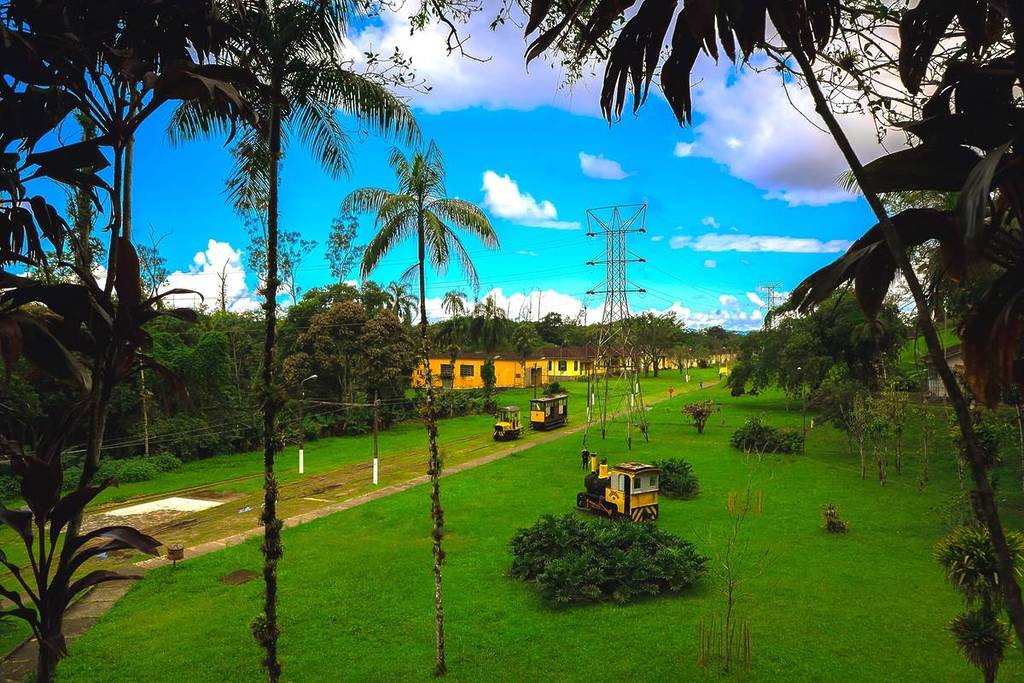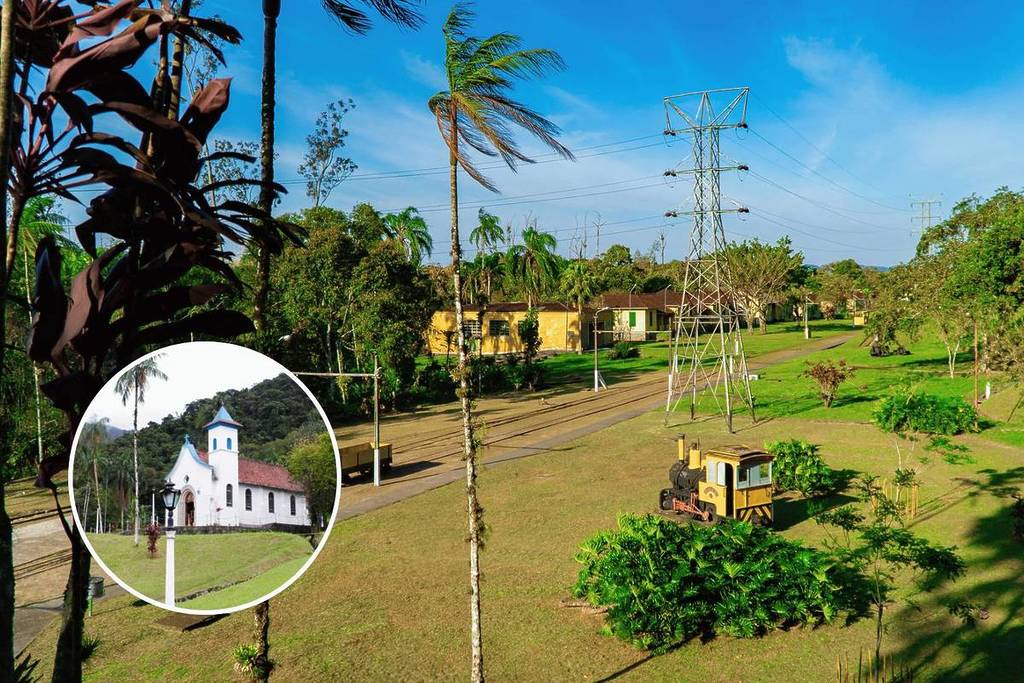

Did you know that the São Paulo coast hides an authentic British workers’ village ? It is the Village of Itatinga, a historical and ecotourism treasure in the heart of the Serra do Mar mountain range, in Bertioga. Built in 1910 to house the employees of one of the country’s first hydroelectric plants, the site is now a “lost village” with only five resident families.
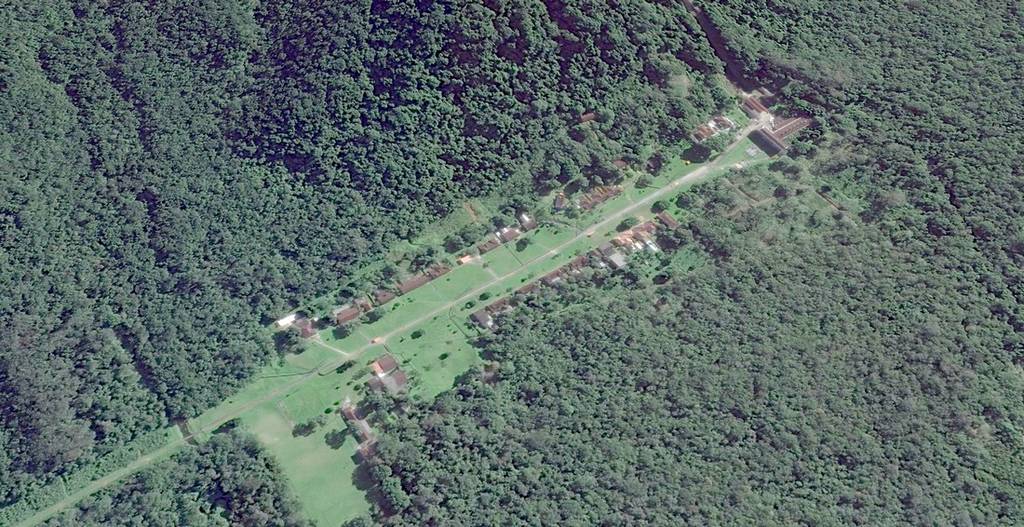
The village is surrounded by the Atlantic Forest, combining environmental preservation with 20th-century industrial heritage. That’s why it’s a must-see destination for anyone seeking history and nature in one place!
Discover the charms of the English village of Bertioga
Designed by British engineers, the Village of Itatinga stands out for its unique architecture. There are about 70 Victorian-style wooden houses, scattered along cobblestone streets with flower-filled gardens. The buildings were constructed using imported materials, such as Riga pine, and housed the workers of the Itatinga Hydroelectric Plant.
In addition to the homes, the complex features a school, bakery, pharmacy, hospital, movie theater, and even the Itatinga Atlético Clube soccer field. But what’s most impressive is the Chapel of Our Lady of the Conception, which preserves stained-glass windows and period furnishings. According to records, it was shipped here from England in pieces!
The hydroelectric plant remains in operation to this day, supplying about 30% of the energy consumed by the Port of Santos. Its employees, likewise, continue to live in the picturesque little houses of the Village of Itatinga.
How to visit the Village of Itatinga?
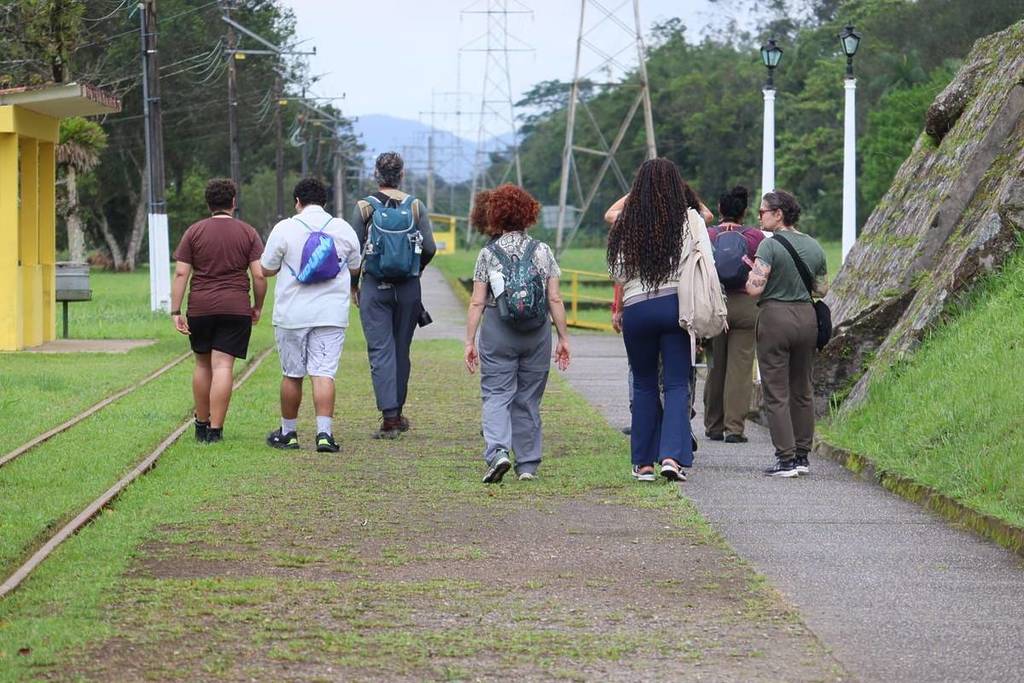
After decades restricted to residents, the village opened its doors to visitors in 2024. Since the community is located in an environmental preservation area within the plant’s grounds, visits are only permitted in the company of guides.
You can visit the Village of Bertioga on Saturdays and Sundays, from 7 a.m. to 11 a.m. or from 1 p.m. to 5 p.m. Simply make a reservation in advance with one of the accredited local associations, such as ABECO (Bertioga Ecotourism Association) and the Association of Local Guides of Bertioga.