


São Paulo has a rule for almost everything. But some seem so specific that it’s hard to believe they actually exist.
Can splashing a pedestrian while walking through a puddle result in a fine? And can sticking gum on a public bench really cost R$ 20,000? Is barbecuing on the sidewalk also a problem?
We dug into the law to find out what’s true about six curious fines associated with everyday life in São Paulo.
And we found some surprises. There are violations that actually exist, fines that are different from what people imagine, and cases where a legitimate rule has been interpreted in an exaggerated way.
Do these fines really exist in São Paulo?
💦 Splashing a pedestrian while driving through a puddle — TRUE

It sounds like an urban legend, but it’s actually stipulated in the Brazilian Traffic Code (CTB).
Article 171 considers it an offense to use a vehicle to spray water or debris at pedestrians or other vehicles.
So, driving through that puddle and splashing someone on the sidewalk can, in fact, result in a fine.
This is a medium-level violation, carrying a fine of R$ 130.16 and four points on your driver’s license. And the rule applies not only in São Paulo but throughout Brazil.
🪁 Flying a kite with cerol — TRUE, BUT THE AMOUNT VARIES

Here, the ban is state-wide and quite clear. State Law No. 17,201/2019 prohibits the use, possession, manufacture, and sale of sharp strings. The rule includes products such as cerol and Chilean string.
For individuals, the law sets a fine of 50 UFESPs, the São Paulo State Fiscal Unit. Therefore, the amount in reais varies depending on the year.
As for establishments that sell these products, the penalty is much higher: 5,000 UFESPs.
📱 Using a cell phone in the gas station’s fueling area — TRUE

This seems like one of those old rules that have disappeared, but it still has a legal basis in São Paulo.
Municipal Law No. 13,440/2002 prohibited the use of cell phones at gas stations and established a fine for noncompliance.
However, the rule changed in 2017. Since then, cell phones can be used inside the vehicle, at convenience stores, and in other areas not designated for refueling.
In other words, the restriction remains in effect around the gas pumps—precisely where refueling takes place.
The original legislation established a fine of R$ 400 for both the user and the gas station owner, adjusted annually based on the IPCA.
🚧 Failing to maintain the sidewalk in front of one’s property — TRUE
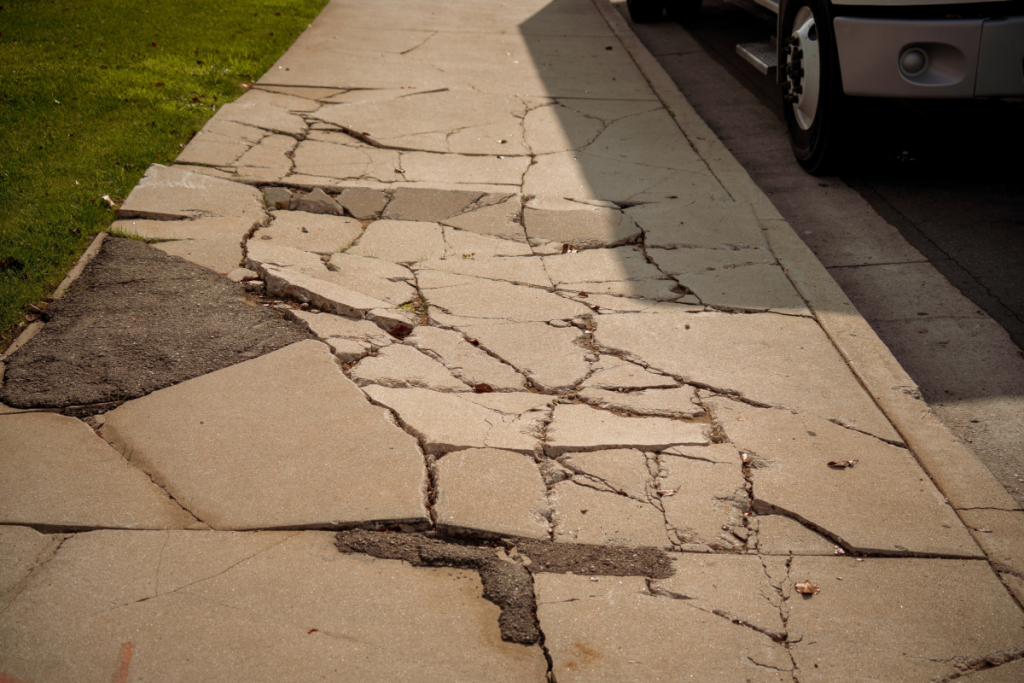
The sidewalk is public, but its maintenance isn’t solely the responsibility of City Hall.
São Paulo law stipulates that property owners must build and maintain sidewalks in good condition.
This includes ensuring adequate accessibility and pedestrian circulation. If irregularities are found, the person responsible may be notified to make the necessary repairs.
Municipal Law No. 15,442/2011 establishes the penalty per linear meter of an irregular sidewalk. Since these amounts are subject to adjustment, the current fine may differ from what was originally stipulated in the law.
In other words: depending on the width of the building’s frontage, letting the sidewalk fall into disrepair can result in a hefty bill.
🍖 Barbecuing on the sidewalk in front of your house — NOT EXACTLY

Did you decide to celebrate your birthday at home and set up a grill, tables, and chairs on the sidewalk? We didn’t find any São Paulo law that sets a specific fine of R$ 2,000 for that.
That doesn’t mean it’s okay to turn the sidewalk into an unlimited extension of your backyard. The sidewalk must remain open to pedestrian traffic, and other rules may come into play in cases of obstruction, excessive noise, or unauthorized occupation of the roadway.
Therefore, the barbecue itself does not automatically result in such a fine. The problem lies in any disturbances caused by the gathering in a public space.
🍬 Sticking gum under tables and benches — THERE’S AN INTERESTING STORY BEHIND IT

Now we’ve reached the famous R$ 20,000. And, surprisingly, that number didn’t just come out of thin air.
In a 2006 publication, the City of São Paulo itself stated that sticking gum under tables and benches could be classified as vandalism.
At the time, the agency stated that the practice could result in a fine of up to R$ 20,000. But there’s an important detail: that official information is two decades old.
Furthermore, we did not find any current regulation that specifically establishes a “chewing gum fine” in that amount.
Therefore, the R$ 20,000 figure has an official basis, but it cannot be said that this is currently the penalty imposed for a single piece of gum.
Ultimately, these curious fines show that reality can be almost as strange as an urban legend.
Puddles, kite string, cell phone use at gas stations, and poorly maintained sidewalks all have very specific rules behind them. As for barbecues and chewing gum, you’ll need to read the fine print.
So, before you assume a fine is too absurd to be true in São Paulo, it might be worth checking the law. Sometimes the story is real—it’s just not exactly the way it reached you.
