Do you know who the writers from São Paulo are? Some artists apply paint to canvases to create their art; others put words on paper. So, let’s take a look at the works of authors from São Paulo.
In addition, we’re now gearing up for the2026 Book Biennial, which will take place inthe Anhembi DistrictfromSeptember 4 to 13. So, if you love to read, be sure to check out booksby São Paulo authors at thismust-see event.
Get your ticket by clicking here!
Lygia Fagundes Telles
Known as the “lady of Brazilian literature, ” Fagundes Telles explores themes such as death, love, fear, and madness in her works. Her major works include “Ciranda de Pedra” (1954, the basis for two Rede Globo soap operas), “Antes do Baile Verde” (1970), and “As Meninas” (1973).
Ricardo de Azevedo
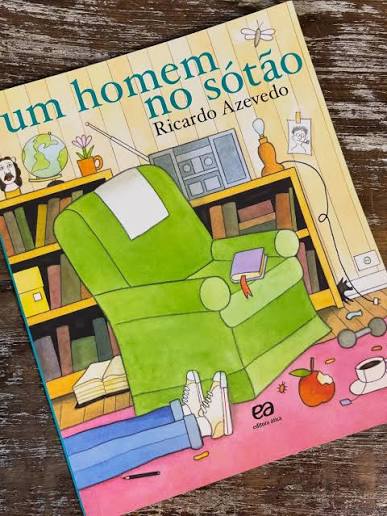
Winner of several Jabuti Awards, this Brazilian writer, illustrator, and researcher is the author of “Vou-me embora desta terra, é mentira eu não vou não!” (2008) and “Um homem no sótão” (2001). In his books, he explores popular culture and childhood, and he also illustrates most of the pages himself.
Tati Bernardi
A native of São Paulo who grew up in Tatuapé, in the city’s East Zone, Tati Bernardi is a writer, screenwriter, columnist, podcaster, and dozens of other things. Her fame began with the columns she wrote for magazines like Trip and VIP, in which she recounted the misfortunes of her love life. Among her books, the following stand out: “Meu Passado Me Condena” (2015) and “Depois a Louca Sou Eu” (2016), both of which have been adapted for the big screen. But her true favorite is her latest, “Você Nunca Mais Vai Ficar Sozinha” (2020), in which the author shares the anxieties and joys of motherhood.
Camila Fremder
She is also a writer, screenwriter, podcaster, and many other things, and has published five books, including “Adulta sim, Madura nem Sempre” (2018).
Vanessa Bárbara
Winner of the Jabuti Award for her report “O Livro Amarelo do Terminal,” Vanessa Barbara has written titles such as “O Verão do Chico” (2008) and “Endrigo, o Escavador de Umbigos” (2010). Her novel “Operação Impensável” (2015) won the Paraná Literature Award.
Marcos Rey
Rey is the author of several titles in the iconic Vagalume Collection, such as “The Abduction of the Golden Boy” (1982), “A Corpse Listens to the Radio” (1983), and “Alone in the World” (1984). In addition, she wrote “Memórias de um Gigolô” (1968) and “Malditos Paulistas” (1980). She later became a member of the Academia Paulista de Letras and won the Jabuti Prize for the short story “O Último Mamífero do Martinelli.”
André Vianco
A specialist in horror and supernatural literature, Vianco gained fame for his vampire stories and is considered one of the leading Brazilian fantasy authors of the 21st century. His book *Os Sete* (2000) achieved bestseller status at the time.
Victor Bonini
Bonini is a journalist and has worked as a reporter for several Rede Globo news programs. At the same time, he has found success in the literary world with suspense stories such as “Colega de Quarto” (2015), “O Casamento” (2017), and “Quando Ela Desaparecer” (2019).
Ruth Rocha
One of the leading authors of Brazilian children’s literature, Ruth has received eight Jabuti Awards and was elected to the São Paulo Academy of Letters.
She published her first book, *Palavras, muitas palavras* (1976), followed by the classic children’s bestseller *Marcelo, marmelo, martelo*. The São Paulo-based writer has a career spanning more than 50 years and hundreds of published titles, making her one of the most award-winning Brazilian authors in the genre.
Mário de Andrade
One of the pillars of Brazilian literature, the poet, chronicler, novelist, and musicologist was one of the founders of the modernist movement in Brazil.
In addition to organizing the 1922 Modern Art Week, Mário de Andrade pioneered a new literary language that valued popular culture and nationalism, striving to move away from classical Parnassian academicism to speak “the language of the people.”
Among her extensive list of titles, the landmark work of modernist poetry*Amar, verbo intransitivo* ( 1927) stands out, as does her magnum opus,*Macunaíma* ( 1928), one of the great classics of Brazilian literature.
Oswald de Andrade
Another major figure and driving force behind modernism in Brazil, Oswald was not only a writer, poet, and playwright but also a lawyer. He had a provocative demeanor and began his career as a literary journalist, writing columns for newspapers.
When she first entered the literary world, she founded the weekly satirical and humorous magazine “O Pirralho,” where she wrote satirical and critical pieces. Her most iconic works are“Memórias Sentimentais de João Miramar”(1924) and“Serafim Ponte Grande” (1933), famous for their language and caustic humor, which broke away from the classical novel model of the time.
Hilda Hilst
One of the most important Portuguese-language writers of the 20th century, Hilda de Almeida Prado Hilst published her first book in 1950: the poetry collection *Presságio*.
Her works explore themes such as death, insanity, mysticism, eroticism, and female sexual freedom, as well as the relationship between God and humankind. Among her best-known titles are *Júbilo, memória, noviciado da paixão* and the novel *A obscena senhora D*.
Natalia Timerman
One of the most interesting authors of the recent São Paulo generation, Natalia explores themes such as psychiatry, grief, memory, abandonment, and urban life in large cities in her books.
She holds a degree in psychiatry from Unifesp, and her first book, *Desterros: Stories from a Prison Hospital*(Elefante, 2017), is a work of nonfiction that brings together real stories of inmates, guards, and doctors from the prison hospital where she worked.
Among her major works, it’s worth highlighting her most recent book, *Antes que apague* (*Before It Fades*), which explores the relationship between a mother and daughter as they cope with Alzheimer’s.